
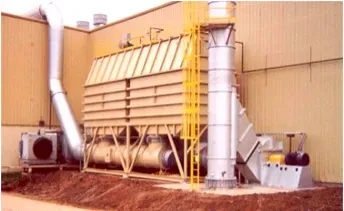
The Challenge
The plant's CEMS had stopped feeding data to the workstation that records it. For a Title V facility, continuous emissions data is the backbone of regulatory compliance. With the feed down, the maintenance team faced a gap in their emissions record and no clear read on whether older data had survived. They needed a partner who understood both the RTO itself and the monitoring system attached to it, and who could get on site quickly from across the country.
The Engagement
The plant's Maintenance Manager contacted CREATE directly. The work was scoped, analyzed, and quoted within two days, with a field engineer on site inside two weeks. It was structured in two parts: a remote review of the RTO and CEMS data the plant supplied so the likely fault could be narrowed down before anyone traveled, and a full-day on-site field assessment to confirm the diagnosis, restore the system, and document what was found.
What CREATE Found
On site, the engineer traced the full sampling path from the RTO inlet and stack, along the heat tracer, to the CEMS cabinet. The CEMS control panel was offline. Once repowered, the HMI revealed the cause: a failed backup battery had let the system clock reset to factory defaults. That clock mismatch had broken the handshake between the CEMS and the data workstation, so the workstation could not pull current readings and the unit's temporary memory was cleared. One finding cut against the worst case: the plant's one-hour averaged data log was still archived intact, so the compliance record itself was not lost. Replacing the battery and re-establishing the data link brought monitoring back online.
CREATE did not stop at the surface fault. Reviewing the emissions data, the engineer identified a more serious and previously unrecognized issue. VOC readings were spiking each time the RTO switched chambers. The natural gas injection method was introducing natural gas that the CEMS counted as VOC, inflating total hydrocarbon numbers and creating a genuine Title V penalty exposure. The likely chain: worn saddle media was lowering thermal efficiency, which drove a higher natural gas injection rate, which produced incomplete combustion and higher measured outlet VOC.
Results
- Restored the lost CEMS data feed and confirmed the archived one-hour data was intact, closing the immediate compliance concern.
- Delivered a field report with a clear root cause and prioritized recommendations.
- Identified a Title V penalty risk the plant had not been aware of, and explained the mechanism behind it.
- Completed and closed the engagement on schedule, and was retained for follow-on support.
What CREATE Recommended Next
- An engineering assessment to push destruction efficiency toward 99 percent using a recirculation system and a shorter cycle time.
- Taking the natural gas injection system out of routine operation to remove the false VOC contribution.
- Targeted saddle media replacement, only where needed.
- A cleanout tray and inspection door for easier media maintenance.
- Insulation repair for a visible hot spot, and a correctly sized burner.
Why It Matters
A data-loss call became a deeper conversation about destruction efficiency, media health, and Title V exposure, the issues that actually drive cost and risk at an RTO. CREATE's approach: respond fast, diagnose the whole system rather than the symptom, protect the client's compliance position, and leave behind a clear plan.