Industrial Infrastructure Engineering & Custom Fabricated Equipment Solutions: The Complete Guide
In today's industrial landscape, efficiency, safety, and long-term performance are no longer optional, they are critical for survival and growth. The backbone of successful operations lies in robust industrial infrastructure engineering paired with high-quality custom fabricated equipment solutions.
Understanding Industrial Infrastructure Engineering
Industrial infrastructure engineering refers to the systematic design, construction, and management of complex systems that support industrial operations. It involves creating a framework that integrates machinery, structural systems, pipelines, electrical utilities, and automation systems into a cohesive, highly efficient setup.
At its core, infrastructure engineering seeks to:
- Optimize Workflow, every component is positioned to reduce inefficiencies and streamline processes
- Ensure Durability, materials and designs withstand high stress, wear and tear, and environmental exposure
- Guarantee Safety, adherence to regulatory standards, proper installation, and fail-safes are integral
- Support Scalability, designs accommodate future growth, upgrades, or changes in production processes
The Role of Custom Fabricated Equipment Solutions
While industrial infrastructure provides the framework, custom fabricated equipment solutions ensure that machinery, supports, and system components precisely meet the operational requirements of the facility. Unlike off-the-shelf equipment, custom solutions are tailored for facility layout constraints, unique production processes, environmental conditions, and safety and compliance requirements.
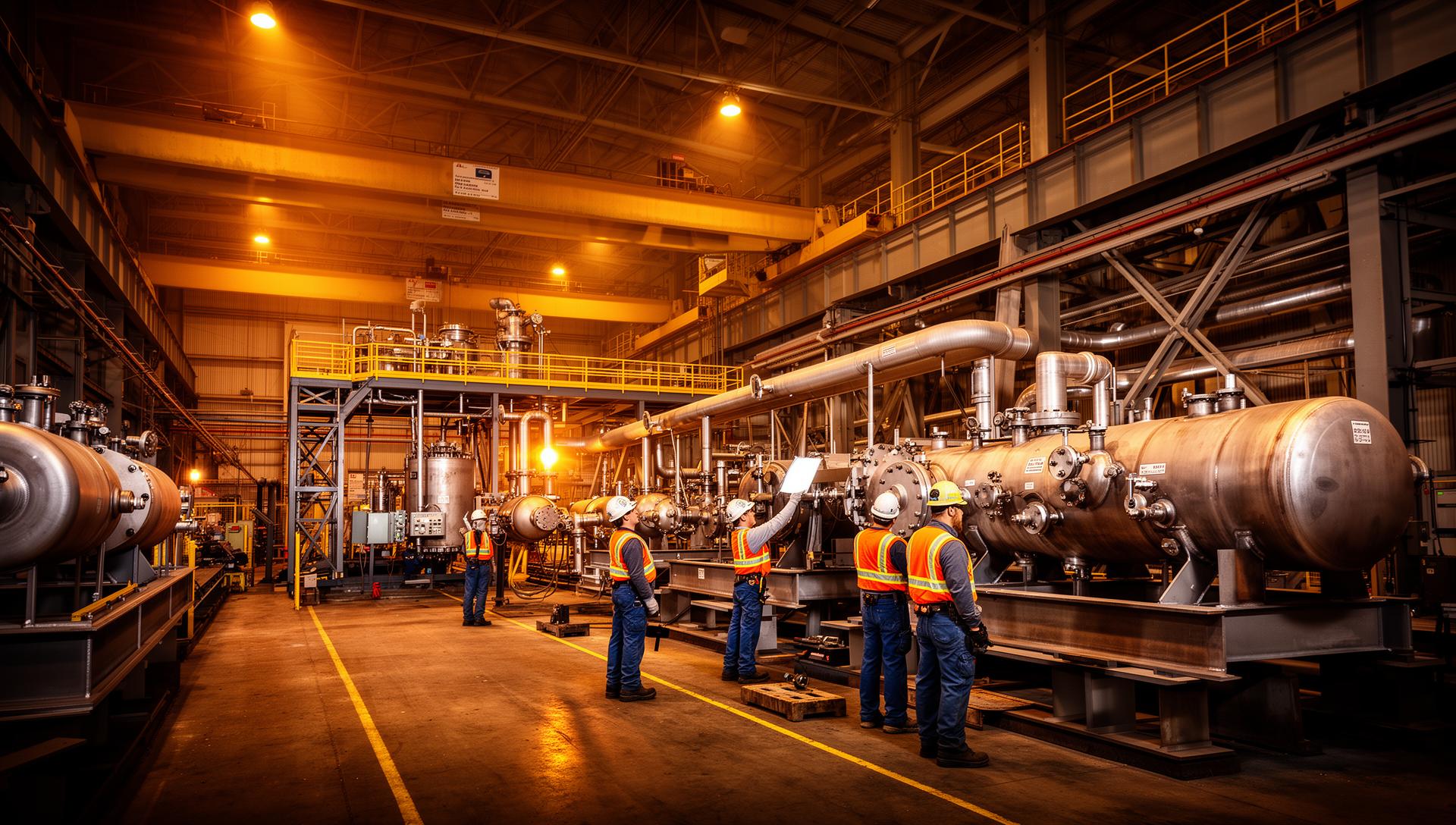
Custom fabrication may include pressure vessels, piping assemblies, skids, enclosures, tanks, and specialized machinery components. Tailored solutions address the unique challenges of each industrial facility, providing better fit, function, and reliability.
Key Benefits of Custom Fabrication
Precise Fit and Integration
Custom components are engineered to match exact specifications, reducing installation challenges and workflow disruptions
Enhanced Reliability and Performance
Materials, thicknesses, and mechanical properties are chosen to withstand operational stresses, temperature fluctuations, and corrosion
Improved Safety and Compliance
Equipment designed to meet stringent safety codes and standards, protecting employees and ensuring regulatory compliance
Reduced Maintenance and Downtime
Precisely engineered parts operate more reliably, decreasing the frequency of repairs and operational interruptions
Cost Optimization Over the Lifecycle
Long-term benefits include reduced maintenance, lower downtime costs, and extended equipment lifespan for better ROI
Common Types of Custom Fabricated Equipment
Structural Supports & Platforms
Foundation for heavy machinery, conveyor systems, and operator access points
Pressure Vessels & Tanks
Designed for high pressure, chemical resistance, and temperature variations
Piping & Tubing Assemblies
Flanges, bends, and junctions that accommodate unique plant layouts
Equipment Skids & Mounts
Modular solutions that allow pre-assembly and quicker installation
Enclosures & Safety Guards
Protective solutions meeting regulatory requirements for machinery and operators
Applications Across Industries
Manufacturing & Processing
Tailored machinery layouts optimize material flow, reduce bottlenecks, and improve productivity
Energy & Power Generation
Robust infrastructure for turbines, generators, and piping that withstand operational stress
Chemical & Petrochemical
Corrosion-resistant tanks, specialized piping, and skids for safe chemical processing
Food & Pharmaceutical
Food-grade custom fabrication ensuring sanitation, hygiene, and precision compliance
Logistics & Warehousing
Optimized structural layouts and custom conveyor supports for storage efficiency
The Engineering and Fabrication Process
Needs Assessment & Consultation
Engineers evaluate operational requirements, site constraints, production goals, and regulatory standards
Design and Modeling
CAD and simulations visualize infrastructure and equipment integration, identifying potential issues early
Material Selection
Materials chosen for durability, corrosion resistance, weight, and environmental suitability
Fabrication and Assembly
Advanced techniques including CNC machining, precision welding, forming, and finishing
Testing & Quality Assurance
Components undergo inspection, mechanical testing, and compliance verification before installation
Installation & Integration
Systems installed, aligned, and integrated with functional testing for efficient and safe operation
Best Practices for Industrial Infrastructure Projects
- Collaborate early with engineering experts to align infrastructure with production goals and long-term strategy
- Utilize advanced modeling tools, simulation and 3D modeling reduce errors and optimize designs before fabrication
- Plan for future expansion, scalable infrastructure reduces the cost of upgrades and allows operational growth
- Invest in quality materials and techniques to extend equipment life and reduce long-term costs
- Document all processes, maintain detailed records of designs, materials, tests, and compliance checks
Emerging Trends in Industrial Infrastructure Engineering
Smart Industrial Systems
Integration of sensors, automation, and monitoring to optimize operations and predict maintenance needs
Robotics & Automation
Robotic fabrication and automated assembly increase precision and improve safety in hazardous environments
Advanced Materials
New alloys and coatings increase durability, reduce corrosion, and enhance performance under extreme conditions
Sustainable Engineering
Eco-efficient designs and recyclable materials reduce environmental impact and support green manufacturing
Conclusion
Investing in industrial infrastructure engineering and custom fabricated equipment solutions is essential for modern industrial operations. By combining tailored designs, precise fabrication, and strategic implementation, businesses can improve operational efficiency, reduce maintenance and downtime, ensure safety and regulatory compliance, achieve long-term cost savings, and support scalability and future growth. The integration of high-quality infrastructure and custom solutions transforms industrial operations from ordinary to exceptional, ensuring facilities operate safely, efficiently, and sustainably for years to come.
Need Custom Infrastructure Engineering?
CREATE Industries delivers industrial infrastructure engineering, custom fabricated equipment, and turnkey solutions for energy, manufacturing, and industrial operations.
Get In Touch