What Is a Thermal Oxidizer for Industrial Operations, and Do You Need One?
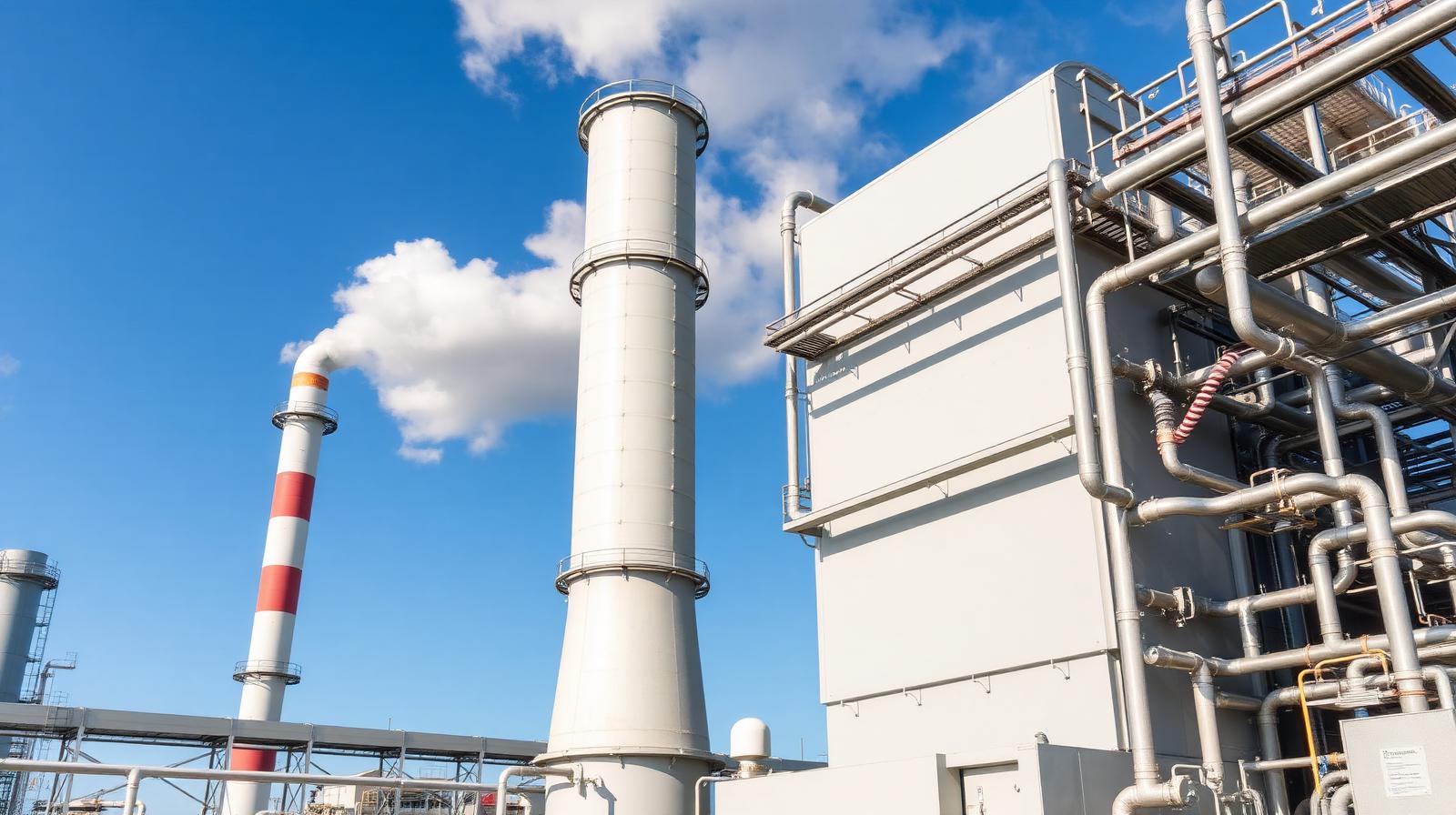
A Thermal Oxidizer for industrial operations is one of the most effective and most misunderstood pieces of emission control equipment in the energy and manufacturing sectors. Most operators know they need one when a permit requires it. Fewer understand how it works, what it actually costs to run poorly, or how a well-engineered system can do far more than just keep regulators satisfied.
A Thermal Oxidizer for industrial operations destroys volatile organic compounds (VOCs), hazardous air pollutants (HAPs), and other combustible contaminants by exposing them to high temperatures in a controlled combustion chamber. The result is clean exhaust, primarily carbon dioxide and water vapor, that meets or exceeds EPA permit thresholds. For operators in oil and gas, biogas, landfill gas, chemical processing, and advanced manufacturing, this is not optional infrastructure. It is the difference between operating and shutting down.
At CREATE Industries, we design, fabricate, and service Thermal Oxidizer systems across the country. What we have learned from over 1,000 installed systems is that the gap between a Thermal Oxidizer that merely passes inspection and one that actively improves your operation is larger than most operators realize, and it starts at the engineering stage.
How a Thermal Oxidizer Actually Works
At its core, a Thermal Oxidizer operates on a straightforward principle: combustible pollutants are destroyed when exposed to sufficient heat for a sufficient amount of time. The three variables that define system performance are temperature, residence time, and turbulence, commonly called the "three T's" of combustion.
Temperature refers to how hot the combustion chamber reaches, typically between 1,400°F and 1,800°F for most industrial applications. Residence time is how long the contaminated airstream stays in that high-temperature zone, usually measured in fractions of a second. Turbulence ensures that all molecules in the airstream are exposed to sufficient heat, with no cold pockets allowing pollutants to pass through untreated.
When all three are properly engineered and maintained, destruction efficiencies of 99% or greater are achievable, which is exactly what most EPA permits require. When any one of the three is out of spec, destruction efficiency drops, permit violations follow, and the cost of non-compliance begins accumulating fast.
There are several types of Thermal Oxidizers used in industrial settings, each suited to different process conditions:
- Direct-fired Thermal Oxidizers (DFTO): The simplest configuration, using a burner to heat the process stream directly. Best for high-concentration waste streams where the pollutants themselves contribute fuel value.
- Regenerative Thermal Oxidizers: Use ceramic media beds to recover and recycle heat from the outgoing exhaust, dramatically reducing fuel consumption. Most efficient option for continuous, high-volume operations.
- Recuperative Thermal Oxidizers: Use a heat exchanger to preheat incoming contaminated air using outgoing clean exhaust. A good balance of efficiency and capital cost for mid-range applications.
- Catalytic Oxidizers: Use a catalyst to lower the combustion temperature required for oxidation, reducing fuel use. Best suited for lower-concentration streams without compounds that could poison the catalyst.
Industries That Depend on Thermal Oxidizers
While Thermal Oxidizers appear across nearly every industrial sector, several industries rely on them as core compliance and operational infrastructure.
Oil and gas operations generate VOC-laden process streams at virtually every stage: wellhead separation, gas processing, storage, and transfer. Thermal Oxidizers destroy these emissions at the source, preventing both permit violations and the safety hazards associated with uncontrolled hydrocarbon venting.
Biogas and landfill gas facilities present a more complex challenge. The composition of biogas, a mixture of methane, carbon dioxide, hydrogen sulfide, and trace contaminants, varies continuously based on feedstock. Thermal Oxidizers in these applications must be robust enough to handle variable inlet compositions without losing destruction efficiency.
Chemical processing and advanced manufacturing facilities often deal with highly specific pollutant profiles, particular solvents, process chemicals, or reaction byproducts that appear on EPA's HAP list. Design must be tightly coupled to the specific chemistry of the process stream.
Wastewater treatment plants and municipal waste facilities use Thermal Oxidizers to manage odor-causing and environmentally regulated compounds, often under public scrutiny that makes reliable, visible compliance especially important.
The Real Cost of Running a Thermal Oxidizer Poorly
The purchase price of a Thermal Oxidizer is the smallest number in its lifecycle cost equation. The largest numbers are fuel consumption, maintenance, downtime, and compliance risk, and all four are directly determined by how well the system was engineered and how consistently it is maintained.
Fuel consumption is the most visible ongoing cost. An undersized or poorly tuned system burns excess fuel to maintain temperature, often without achieving the destruction efficiency the fuel spend is supposed to guarantee. A properly sized system with heat recovery can reduce fuel costs by 50 to 90 percent compared to a direct-fired unit running inefficiently.
Maintenance costs follow engineering quality closely. Systems designed with field serviceability in mind, accessible components, standard hardware, and documented maintenance intervals, cost significantly less to maintain than systems that require specialized technicians or extended downtime for routine service.
Compliance risk is where the costs get serious. A Thermal Oxidizer that fails to maintain required destruction efficiency, even briefly, can trigger a notice of violation, require third-party stack testing, and, in repeat cases, result in facility shutdown orders. The cost of a single significant compliance event typically exceeds the cost of the system itself.
What to Look for When Selecting a Thermal Oxidizer Partner
For straightforward applications with well-defined, stable process streams, a standard configuration may be entirely appropriate. For operations with variable inlet compositions, space constraints, heat recovery requirements, or complex permitting conditions, off-the-shelf solutions often underperform. Key questions to ask any partner:
- Do they design to your specific process conditions, or do they fit your process to their standard product?
- Can they provide performance guarantees, not just specifications, but tested destruction efficiency at your actual operating conditions?
- What does their Service and support model look like after commissioning? Do they offer 24/7 emergency response?
- Have they worked in your specific industry, with your specific pollutant profile and regulatory environment?
- Can they handle engineering, fabrication, installation, and commissioning under one roof, or will you be managing multiple handoffs between vendors?
That last point matters more than most operators realize. Every handoff between design, fabrication, and installation is an opportunity for specification drift, small changes that seem inconsequential until the system does not perform as expected in the field.
How CREATE Industries Approaches Thermal Oxidizer Projects
CREATE Industries built its Thermal Oxidizer capability around a single principle: the system has to work in the real world, not just on paper. Engineering starts with your actual process conditions, not a standard data sheet, and fabrication is held to the same standard as the engineering that precedes it.
Our integrated model covers the full project lifecycle. We develop the process design, select and specify components, fabricate the system in our own facilities, and commission it in the field with the same team that built it. This eliminates the handoff gaps that cause performance problems and gives operators a single accountable partner from contract to startup.
We also provide ongoing Service and maintenance support, including 24/7 emergency response for facilities where downtime is not an option. Our Service team understands our systems at a component level, not because they have read a manual but because they have built and commissioned the same systems they are maintaining.
A Thermal Oxidizer for Industrial Operations Is an Asset, Not Just a Cost
The right Thermal Oxidizer for industrial operations does not just keep you in compliance; it reduces your fuel spend, lowers your maintenance burden, protects your operating permit, and positions your facility as a reliable, high-performing operation in the eyes of customers, regulators, and partners.
A Thermal Oxidizer for industrial operations that was engineered correctly from the start will outperform, outlast, and out-economize one that was selected purely on purchase price. The difference shows up in every utility bill, every maintenance cycle, and every regulatory interaction over the life of the asset.
Frequently Asked Questions
What is a Thermal Oxidizer for industrial operations?
A Thermal Oxidizer for industrial operations is emission control equipment that destroys volatile organic compounds (VOCs), hazardous air pollutants (HAPs), and other combustible contaminants by exposing them to high temperatures in a controlled combustion chamber. The result is clean exhaust, primarily carbon dioxide and water vapor, that meets or exceeds EPA permit thresholds.
How does a Thermal Oxidizer actually work?
It relies on the three T's of combustion: temperature (typically 1,400°F to 1,800°F), residence time (fractions of a second in the high-temperature zone), and turbulence (so every molecule is exposed to sufficient heat). When all three are properly engineered and maintained, destruction efficiencies of 99% or greater are achievable.
What types of Thermal Oxidizers are used in industry?
The main types are direct-fired (DFTO) for high-concentration streams, regenerative for continuous high-volume operations, recuperative for mid-range applications, and catalytic for lower-concentration streams. Selecting the right type for your specific process conditions is the first engineering decision.
Which industries depend on Thermal Oxidizers?
Oil and gas, biogas and landfill gas processing, chemical processing, advanced manufacturing, and wastewater treatment all rely on Thermal Oxidizers as core compliance and operational infrastructure for VOC and HAP destruction at the source.
What does it really cost to run a Thermal Oxidizer poorly?
The largest lifecycle costs are fuel consumption, maintenance, downtime, and compliance risk, all directly determined by engineering quality and consistent maintenance. A poorly tuned system can burn double or triple the necessary fuel and trigger violations that exceed the cost of the system itself.
How does CREATE Industries approach Thermal Oxidizer projects?
CREATE Industries delivers an integrated model, process design, component selection, in-house fabrication, field commissioning, and 24/7 Service, under one accountable team. Eliminating handoffs between vendors prevents the specification drift that causes underperformance in the field.
Engineer the Right Thermal Oxidizer From Day One
CREATE Industries designs, fabricates, commissions, and services Thermal Oxidizer systems for oil and gas, biogas, landfill, chemical processing, and advanced manufacturing operators.
Talk to an Engineer