How AI and Automation Are Changing the Math for Gulf Coast Manufacturers
For years, automation in Gulf Coast manufacturing was primarily a story about large-scale refineries and petrochemical facilities with capital budgets to match. Small and mid-sized industrial manufacturers watched from the sidelines, told the technology was too expensive or too complex for operations their size.
That calculus has changed. The cost of industrial automation has dropped substantially. AI-powered system capabilities have expanded dramatically. And labor market pressures on the Gulf Coast have made the operational case for automation more compelling than ever.
Why Gulf Coast Manufacturers Can't Afford to Wait on Automation
The business drivers pushing Gulf Coast manufacturers toward automation:
- Labor availability and cost: skilled manufacturing labor is increasingly difficult to recruit and retain, driving wage inflation across the sector
- Throughput demands: customers expect faster turnaround and higher volumes than manual operations can consistently deliver
- Quality consistency: automated systems eliminate variability from manual production processes
- Safety: removing workers from high-risk tasks reduces injury rates and workers' compensation costs
- Data visibility: automated systems generate the operational data modern business management requires
- Contract requirements: larger customers increasingly require quality management systems that only automated environments can support
CREATE Industries' AI, Automation, and Robotics Capabilities
Automated Manufacturing Systems
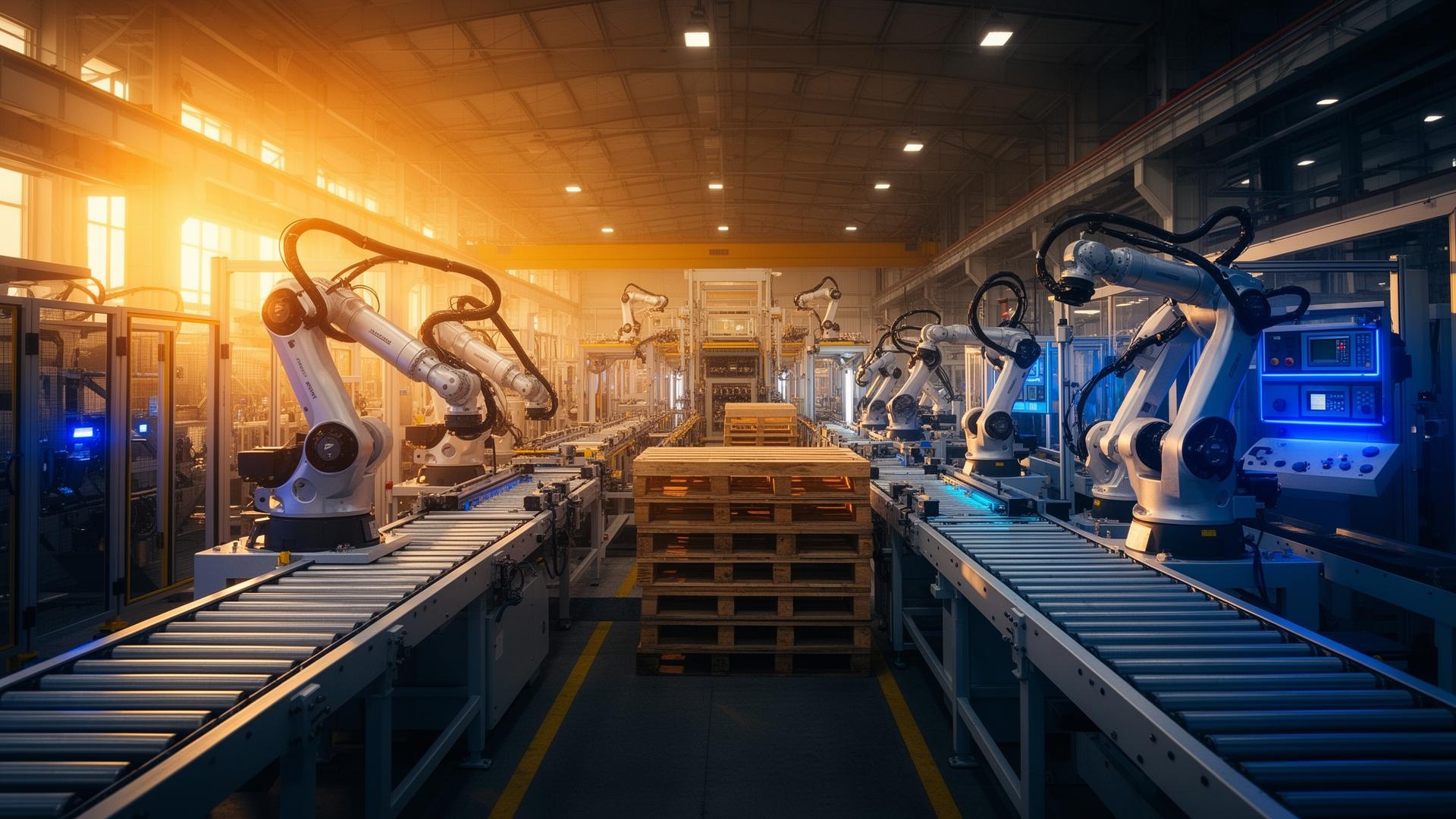
- Automatic packaging systems: end-of-line packaging automation reducing labor cost and improving throughput consistency
- Conveyor system design and installation: material handling automation connecting production stages
- Engineering automation design: custom automation solutions engineered for specific production processes
- Robotic integration: industrial robots for welding, material handling, assembly, and inspection
Warehouse and Logistics Automation
- Automated picking systems: order fulfillment automation improving accuracy and speed
- Robotic palletizing systems: end-of-line palletizing reducing labor cost and back-injury risk
- Guided vehicle systems: autonomous material transport for high-movement facilities
- Manufacturing automation strategies: facility-level planning for how automation investments interconnect
AI-Powered Systems and Consulting
- Predictive maintenance systems: AI models analyzing equipment data to predict failures before they occur
- Process optimization: machine learning identifying inefficiencies in production data
- Automation consulting: strategic guidance for manufacturers building multi-year automation roadmaps
- Controls and HMI upgrades: modernizing the human-machine interface to support data-driven operations
What an Automation Implementation Actually Looks Like
A typical CREATE automation engagement:
- Process mapping and opportunity assessment identifying which tasks offer the best automation ROI
- Solution design engineering the specific automation solution for the application
- Integration planning designing interfaces between new systems and existing equipment
- Fabrication and procurement building or sourcing the physical automation components
- Installation and commissioning deploying and validating performance against design specs
- Training and documentation ensuring staff can run, maintain, and troubleshoot the system
- Performance tracking measuring ROI against the pre-implementation baseline
Measuring the ROI of Industrial Automation
Key ROI drivers for industrial automation:
- Direct labor reduction: automated systems replacing manual labor generate immediate, calculable payback
- Throughput increase: consistent automated production enables more output per shift
- Defect and rework reduction: consistent processes reduce quality-related costs
- Downtime reduction: predictive maintenance reduces unplanned equipment failures
- Safety cost reduction: fewer workplace injuries mean lower workers' compensation premiums
For most targeted automation projects in Gulf Coast manufacturing, payback periods of 18 to 36 months are achievable, with ongoing benefit compounding well beyond that horizon.
The Window for First-Mover Advantage Is Open Now
The companies investing in automation and AI today are building operational advantages that compound over time: lower cost structures, faster throughput, better quality data, and more attractive employment propositions for the next generation of industrial workers.
What sets CREATE's automation practice apart:
- Engineering design, fabrication, integration, and installation all in-house
- Gulf Coast regional expertise and established supply chain relationships
- Scalable solutions designed for mid-sized manufacturers, not just large facilities
- Ongoing support and performance tracking after go-live
Frequently Asked Questions
Is industrial automation realistic for mid-sized Gulf Coast manufacturers?
Yes. Hardware, vision systems, and controls costs have dropped substantially, and scalable solutions are available for facilities far smaller than refineries. Most targeted automation projects pay back in 18 to 36 months.
What is the best first automation project to take on?
Usually end-of-line tasks: automated packaging, palletizing, or material handling between production stages. They are well-understood, the labor savings are easy to measure, and the integration risk is contained.
How does AI fit into industrial manufacturing today?
Primarily through predictive maintenance, process optimization, and quality inspection. AI models analyze equipment and production data to flag failures before they happen and surface inefficiencies humans miss.
Will automation eliminate skilled jobs in our facility?
Automation typically shifts labor toward higher-skill roles: operating, maintaining, and improving automated systems. Most Gulf Coast manufacturers redeploy staff into these roles rather than reduce headcount.
How does CREATE Industries approach automation projects?
CREATE handles process mapping, engineering, fabrication, integration, installation, commissioning, training, and performance tracking in-house, so a single accountable team owns the project from assessment through go-live.
What is the typical payback period for an industrial automation investment?
For well-scoped projects in Gulf Coast manufacturing, payback periods of 18 to 36 months are achievable, with benefits compounding well beyond that window through lower labor cost, higher throughput, and better quality data.
Explore Automation Solutions for Your Gulf Coast Facility
CREATE Industries designs, fabricates, integrates, and supports AI-driven automation systems for Gulf Coast manufacturers under one accountable team.
Talk to Our Team