Gulf Coast Advanced Manufacturing: How Modern Industry Is Rebuilding America
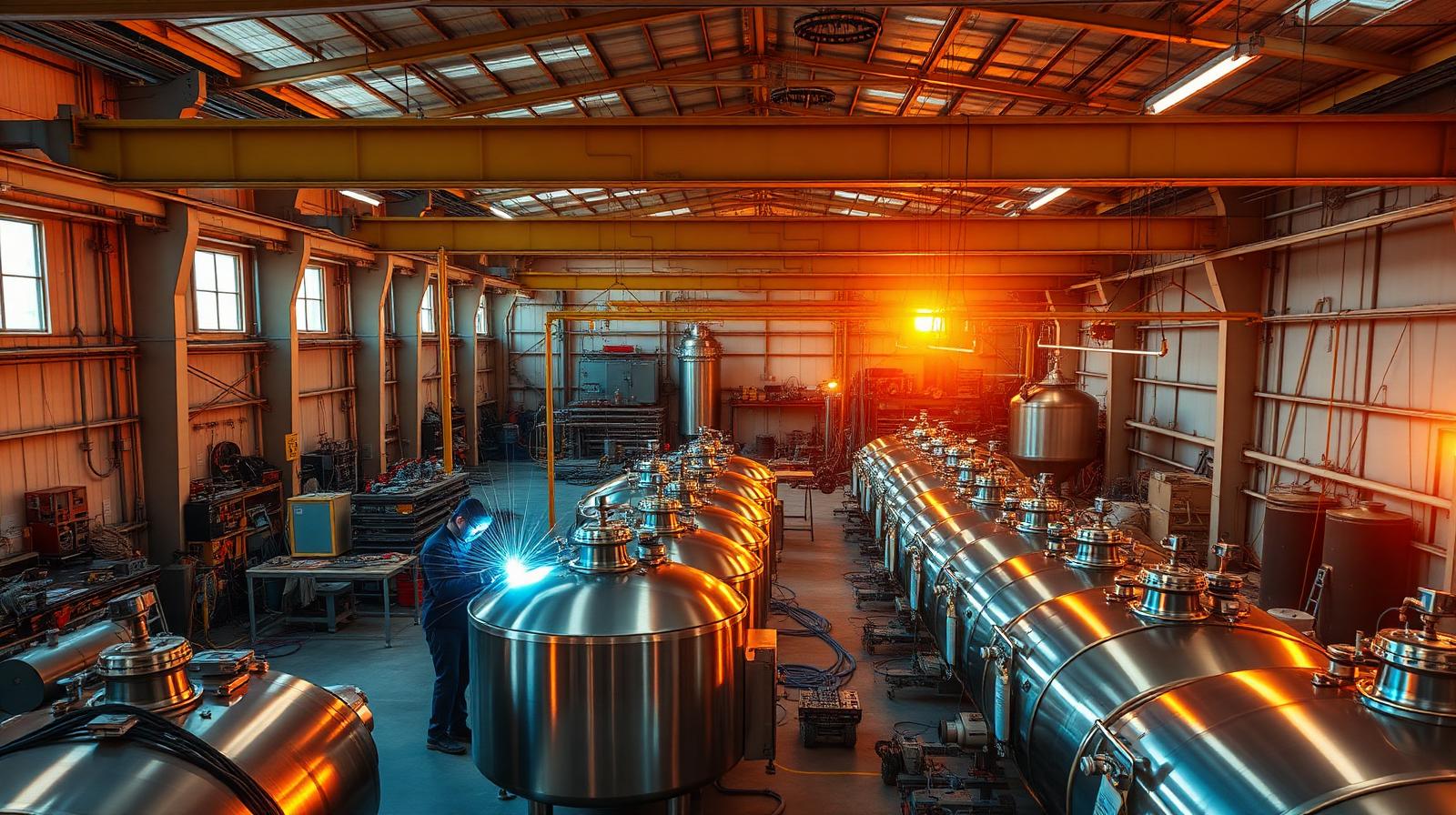
Gulf Coast advanced manufacturing has always been the backbone of American industry. From the refineries lining the Mississippi River to the fabrication yards along Mobile Bay, this stretch of coastline has powered the nation's energy economy for over a century. But the rules of the game are changing, and the manufacturers who thrive in the next decade will be the ones who modernize now.
Gulf Coast advanced manufacturing is not a buzzword. It is a fundamental shift in how industrial businesses design, build, and operate critical systems. For operators across Alabama, Louisiana, and Mississippi, it represents a pivotal opportunity: leverage decades of field expertise and combine it with modern engineering, smarter systems, and a new generation of fabrication capabilities.
At CREATE Industries, we have built our platform specifically around this moment. We work with operators, business owners, and infrastructure developers across the Gulf Coast to do what the region does best, only better, faster, and with an eye on long-term scalability.
Why the Gulf Coast Is Ground Zero for Industrial Modernization
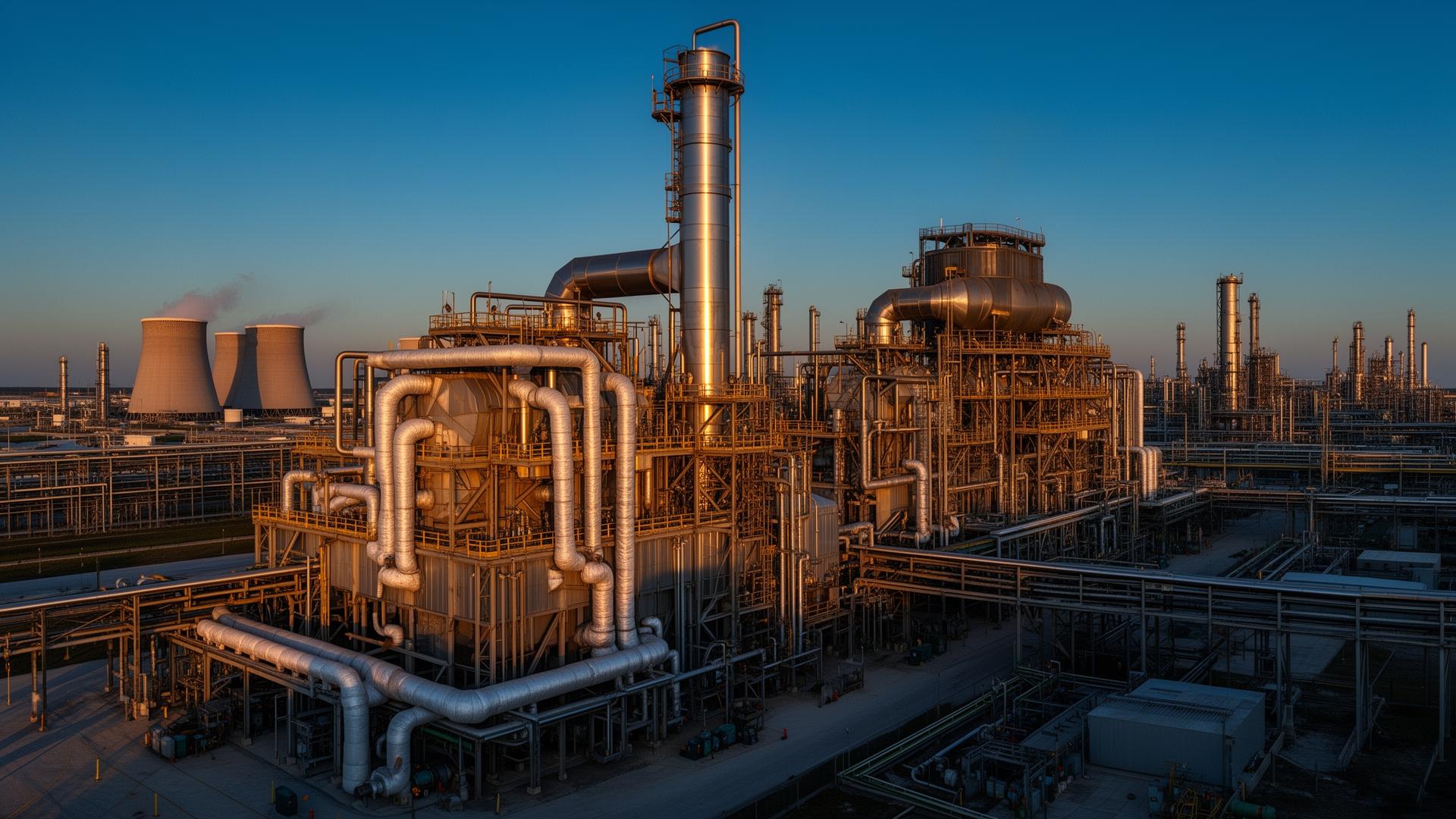
Few regions in the United States carry the industrial footprint of the Gulf Coast. Louisiana, Mississippi, Alabama, and the Texas Gulf Shore collectively account for a massive share of the country's oil and gas output, refining capacity, chemical processing, and marine fabrication. This concentration of industry creates both urgency and opportunity.
The urgency: aging infrastructure, tightening emissions regulations, workforce transitions, and global supply chain pressures are forcing operators to make hard decisions about how they operate. Legacy systems that worked well in the 1990s are now compliance liabilities. Equipment that ran without issue for 20 years now demands capital-intensive upgrades or replacement.
The opportunity: companies that invest in modernization today are positioning themselves to operate more efficiently, comply with regulations proactively, and compete for the next generation of contracts, both in traditional energy markets and in emerging sectors like biogas, waste-to-energy, and renewable fuels.
What Advanced Manufacturing Actually Looks Like on the Ground
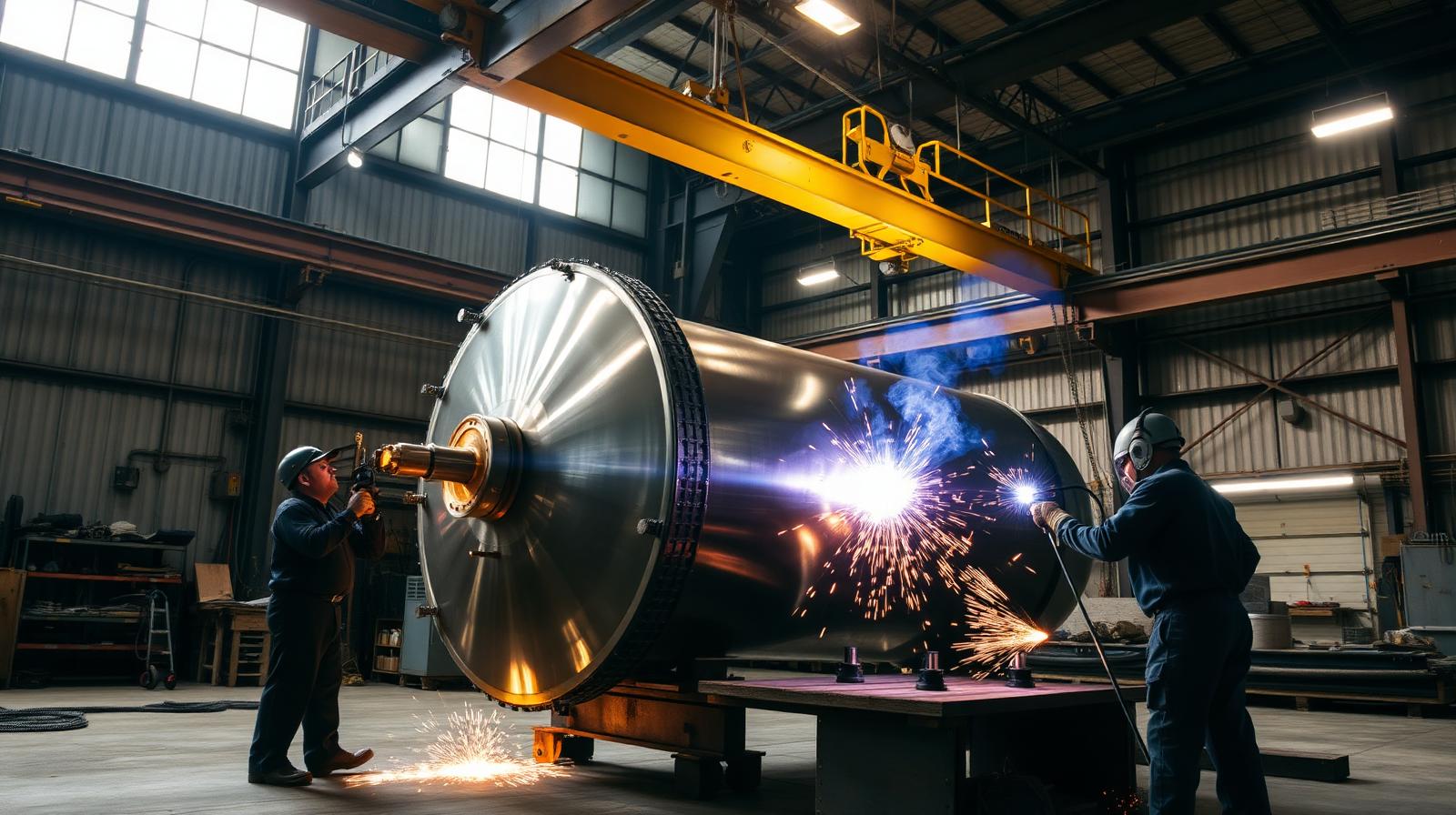
For Gulf Coast industrial businesses, advanced manufacturing is not about robots replacing humans. It is about upgrading how systems are engineered, fabricated, and integrated from concept through commissioning. In practice it includes:
- Custom fabrication designed for real field conditions, not off-the-shelf equipment that has to be retrofitted on-site.
- Engineering-led design that integrates compliance requirements from day one, not as an afterthought.
- Modular systems that can scale as operations grow or as regulations evolve.
- Digital documentation, inspection protocols, and QA systems that reduce rework and accelerate delivery timelines.
- Operator-led project management that understands the difference between a clean blueprint and a functioning field installation.
CREATE Industries operates across all of these dimensions. Our integrated model, engineering, fabrication, installation, and Service, means we can move from concept to commissioned system faster and with fewer handoff failures than traditional project delivery models.
Energy Infrastructure and the New Demands of Gulf Coast Operations
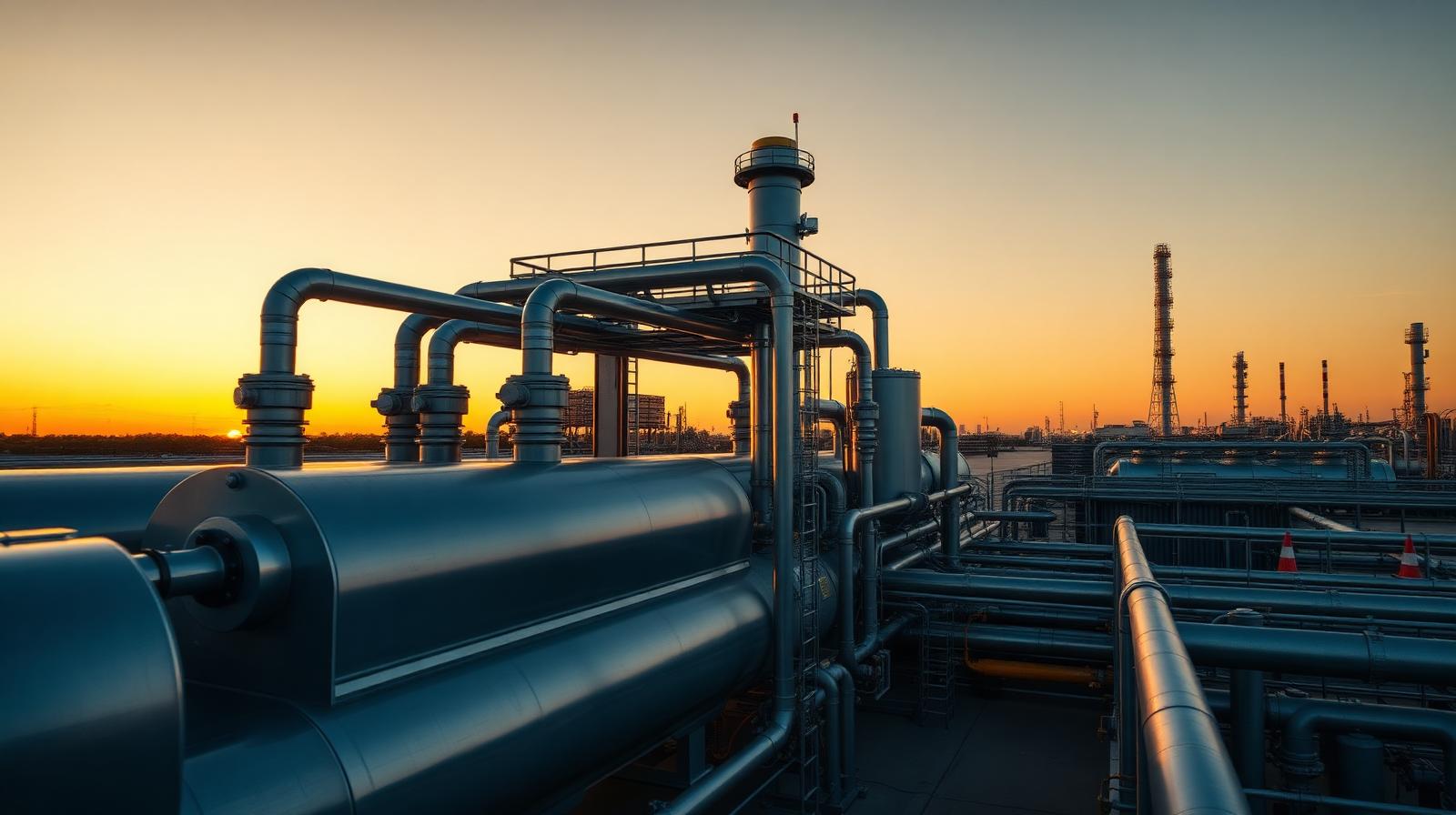
Energy infrastructure along the Gulf Coast is undergoing a generational transformation. Natural gas processing facilities are expanding to meet LNG export demand. Biogas and landfill gas recovery projects are multiplying as municipalities and waste operators look for new revenue streams. Refineries are investing in emissions control and operational efficiency to meet both regulatory requirements and investor expectations.
Each of these growth areas requires sophisticated manufacturing capabilities. Pressure vessels, heat exchangers, combustion systems, and piping assemblies that meet strict API, ASME, and EPA standards do not come off a shelf. They are engineered and built, often to one-of-a-kind specifications, by fabrication teams that understand both the technical requirements and the operational environment they are being built for.
That is where Gulf Coast manufacturers have a natural advantage and where companies like CREATE Industries serve as a force multiplier. We do not just build equipment. We build the right equipment, with the right certifications, designed to integrate into the broader system it will operate within.
Emission Compliance: From Burden to Business Advantage
Few topics generate more anxiety for Gulf Coast industrial operators than emission compliance. The regulatory landscape continues to evolve, with EPA rules on volatile organic compounds (VOCs), nitrogen oxides (NOx), and hazardous air pollutants growing more stringent across oil and gas, waste management, and industrial processing sectors.
For operators running older equipment, compliance can feel like a never-ending cost center. But the companies that are winning in this environment have reframed the conversation entirely. They are treating emission compliance not as a burden but as a systems engineering challenge, and in doing so, they are finding efficiency gains and operational improvements they did not anticipate.
Thermal Oxidizers are a perfect example. When properly engineered and maintained, a Thermal Oxidizer does not just destroy VOCs; it recovers heat, reduces fuel consumption, and demonstrates to regulators, partners, and customers that your operation is running at a high level. CREATE Industries designs, builds, and services Thermal Oxidizer systems across the Gulf Coast, helping operators meet permit requirements while improving overall site performance.
Modernizing Legacy Industrial Businesses: The Untapped Opportunity
Some of the most valuable industrial businesses on the Gulf Coast are also the most overlooked candidates for modernization. These are established operators, many of them family-owned or founder-led, that have been running the same core processes for 20 or 30 years. Their crews are experienced. Their relationships are deep. Their backlogs are full.
But their systems, processes, and infrastructure often have not kept pace with what is now possible: manual workflows that could be automated, aging equipment that is consuming maintenance budgets at an accelerating rate, operational data that exists only in someone's head rather than in a system that can be analyzed or acted upon.
Modernizing these businesses does not mean tearing out everything and starting over. It means identifying the highest-leverage upgrade opportunities and executing them in a sequence that preserves operational continuity while unlocking new performance. CREATE Industries works alongside business owners and leadership teams to do exactly this, not as outside consultants but as operators who have run these kinds of businesses ourselves.
The Future of Gulf Coast Advanced Manufacturing
Gulf Coast advanced manufacturing is not slowing down; it is accelerating. The region's geographic advantages, deepwater ports, existing pipeline infrastructure, and proximity to domestic energy resources, are durable. What is changing is the standard of execution required to compete.
Advanced manufacturing, energy infrastructure investment, emission compliance, and business modernization are not four separate initiatives. They are four dimensions of a single imperative: running better industrial operations. Companies that connect these dots will outperform. Those that treat each as an isolated project will find themselves falling behind on all four fronts.
The blue flame burns hottest and cleanest when everything is working together. That is the standard we hold ourselves to and the standard we help our partners achieve.
The Hidden Costs of Aging Equipment
The maintenance line item is visible. These costs tend to disappear into the background until they do not:
- Reactive maintenance premium: emergency labor, expedited parts, and the cascading cost of unplanned downtime
- Compliance buffer spending: extra monitoring, inspections, audits, and legal review that modern systems would not need
- Bid exclusions: larger energy companies and municipalities increasingly screen vendors on equipment age, certification, and emissions documentation
- Workforce and knowledge risk: critical system knowledge held in the heads of operators nearing retirement rather than in documented processes
- Valuation discount: buyers and investors discount businesses with aging infrastructure and undocumented processes
Building the Business Case and Roadmap
Total cost of ownership analysis is the most persuasive tool. Add the annual maintenance cost of legacy equipment, production losses from downtime, the energy premium from reduced efficiency, and compliance risk exposure, then compare it against the annualized cost of a replacement system. The payback period is often much shorter than leadership expects.
Start with an honest assessment of every significant system: technical condition, operational performance, maintenance history, compliance status, and strategic importance. Then prioritize:
- Top of list: systems closest to failure, with the greatest compliance risk, or with the largest facility-wide impact
- Mid-priority: aging but reliable systems with manageable maintenance costs and low compliance exposure
- Planned cycle: equipment in adequate condition that fits a future replacement window
A phased three to five year plan with defined milestones is a far easier organizational sell than one large capital request, and it captures the highest-priority benefits first. Along the way, build in controls and data infrastructure, process automation where ROI justifies it, a shift from reactive to preventive and predictive maintenance, workforce training, and KPIs that track the return on the investment.
Modernizing Without Shutting Down
For most operations, a prolonged shutdown is not economically viable: lost production revenue can dwarf the cost of the project itself. Modernization works best as a phased, planned program that keeps critical systems running while components are systematically replaced and upgraded.
That requires close coordination between engineering, fabrication, and operations, and it rewards partners who meet tight delivery schedules, provide dimensionally accurate equipment that minimizes field modification, and support rapid installation inside an operating facility. The operators who do this best treat modernization as a continuous program rather than a one-time project.
Frequently Asked Questions
What is Gulf Coast advanced manufacturing?
Gulf Coast advanced manufacturing is the modernization of how industrial businesses across Texas, Louisiana, Mississippi, and Alabama design, fabricate, and operate critical systems, combining engineering-led design, custom fabrication, modular systems, and integrated digital QA to outperform legacy off-the-shelf approaches.
Why is the Gulf Coast a focus for industrial modernization?
The Gulf Coast holds a massive concentration of refining, oil and gas, chemical processing, and marine fabrication. Aging infrastructure, tightening EPA standards, workforce transitions, and supply-chain pressure are forcing operators to modernize now to remain competitive in both traditional energy and emerging biogas, waste-to-energy, and renewable fuel markets.
How does CREATE Industries support advanced manufacturing on the Gulf Coast?
CREATE Industries operates an integrated platform, engineering, custom fabrication, installation, and Service, that moves Gulf Coast operators from concept to commissioned system faster, with fewer handoff failures, and with compliance engineered in from day one rather than retrofitted.
Can emission compliance be turned into a business advantage?
Yes. When emission compliance is treated as a systems engineering challenge rather than a cost center, operators capture efficiency gains. A properly engineered Thermal Oxidizer, for example, can destroy VOCs while recovering heat, reducing fuel use, and demonstrating high operating standards to regulators and customers.
What does modernizing a legacy industrial business actually involve?
It does not mean tearing everything out. It means identifying the highest-leverage upgrade opportunities, combustion, controls, monitoring, documentation, and executing them in a sequence that preserves operational continuity while unlocking new performance over time.
Which industries benefit most from advanced manufacturing solutions?
Oil and gas, LNG, biogas and landfill gas recovery, refining, chemical processing, and marine fabrication operators all benefit because their systems require API, ASME, and EPA-compliant equipment engineered to specific process and site conditions, exactly where advanced manufacturing outperforms catalog supply.
Build Smarter. Stay Compliant. Scale With Confidence.
Talk with CREATE Industries about engineering, custom fabrication, and Thermal Oxidizer Service for your Gulf Coast operation.
Start a Project