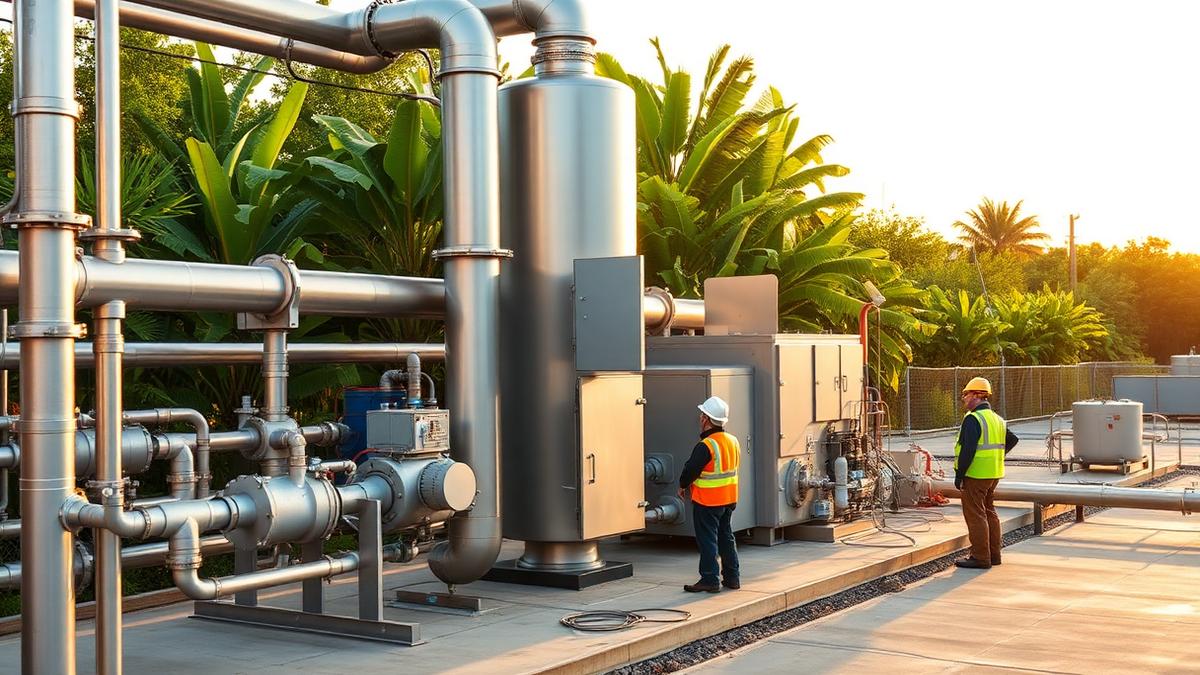
The Gulf Coast is one of the most industrially active corridors in the United States, and Mobile, Alabama sits right at the heart of it. Between the Port of Mobile, the region's dense refining and petrochemical infrastructure, growing wastewater and municipal gas operations, and expanding renewable energy projects, Gulf Coast operators face both significant opportunity and serious regulatory pressure when it comes to biogas and emissions management.
Industrial biogas system installation in this region isn't like installing systems in a generic industrial park. Gulf Coast sites deal with high humidity, salt air corrosion, hurricane exposure, complex permitting under Alabama Department of Environmental Management (ADEM) and EPA oversight, and infrastructure that often dates back decades. Getting the installation right the first time matters because the cost of getting it wrong in this environment is high.
Gulf Coast Rated
Marine-grade materials, hurricane-rated structures, and corrosion-resistant fabrication built for this region.
ADEM & EPA Compliance
Permitting support and emissions control designed to meet Alabama and federal regulatory requirements from day one.
Full-Service Installation
Site assessment through commissioning and ongoing environmental services: one team, one accountability chain.
Why the Gulf Coast Is a High-Stakes Environment for Biogas Installation
Gulf Coast industrial facilities operate in conditions that stress equipment harder than most other regions in the country. Before any installation begins, operators and their engineering partners need to account for several critical factors that separate successful projects from costly failures.
Climate and Corrosion Factors
- High relative humidity year-round: Accelerates corrosion in piping, fittings, and electrical enclosures
- Salt air from Mobile Bay and the Gulf: Requires marine-grade material specifications for exposed components
- Summer heat extremes: Impact gas conditioning equipment sizing and heat exchanger performance
- Hurricane and tropical storm exposure: Requires structural reinforcement of skids, vessels, and support systems
Regulatory Environment
- ADEM air permit requirements: For biogas combustion and flaring operations
- EPA New Source Performance Standards (NSPS): For landfill gas and oil and gas facilities
- Title V operating permit thresholds: For VOC, H₂S, NOx, and methane emissions
- Port of Mobile and industrial zone-specific: Zoning and operational constraints
Operators who work with engineering partners unfamiliar with Gulf Coast-specific conditions often discover these gaps only after installation: during an inspection, a startup failure, or a permit violation. That's an expensive lesson.
Emissions Control Solutions for Oil and Gas Operators in Mobile, AL
For oil and gas operators in and around Mobile, the regulatory landscape has tightened considerably over the past decade. Emissions control solutions for oil and gas facilities in the Gulf Coast region must now address a broader range of pollutants and demonstrate compliance proactively, not reactively.
The most common emissions challenges CREATE encounters at Gulf Coast oil and gas and related industrial sites include:
- H₂S management: Hydrogen sulfide concentrations in Gulf Coast biogas and sour gas streams tend to be elevated. Scrubbing systems must be sized correctly for actual site conditions, not default assumptions.
- VOC control: Mobile County sits within a broader Alabama air quality monitoring region, and VOC emissions from combustion, venting, and fugitive sources require documented control strategies.
- Flare compliance: Enclosed flares and combustion devices must meet EPA 98% destruction efficiency requirements, with proper monitoring and recordkeeping in place.
- Methane slip from engine-generator sets: CHP units running on biogas must be optimized to minimize unburned methane, which counts against facility GHG reporting thresholds.
- Siloxane fouling: Particularly relevant in municipal wastewater and landfill gas applications common to the Mobile metro area, where siloxane buildup in combustion equipment is a chronic maintenance driver if not addressed upstream.
At CREATE, our approach embeds emissions compliance into the system design not as a checkbox at the end, but as an engineering constraint from the first conversation.
Industries in the Mobile, AL Region That Rely on Biogas Infrastructure
The Greater Mobile area and broader Gulf Coast corridor support a diverse industrial base, many of which are active or emerging biogas and emissions control customers:
- Port of Mobile operations: One of the largest U.S. ports by tonnage, with growing interest in LNG and alternative fuel infrastructure
- Municipal wastewater treatment: Mobile Area Water and Sewer System (MAWSS) and surrounding municipal utilities managing digester gas
- Solid waste and landfill operations: Regional landfills in Mobile and Baldwin counties managing LFG collection and beneficial reuse
- Petrochemical and refining facilities: Along the I-65 and I-10 industrial corridors, managing associated gas, flares, and air permit compliance
- Food and beverage manufacturing: Growing cluster of Gulf Coast food processors with anaerobic digestion potential in organic waste streams
- Bio-science and pharmaceutical manufacturing: Expanding in the Mobile metro, with waste gas handling and air permitting needs
- Industrial manufacturing and fabrication: The region's manufacturing base supports a wide range of process gas and emissions control applications
What a Gulf Coast Biogas System Installation Actually Involves
A properly engineered industrial biogas system installation in the Gulf Coast region moves through several critical phases:
Phase 1: Site Assessment and Gas Characterization
We analyze actual biogas composition from the source: landfill, digester, or process stream rather than relying on published averages. Gulf Coast gas streams frequently have higher H₂S and moisture content than national norms, which directly affects equipment sizing, materials selection, and emissions control design.
Phase 2: Engineering and Permitting Support
CREATE's engineering team develops process flow diagrams, P&IDs, and equipment specifications aligned with ADEM and EPA permit requirements. We work with operators and their environmental consultants to support the air permit application process: helping avoid the costly back-and-forth that comes from submitting underspecified designs.
Phase 3: Gulf Coast-Rated Fabrication
Our fabrication facility builds equipment to Gulf Coast environmental standards: coated and lined piping systems, NEMA 4X or better electrical enclosures, marine-grade fasteners and hardware, and structural frames rated for wind loads consistent with the region's hurricane exposure zones.
Phase 4: Field Installation and Commissioning
Our field teams are experienced working in Gulf Coast industrial environments: confined spaces, hot and humid conditions, active process facilities, and sites with complex permitting constraints. We commission systems with emissions performance testing built into the handoff, so operators start with documented compliance from day one.
Phase 5: Ongoing Environmental Services
Post-commissioning, CREATE's environmental services division supports ADEM compliance reporting, continuous emissions monitoring system (CEMS) integration, periodic performance testing, and system optimization: keeping Gulf Coast operators in good standing without managing it alone.
Serving Mobile, AL and the Gulf Coast Region
CREATE Industries is headquartered in the Southeast USA and actively serves industrial operators along the Gulf Coast: from Mobile and the Eastern Shore, west through the Mississippi Gulf Coast, and across the broader I-10 and I-65 industrial corridors.
We understand this region's regulatory environment, its weather, its infrastructure challenges, and its industries. Our team has completed industrial biogas system installation Gulf Coast projects here, maintained systems here, and helped operators navigate ADEM permit processes here: not just read about it.
When it comes to emissions control solutions for oil and gas facilities in Mobile, AL and across the Gulf Coast, we don't offer off-the-shelf answers. We engineer compliance into every system from the ground up because in this region, the stakes are too high for anything less.
If you're scoping a biogas installation, upgrading aging emissions control equipment, or working through a permit compliance challenge in Mobile or anywhere along the Gulf Coast, we want to hear from you.
Frequently Asked Questions
What is involved in an industrial biogas system installation on the Gulf Coast?
A Gulf Coast biogas system installation includes site assessment and gas characterization, engineering and permitting support aligned with ADEM and EPA requirements, fabrication using marine-grade and hurricane-rated materials, field installation and commissioning with emissions performance testing, and ongoing environmental services for compliance reporting and system optimization.
Why does Gulf Coast biogas installation require specialized engineering?
Gulf Coast facilities face unique challenges: high humidity and salt air accelerate corrosion, hurricane exposure demands structural reinforcement, and elevated H2S and moisture content in regional gas streams require site-specific equipment sizing. Generic designs often fail under these conditions, making region-specific engineering essential.
What emissions control solutions are required for oil and gas operators in Mobile, AL?
Mobile-area oil and gas operators need comprehensive emissions control addressing H2S management, VOC control, flare compliance meeting EPA 98% destruction efficiency, methane slip optimization from engine-generator sets, and siloxane fouling prevention: all documented for ADEM and EPA compliance.
Which industries in the Mobile, AL region use biogas infrastructure?
Key industries include Port of Mobile operations with growing LNG interest, municipal wastewater treatment facilities like MAWSS, regional landfills in Mobile and Baldwin counties, petrochemical and refining facilities along the I-65 and I-10 corridors, food and beverage manufacturing, bio-science and pharmaceutical manufacturing, and general industrial manufacturing.
How does CREATE Industries support Gulf Coast operators after installation?
Post-commissioning, CREATE's environmental services division supports ADEM compliance reporting, CEMS integration, periodic performance testing, and system optimization: keeping Gulf Coast operators in good standing without managing it alone.
Ready to Discuss Your Gulf Coast Biogas Project?
From site assessment and ADEM permitting to Gulf Coast-rated fabrication and ongoing environmental services, CREATE Industries delivers integrated biogas solutions built for this region.
Get In Touch