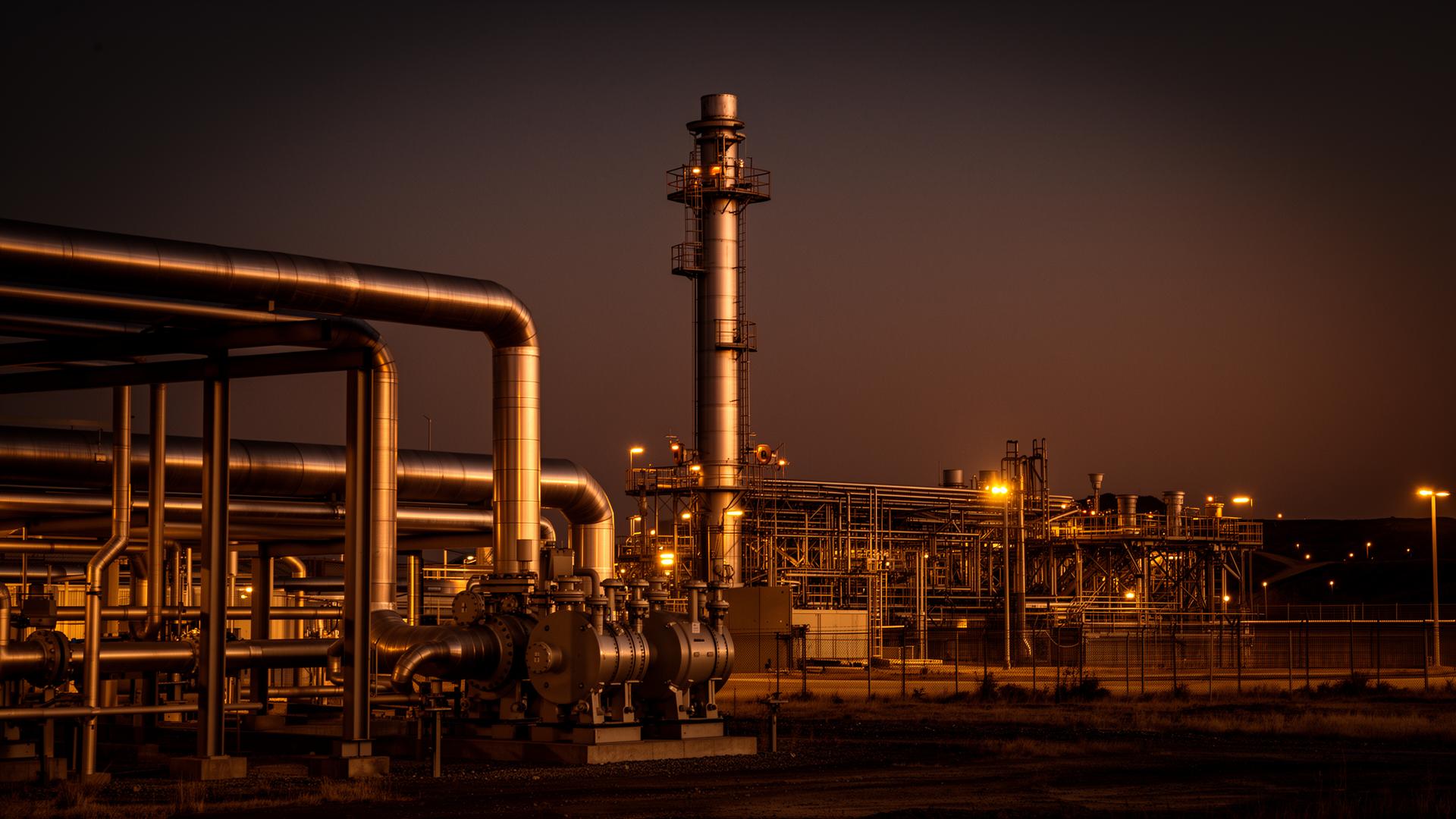
Environmental regulations are becoming stricter, energy demands are rising, and infrastructure systems across the United States are aging. Industrial facilities, landfill operators, and waste management companies must now balance compliance, operational efficiency, and sustainability. At the center of this transformation is the growing demand for advanced landfill emissions control solutions supported by integrated engineering expertise.
Landfills generate methane and other gases as waste decomposes. Without proper control systems, these emissions can harm the environment, violate regulatory standards, and create safety risks. Modern landfill operations require strategic planning, durable equipment, and comprehensive engineering support to remain compliant and efficient.
Compliance
Meet federal and state emissions standards from day one.
Reliability
Engineered systems built to perform in harsh conditions.
Lifecycle Support
From design through commissioning and ongoing maintenance.
The Role of Full-Service Industrial Engineering
Effective environmental infrastructure cannot be built using fragmented contractors. This is where full-service industrial engineering becomes essential. Rather than separating design, fabrication, installation, and maintenance into disconnected phases, a full-service approach integrates every stage of the project lifecycle.
This model ensures:
- Engineering designs match fabrication capabilities
- Compliance standards are addressed from the beginning
- Installation teams follow exact system specifications
- Project timelines remain predictable
- Long-term operational reliability is prioritized
By adopting full-service industrial engineering, landfill operators and industrial facilities reduce risk while improving overall system performance.
Why Landfill Emissions Control Solutions Are Critical
Methane is one of the most potent greenhouse gases. Federal and state environmental agencies require landfill operators to capture, monitor, and treat landfill gas to reduce environmental impact.
Modern landfill emissions control solutions are designed to:
- Capture methane safely
- Reduce greenhouse gas output
- Improve air quality compliance
- Support renewable energy conversion
- Protect surrounding communities
These systems are not optional; they are regulatory necessities. Facilities without properly engineered landfill emissions control solutions risk financial penalties, legal consequences, and reputational damage.
Engineering Customized Emission Systems
Every landfill site has unique gas production rates, pressure levels, and environmental conditions. A standardized system rarely performs efficiently across different sites. That is why landfill emissions control solutions must be custom engineered.
Engineering teams evaluate:
- Gas flow volumes
- Flare sizing requirements
- Blower capacity
- Piping network layout
- Monitoring and reporting needs
Through precise analysis and modeling, engineers design systems that maximize gas capture efficiency while maintaining safety and compliance. When landfill emissions control solutions are engineered correctly, facilities experience improved performance and reduced operational disruptions.
Fabrication That Ensures Durability
Once systems are engineered, fabrication quality determines long-term success. Environmental equipment operates in harsh conditions, often exposed to corrosive gases and extreme temperature fluctuations.
Precision fabrication includes:
- Gas collection skids
- Structural steel supports
- Heavy-duty piping systems
- Flare stacks
- Custom environmental processing units
By integrating fabrication into a full-service industrial engineering model, designs align seamlessly with production capabilities. This coordination eliminates costly redesigns and ensures durability under real-world conditions. Learn more about our fabrication and engineering capabilities.
Installation and Mechanical Integration
Engineering and fabrication are only part of the solution. Proper mechanical and electrical integration ensures landfill emissions control solutions operate effectively from day one.
Installation teams manage:
- Equipment alignment and placement
- Electrical wiring and control systems
- Sensor configuration
- Performance testing
- Commissioning and startup
When executed under a unified structure, full-service industrial engineering ensures smooth transitions between design, fabrication, and field execution.
Automation and Monitoring for Compliance
Environmental regulations require precise monitoring and documentation. Automation enhances landfill emissions control solutions by providing real-time performance data.
Modern monitoring systems can:
- Measure methane concentration levels
- Track gas pressure and flow
- Detect irregularities
- Generate automated compliance reports
- Trigger safety alerts
Integrating automation strengthens environmental accountability while improving operational efficiency. Full-service industrial engineering incorporates these smart systems directly into the infrastructure design.
Supporting Renewable Energy Through Gas Recovery
Landfill gas, when captured effectively, can be converted into renewable energy. This transforms environmental compliance into an economic opportunity.
Energy recovery projects rely on advanced landfill emissions control solutions that:
- Capture gas efficiently
- Filter impurities
- Compress and transport methane
- Integrate with energy production systems
By combining emission control with renewable energy systems, facilities can reduce waste while generating value. Explore our environmental services to learn more.
Infrastructure Modernization Beyond Landfills
While landfill emissions control solutions are a key focus, integrated engineering services also support broader industrial sectors such as:
- Oil & Gas
- Biogas facilities
- Wastewater treatment plants
- Power generation stations
- Manufacturing operations
Aging infrastructure across these sectors requires modernization. Full-service industrial engineering enables facilities to upgrade emission systems, implement automation, reinforce structural components, and improve energy efficiency without disrupting operations. See our full range of industries we serve.
The Lifecycle Advantage
A lifecycle approach ensures continuity from concept to completion and beyond. Rather than treating each phase separately, integrated teams manage:
- Engineering and system design
- Custom fabrication
- Environmental compliance integration
- Installation and commissioning
- Ongoing maintenance and support
This approach reduces project delays, improves accountability, and enhances long-term system reliability. Facilities that invest in landfill emissions control solutions through a lifecycle model experience better cost control and fewer operational surprises.
Long-Term Performance and Strategic Growth
Industrial infrastructure is a long-term investment. Systems must remain compliant and efficient for decades. Poorly engineered solutions can result in maintenance challenges, downtime, and increased expenses.
By combining landfill emissions control solutions with full-service industrial engineering, organizations benefit from:
- Greater operational uptime
- Reduced lifecycle costs
- Improved environmental compliance
- Enhanced safety standards
- Scalable infrastructure expansion
Strategic engineering decisions today create measurable operational advantages tomorrow.
Conclusion
As environmental standards tighten and infrastructure demands grow, companies must adopt smarter, integrated solutions. Advanced landfill emissions control solutions are essential for regulatory compliance, sustainability, and renewable energy opportunities. When supported by full-service industrial engineering, these systems deliver long-term reliability, operational efficiency, and environmental responsibility.
For organizations seeking comprehensive environmental and industrial infrastructure expertise, CREATE Industries provides the integrated capabilities needed to design, fabricate, and implement high-performance solutions with confidence.
Ready to Engineer Your Emissions Control Solution?
From custom fabrication to full-system installation, CREATE Industries delivers integrated landfill emissions control infrastructure built to last.
Get In TouchFrequently Asked Questions
What is landfill gas and why is methane control required?
Landfill gas is a natural byproduct of decomposing organic waste in landfills. It primarily consists of methane and carbon dioxide. Methane is a potent greenhouse gas, over 80 times more effective at trapping heat than CO₂ in the short term. Federal and state regulations, including EPA's New Source Performance Standards (NSPS), require landfill operators to capture and control methane emissions to protect air quality, public health, and the environment.
Why is a full-service approach better than multiple contractors?
A full-service industrial engineering approach integrates design, fabrication, installation, and maintenance under one team. This eliminates communication gaps between contractors, ensures engineering designs match fabrication capabilities, reduces project delays, and improves long-term system reliability. It also simplifies accountability, one partner owns the outcome from concept to commissioning.
Can landfill gas be converted into usable energy?
Yes. When captured effectively, landfill gas can be processed and converted into renewable natural gas (RNG) or used to generate electricity. This transforms an environmental compliance obligation into an economic opportunity, reducing waste while producing clean energy that can be sold or used on-site.