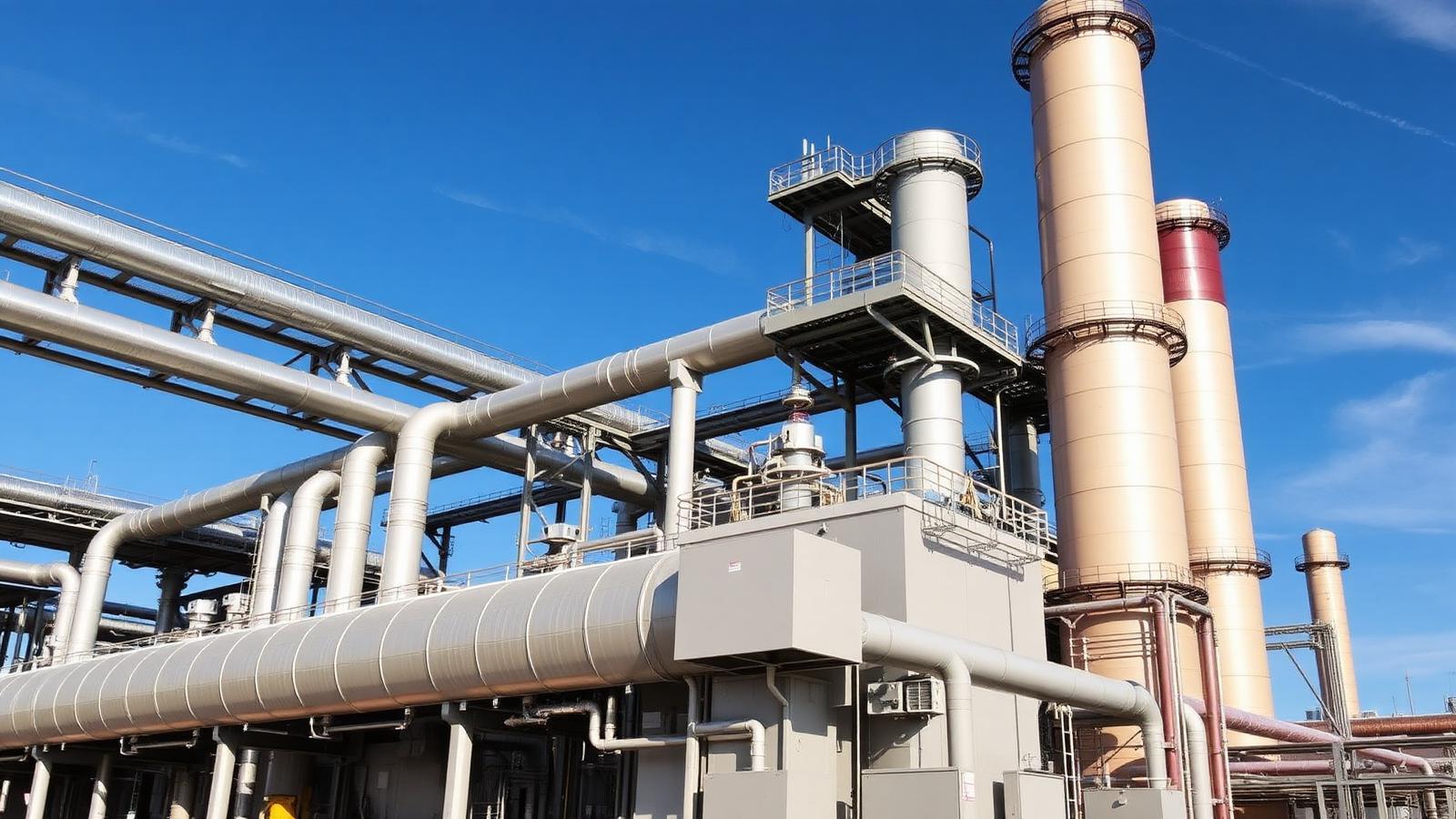
When a CEMS Goes Dark: How a Field Diagnostic Restored Lost Emissions Data and Surfaced a Hidden Title V Risk
For a Title V facility, the Continuous Emissions Monitoring System (CEMS) is not a convenience. It is the evidence file. Every hour of data it records is what tells a regulator that your stack is operating inside its permit. So when that data feed goes quiet, the problem is never just a piece of hardware acting up. It is a gap opening in the one record you are legally required to keep.
That is exactly the situation a national protective-packaging manufacturer found itself in at one of its production plants. The CEMS attached to its Regenerative Thermal Oxidizer (RTO) had stopped feeding data to the workstation that records it. The maintenance team did not know how much data had been lost, whether older records had survived, or what had caused the failure in the first place. They needed a partner who understood both the RTO and the monitoring system bolted to it, and who could get on site fast from across the country.
Key Takeaways
- A CEMS data outage at a Title V facility is a compliance event, not just a maintenance ticket, because continuous emissions data is the legal backbone of the permit.
- The root cause was small and unglamorous: a failed backup battery reset the system clock, which broke the data handshake between the CEMS and its recording workstation.
- The plant's archived one-hour averaged data survived intact, so the compliance record itself was never lost, the worst-case outcome was avoided.
- The deeper find was a false VOC signal: the RTO's natural gas injection was being counted as VOC by the CEMS, inflating hydrocarbon readings and creating real Title V penalty exposure.
- Diagnosing the whole system, not just the reported symptom, is what separated a routine repair from a genuine compliance save.
The Challenge: A Title V Plant With a Blind Spot
Continuous emissions data is the foundation of Title V compliance under the Clean Air Act. The permit assumes the facility can demonstrate, hour by hour, that its emissions stayed within limits. A CEMS that has gone dark cannot make that demonstration. Worse, when nobody is sure whether historical data survived, the facility cannot even say with confidence how large the gap is.
At this California plant, the symptoms were straightforward but alarming. The CEMS had stopped sending readings to the workstation that logs them. The maintenance team was staring at an emissions record with a hole in it and no clear read on whether the data already captured was recoverable.
The team needed three things at once: someone who understood the RTO, someone who understood the CEMS, and someone who could be on site quickly. Most vendors do one of those well. Combustion specialists often do not touch the monitoring electronics, and instrumentation technicians often do not understand the oxidizer driving the readings.
The Engagement: Scoped in Two Days, On Site in Two Weeks
The plant's Maintenance Manager reached out directly. The work was scoped, analyzed, and quoted within two days, and a field engineer was on site inside two weeks. The engagement was deliberately structured in two parts so that no time was wasted once boots hit the ground.
The first part was a remote review. Before anyone traveled, CREATE's engineer studied the RTO and CEMS data the plant supplied, narrowing the likely fault so the on-site visit could move straight to confirmation and repair rather than open-ended hunting. The second part was a full-day on-site field assessment to verify the diagnosis, restore the system, and document everything found.
What the Engineer Found On Site
On the day of the assessment, the engineer traced the full sampling path end to end, from the RTO inlet and stack, along the heat tracer line, all the way to the CEMS cabinet. Tracing the whole path matters because a monitoring fault can hide anywhere between where the sample is drawn and where it is read.
The CEMS control panel was offline. Once it was repowered, the HMI told the story. A failed backup battery had allowed the system clock to reset to factory defaults. That single reset was the entire cause of the outage. The clock mismatch had broken the handshake between the CEMS and the recording workstation, so the workstation could no longer pull current readings, and the unit's temporary memory had been cleared in the process.
Here is the detail that changed the whole tenor of the visit: the plant's one-hour averaged data log was still archived and intact. The compliance record, the data the facility is actually required to retain and report, had survived.
The Hidden Find: A False VOC Signal and a Title V Exposure
CREATE did not stop once the data feed was restored. While reviewing the emissions data, the engineer caught something the plant had not flagged: VOC readings were spiking every time the RTO switched chambers.
In a regenerative thermal oxidizer, the airflow periodically reverses between ceramic media beds to recover heat. That chamber switch is normal. The VOC spikes lined up with it were not. The engineer traced the cause to the natural gas injection method. The system was introducing natural gas that the CEMS was counting as VOC. Because raw natural gas reads as unburned hydrocarbon to the analyzer, every injection was inflating the total hydrocarbon number the facility was reporting.
The engineer also reconstructed the likely mechanical chain behind it. Worn saddle media was lowering the RTO's thermal efficiency. Lower thermal efficiency drove a higher natural gas injection rate to hold the required temperature. The higher injection rate produced incomplete combustion and a higher measured outlet VOC. One worn component at the bottom was quietly rippling all the way up into the compliance record at the top.
The Results
- The lost CEMS data feed was restored, and the archived one-hour data was confirmed intact, closing the immediate compliance concern.
- A field report was delivered with a clear root cause and prioritized recommendations the plant could act on in order.
- A Title V penalty risk was identified that the plant had not been aware of, with the mechanism behind it explained, not just the symptom flagged.
- The work was completed and closed on schedule, and CREATE was retained for follow-on support.
What CREATE Recommended Next
- An engineering assessment to push destruction efficiency toward 99 percent, using a recirculation system and a shorter cycle time.
- Taking the natural gas injection system out of routine operation to remove the false VOC contribution from the data entirely.
- Targeted saddle media replacement, only where needed, rather than a wholesale and expensive media swap.
- A cleanout tray and inspection door to make future media maintenance faster and cheaper.
- Insulation repair for a visible hot spot, and a correctly sized burner, to bring the unit's thermal profile back where it belongs.
Warning Signs Your CEMS Is Drifting Toward a Problem
- Readings that move with the equipment cycle: If a value spikes or dips in lockstep with a mechanical event, treat that correlation as a clue, not noise.
- Numbers that drift in one direction over weeks: A slow, steady climb or decline in a baseline often signals analyzer drift or a developing fault in the sample path.
- Climbing fuel use with no process change: If the oxidizer is burning more natural gas to do the same work, thermal efficiency is slipping.
- Recurring minor faults you keep clearing: Repeated small alarms and intermittent communication errors are how aging components tell you they are near the end.
- Data that "looks fine" but nobody has audited: The most dangerous CEMS is the one everyone trusts because it has never thrown an obvious error.
Frequently Asked Questions
What is a CEMS and why is it critical for Title V facilities?
A Continuous Emissions Monitoring System (CEMS) measures and records pollutant concentrations leaving a stack on an ongoing basis. For a Title V facility under the Clean Air Act, that continuous data is the primary evidence used to demonstrate the facility is operating within its permit limits. If the CEMS stops recording, the facility can lose the ability to prove compliance for that period.
What happens to compliance if CEMS data is lost?
It depends on whether the archived, averaged data survived. In this case, the plant's one-hour averaged log remained intact even though the system's temporary memory had cleared, so the official compliance record was preserved. The risk is greatest when the archived data itself is lost, which can create a reportable monitoring gap.
Why would an RTO cause false high VOC readings?
If a regenerative thermal oxidizer injects natural gas to maintain temperature, the analyzer can count that raw natural gas as volatile organic compounds (VOC), because unburned hydrocarbon reads the same way. The result is an inflated total hydrocarbon number that does not reflect actual emissions, but still appears in the compliance record.
How fast can a field diagnostic be scheduled?
In this engagement, the work was scoped and quoted within two days and a field engineer was on site within two weeks, with a remote data review completed first so the on-site visit went straight to confirmation and repair.
Who should service an RTO and its CEMS, one vendor or two?
Ideally one partner who understands both the combustion system and the monitoring instrumentation. Splitting the work risks two disconnected diagnoses, which is exactly how a problem like a worn-media-to-false-VOC chain goes unnoticed.
CEMS Down or Data You Cannot Defend?
CREATE Industries diagnoses the RTO and the CEMS as one connected system, fast. Get a field engineer on site before a data gap becomes a violation.
Talk to an Engineer