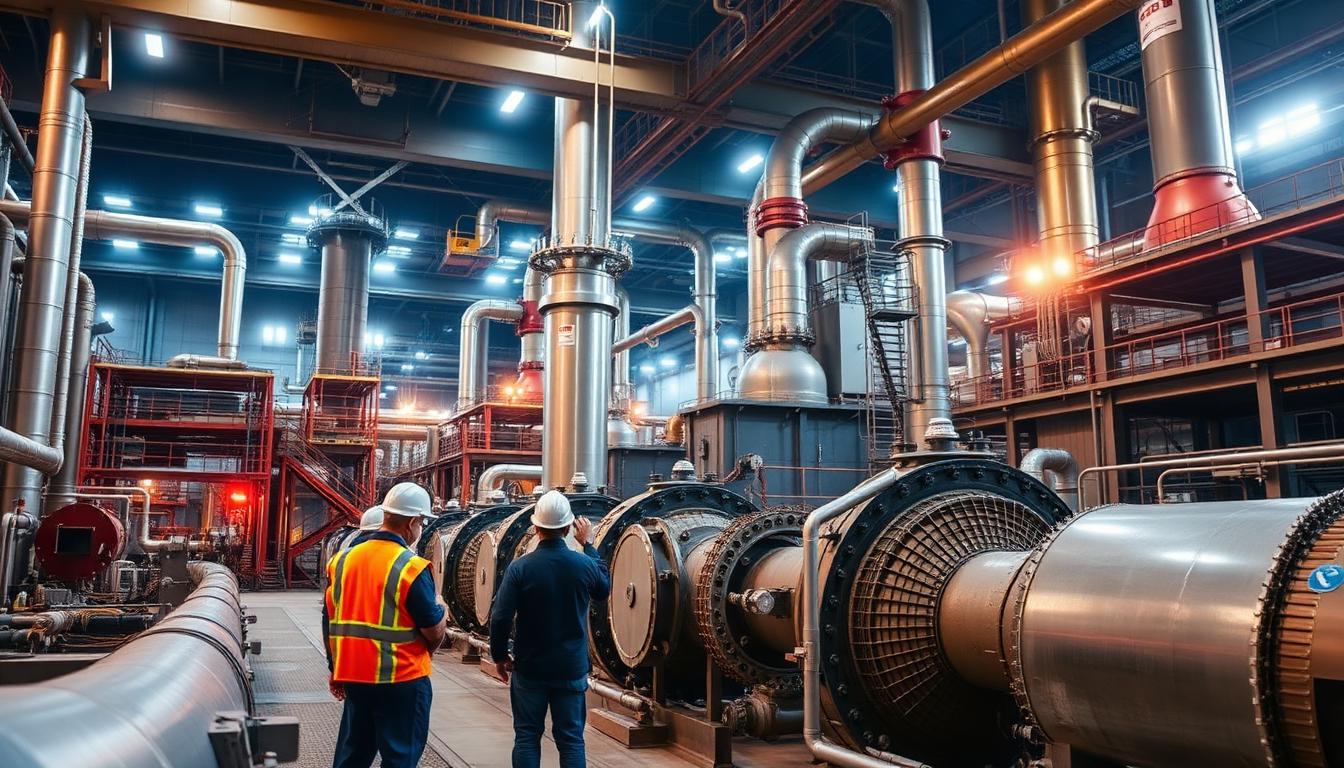
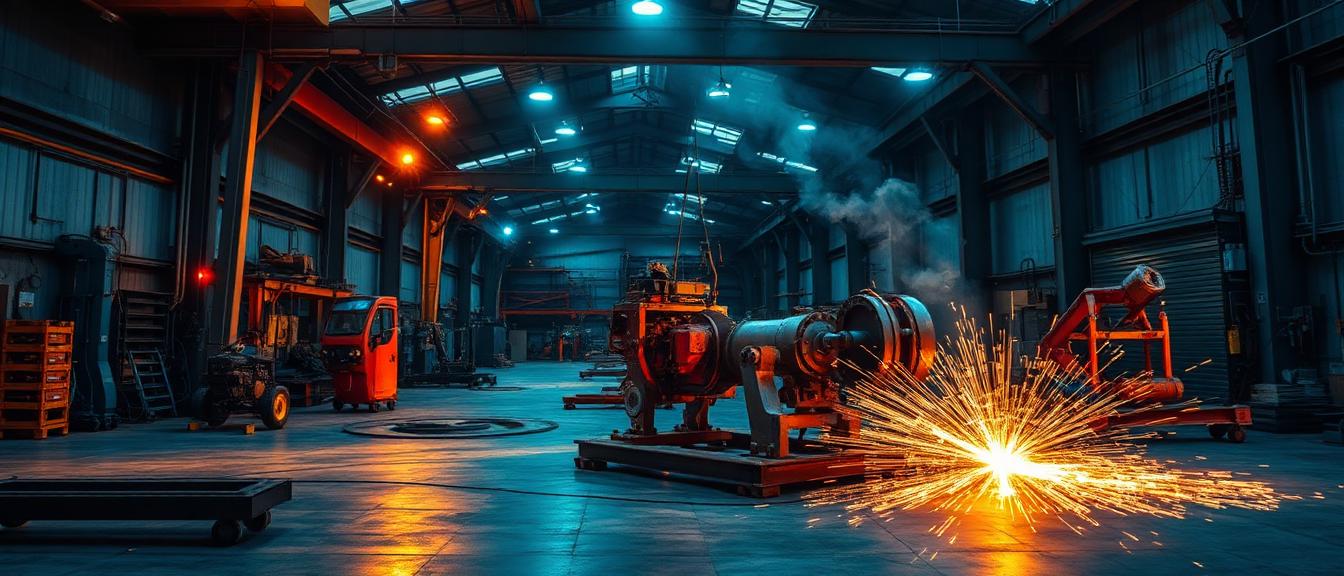
When a piece of equipment fails in the middle of a production run, or when a facility gets flagged for emissions violations, there's no time to debate which contractor to call. You need a team that already understands your systems, your constraints, and what's actually at stake. That's the difference between hiring a vendor and working with a real industrial engineering and fabrication company: one that treats your problems like their own.
This post breaks down what it really means to work with an integrated industrial partner: from how fabrication quality affects long-term performance, to why emissions control systems for industrial facilities have become a non-negotiable part of modern operations.
Integrated Capabilities
Engineering, fabrication, and installation under one roof for seamless project execution.
Custom Fabrication
Precision-built equipment matched to your operating environment and application.
Emissions Compliance
Engineered solutions that keep you compliant without compromising throughput.
Engineering That Starts With Understanding the Problem
There's a misconception that industrial engineering is mostly about specs and blueprints. In reality, the best engineering work starts with a conversation and a deep willingness to understand what's actually going wrong, or what could go better.
A skilled industrial engineering team doesn't just take your requirements at face value. They ask questions. They want to know how old your infrastructure is, what failure modes you've experienced, what your growth plans look like, and what constraints you're working under: budget, timeline, site conditions, regulatory environment. All of that feeds into a smarter design.
The output isn't just a drawing or a design package. It's a plan that accounts for real-world installation conditions, future serviceability, and the specific demands of your industry. Whether you're in oil and gas, biogas, landfill operations, or industrial manufacturing, the engineering has to match the environment, not just the textbook.
Custom Fabrication: Why Off-the-Shelf Often Falls Short
Standard equipment has its place. But in heavy industry, the gap between what's available off the shelf and what your operation actually needs can create serious problems down the line: inefficiency, accelerated wear, maintenance headaches, and costly downtime.
Custom fabrication solves for that gap. When equipment is built specifically for your application, it fits correctly the first time. Connections align. Materials are matched to the operating environment, whether that means high heat, corrosive chemicals, pressure extremes, or exposure to the elements. The design accounts for how the equipment will be installed, accessed for maintenance, and eventually replaced or upgraded.
There's also a quality dimension that matters enormously. Precision fabrication, done by experienced welders and machinists working to tight tolerances, produces equipment that simply lasts longer. When you're running 24/7 operations in demanding conditions, that durability translates directly into uptime, and uptime is money.
The best industrial fabrication companies maintain full quality control throughout the process: from raw material inspection to final testing before anything ships. That discipline shows up in the finished product.
Emissions Control Systems for Industrial Facilities: Meeting Compliance Without Slowing Down
Regulatory pressure on industrial emissions has never been higher. Operators across oil and gas, wastewater, landfill, food processing, chemical manufacturing, and dozens of other sectors are navigating increasingly complex compliance requirements, and the cost of getting it wrong has grown substantially.
Emissions control systems for industrial facilities aren't a bolt-on afterthought. They're an engineered solution that has to integrate with your existing processes, handle your specific effluent streams, and perform reliably under continuous operation. A system that works perfectly in a test environment but causes bottlenecks in production isn't a solution: it's a new problem.
Getting this right requires a team that understands both the regulatory side and the operational side:
- What are the actual emission thresholds you're required to meet?
- What's the chemical composition of your waste stream?
- What are the temperature, pressure, and flow rate conditions the system will operate under?
- What does maintenance look like, and who's going to be doing it?
The right emissions control partner brings answers to all of those questions and designs a system that keeps you compliant without forcing you to compromise on throughput. Some of the most effective solutions also recover value from what would otherwise be waste: captured gas, recovered heat, and reduced disposal costs.
The Case for an Integrated Engineering and Fabrication Partner
One of the most common friction points in industrial projects is the handoff between engineering and fabrication. When those functions are siloed by different companies, different teams, different priorities, something almost always gets lost in translation. A design assumption that made sense on paper doesn't survive contact with the shop floor. A fabrication choice that seemed efficient creates installation headaches. Tolerances that worked in the CAD model don't match real-world conditions.
An integrated industrial engineering and fabrication company eliminates that gap. When the same organization handles design, build, and installation, the feedback loop is tight. Engineers know what fabricators can actually produce. Fabricators understand the design intent. Installation teams flag issues early, before they become change orders. The result is a smoother project, a better product, and fewer surprises.
This matters especially in complex, time-sensitive projects: energy infrastructure buildouts, facility upgrades, environmental retrofits, where delays cascade and rework is expensive. Speed without sacrificing quality is only possible when the team is genuinely coordinated.
Industries That Benefit Most From Specialized Industrial Partners
While the principles of good engineering and fabrication apply broadly, some industries have particularly specialized requirements that demand a partner with real depth of experience:
- Oil and Gas: High-pressure systems, hazardous environments, and strict safety regulations require precision at every stage from initial engineering through final commissioning.
- Biogas and Wastewater: Processing organic waste streams into usable energy or safely treated discharge requires custom equipment built for variable inputs and continuous operation.
- Landfill Operations: Leachate management and gas capture systems must handle chemically complex streams in outdoor environments, often under strict regulatory oversight.
- Industrial Manufacturing: From automotive to pharmaceuticals, manufacturers need reliable custom equipment that integrates with existing production lines without disruption.
- Data Centers and Critical Facilities: Power and thermal infrastructure in these environments must meet exceptional reliability standards; there's simply no tolerance for failure.
In all of these sectors, the cost of working with a partner who doesn't truly know the industry shows up quickly in redesign cycles, field failures, compliance issues, and missed deadlines.
What to Look for When Choosing an Industrial Engineering Partner
Not all industrial contractors are built the same. When evaluating your options, a few things are worth paying close attention to:
- Industry-Specific Experience: Not just general industrial work, but direct familiarity with your operational context.
- Integration Across Disciplines: The ability to take a project from concept to commissioning without losing momentum at the handoffs between engineering, fabrication, and installation.
- Regulatory Knowledge: Particularly for emissions and environmental compliance, where the rules are complex and the penalties for non-compliance are significant.
- Track Record of Installed Systems: Companies that have built and commissioned many systems in the field have worked through the failure modes and know how to avoid them.
- Responsiveness: In industrial operations, problems don't wait for business hours. A partner who picks up the phone and responds fast is worth a great deal.
Building Infrastructure That Lasts
The best industrial projects don't just solve today's problem. They're designed with an eye toward the next decade: systems that can be maintained, upgraded, and scaled as your operation evolves. That kind of forward thinking is the hallmark of a serious industrial engineering and fabrication company.
Whether you're building new energy infrastructure, installing emissions control systems for industrial facilities, or replacing aging equipment that's reached the end of its service life, the quality of your engineering and fabrication partner will have a lasting impact on your operation. Choose one that brings real expertise, genuine accountability, and the kind of integrated capabilities that keep complex projects on track.
Frequently Asked Questions
What does an industrial engineering and fabrication company do?
An industrial engineering and fabrication company designs, builds, and installs custom equipment and systems for heavy industry: including pressure vessels, piping systems, structural steel, and process equipment tailored to specific operational requirements.
Why are emissions control systems for industrial facilities important?
Emissions control systems for industrial facilities ensure regulatory compliance, reduce environmental impact, and protect operators from fines and shutdowns. These engineered solutions integrate with existing processes to handle specific waste streams while maintaining production throughput.
How does integrated engineering and fabrication reduce project risk?
When the same organization handles design, fabrication, and installation, the feedback loop is tight: engineers understand shop capabilities, fabricators know design intent, and installation teams flag issues early. This eliminates costly handoff errors and rework.
What industries benefit most from a specialized fabrication partner?
Oil and gas, biogas and wastewater, landfill operations, industrial manufacturing, and data centers all benefit from specialized partners who understand their unique operational contexts, regulatory requirements, and performance demands.
Ready to Partner With a Proven Team?
From custom fabrication to emissions control systems, CREATE Industries delivers integrated engineering and fabrication solutions built for real-world performance.
Get In Touch