Agricultural and Dairy Digesters: North America's Fastest-Growing Biogas Segment
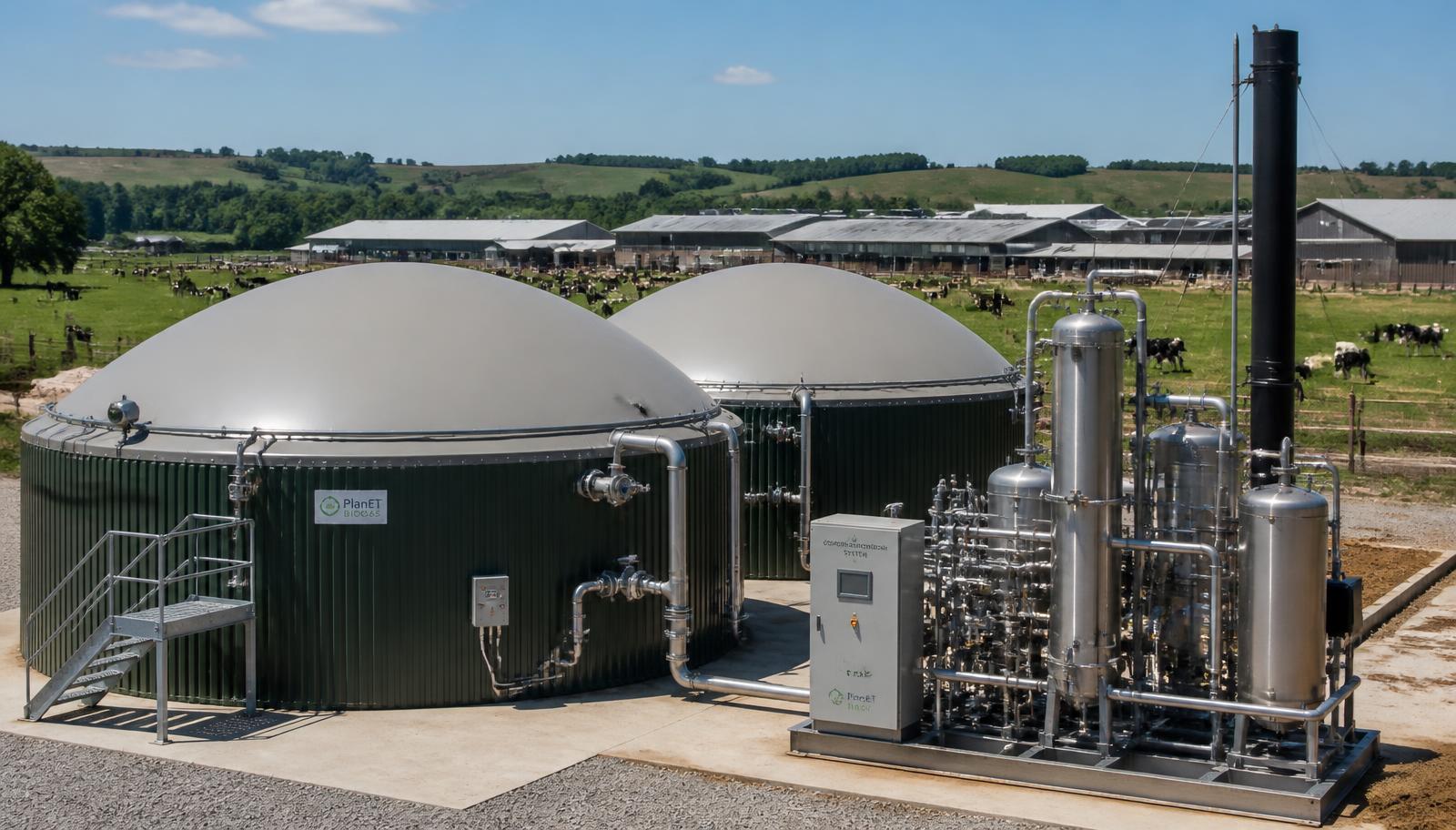
Landfills and wastewater plants built the early foundation of North America's biogas industry, but the fastest growth over the past several years has come from a different source entirely: dairy farms, feedlots, and agricultural operations converting manure into biogas. The economics have shifted enough, and the incentive programs on both sides of the border have matured enough, that agricultural digestion is no longer a niche pursued by a handful of early-adopter farms. It is becoming a mainstream capital decision for mid-size and large livestock operations across the US and Canada, and the equipment demands it creates are distinct from landfill or wastewater biogas projects in several important ways.
Why agricultural digesters are scaling faster than other biogas sources
Manure management was, for most livestock operations, a cost center long before it became a revenue opportunity: lagoon storage, land application, and odor control all carry real operating expense with no direct revenue attached. Anaerobic digestion changes that equation by converting a cost into a saleable product, whether as pipeline-injected RNG, vehicle fuel, or on-farm power generation, while simultaneously reducing the methane and odor burden of manure storage. That dual benefit (lower ongoing cost plus new revenue) is a stronger investment case than many other emissions-reduction projects can offer, which helps explain why agricultural digestion has scaled quickly once the economics were demonstrated at a handful of flagship dairies.
Aggregation models, where a single centralized digester processes manure from several nearby farms rather than each farm building its own smaller system, have also improved project economics meaningfully. A shared digester spreads capital cost across multiple feedstock suppliers and can support a conditioning and injection system sized for pipeline-quality gas in a way that a single small farm often could not justify on its own.
Feedstock variability is the defining engineering challenge
Landfill gas and wastewater biogas have relatively predictable feedstock characteristics once a facility has been operating for a while. Manure-based feedstock is a different challenge entirely: composition varies by species, by diet, by season, and by whether bedding material, wash water, or co-digestion feedstocks like food waste are blended in. A conditioning system engineered around a single assumed feedstock profile can be caught off guard by the variability a real operating farm produces over the course of a year.
This is where agricultural digester design differs most from a landfill gas project. Gas composition, moisture content, and hydrogen sulfide levels can swing meaningfully between a summer feeding regimen and a winter one, and a well-engineered system needs enough operating flexibility in its conditioning train to handle that range without constant manual reconfiguration. Facilities that underestimate this variability during design tend to discover it during the second or third season of operation, when conditioning performance starts to drift outside expected ranges.
Incentive stacking across the US and Canada
Agricultural digesters in the US can draw on a combination of federal tax incentives for clean energy equipment, Renewable Fuel Standard credit generation when gas is upgraded to pipeline quality and displaces conventional transportation fuel, and in some states, additional low-carbon fuel program credits layered on top. In Canada, agricultural digestion projects benefit from the same Clean Fuel Regulation and industrial carbon pricing dynamics that apply to other biogas sources, along with provincial agricultural and clean technology programs in several provinces that specifically target on-farm and centralized manure digestion.
The specific mix of available incentives depends heavily on project location, feedstock source, and end use of the gas, and operators should map their own incentive stack against current program guidance rather than relying on assumptions carried over from a different project type or an earlier program year.
Equipment considerations specific to agricultural biogas
Manure-based biogas systems place particular demands on solids handling, corrosion-resistant materials given typically higher hydrogen sulfide concentrations than some other feedstocks, and conditioning equipment flexible enough to handle the seasonal and dietary variability described above. Odor control at the receiving and pre-treatment stage is also a more prominent design consideration for agricultural digesters than for landfill or wastewater systems, since these facilities are frequently located closer to residential areas and rural communities that are directly affected by odor in a way an urban landfill site typically is not.
For operators building or expanding agricultural digestion capacity, the equipment specification should start with a realistic feedstock characterization across the actual seasonal range the farm or aggregation network will produce, rather than a single average sample taken at one point in the year.
What this means for the broader North American biogas equipment market
The rapid growth of agricultural digestion is reshaping demand for biogas equipment manufacturers across North America, pushing conditioning and fabrication capability toward systems that can handle more variable feedstock, smaller and more distributed installations, and faster deployment timelines than the large centralized landfill projects that historically anchored the industry. Manufacturers and fabricators who can engineer for that variability rather than treating agricultural digestion as a smaller version of a landfill project are well positioned as this segment continues to expand across dairy and livestock regions in both countries.
Related reading from CREATE Industries: Biogas Conditioning for RNG Pipeline Injection, RNG and Biogas Incentives in 2026, and our biogas and emission control equipment.
FAQs
Why is agricultural biogas growing faster than other biogas segments in North America?
It converts an existing cost (manure storage and management) into a revenue-generating process while reducing methane and odor, giving it a stronger combined investment case than many other emissions-reduction projects.
How does manure feedstock variability affect equipment design?
Gas composition, moisture, and hydrogen sulfide levels can shift meaningfully with diet and season. Conditioning systems need enough built-in flexibility to handle that range rather than being engineered around a single average feedstock sample.
What is an aggregation model in agricultural digestion?
It is a shared digester system that processes manure from multiple nearby farms rather than each farm building its own, spreading capital cost across several feedstock suppliers and supporting a larger, more efficient conditioning and injection system.
Do the same incentive programs apply to agricultural digesters as landfill biogas projects?
There is overlap: federal tax incentives, RIN generation, and Clean Fuel Regulation credits can apply to both. But agricultural projects can also access certain provincial and state programs specifically targeting on-farm and manure-based digestion, so the incentive stack should be mapped project by project.
Why is odor control a bigger design factor for agricultural digesters than for landfill gas systems?
Agricultural digesters are frequently located closer to residential and rural communities than landfill sites, making odor control at the receiving and pre-treatment stage a more prominent design consideration.
Built for Feedstock That Changes With the Season.
CREATE Industries engineers and fabricates biogas conditioning and emission control equipment for agricultural, landfill, and wastewater digestion projects across North America. Offices in Kennesaw, GA and Mobile, AL. 24/7 emergency response.
Talk to an Engineer