Biogas Conditioning for RNG Pipeline Injection: What U.S. and Canadian Operators Need to Know
Key Takeaways
- Raw biogas from an anaerobic digester or landfill is nowhere near pipeline quality, and conditioning it into renewable natural gas is a multi-stage engineering process, not a single filter.
- Hydrogen sulfide removal, moisture control, and carbon dioxide separation each have to hit a specific spec before a local distribution company will accept gas into its system.
- Undersized or poorly maintained conditioning trains show up first as rejected gas or curtailed injection, long before equipment failure.
- Pipeline injection standards vary by utility and by province or state, which means a conditioning system has to be designed against the actual receiving specification, not a generic target.
- Getting conditioning right is what turns a landfill or digester's biogas from a compliance obligation into a revenue stream.
From Biogas to Pipeline Gas: What Actually Has to Change
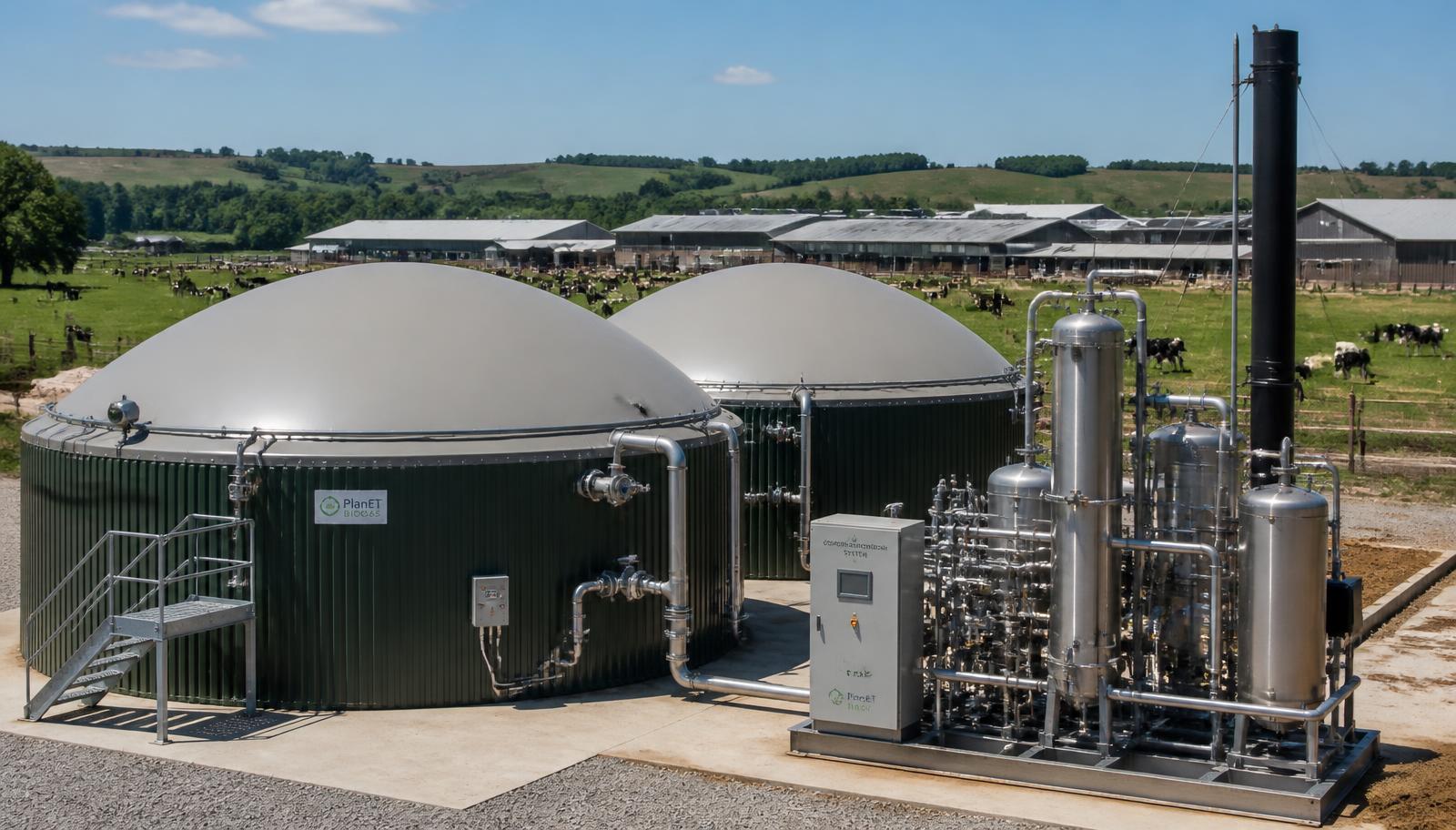
Raw biogas, whether from an anaerobic digester at a wastewater or agricultural facility or from a landfill's gas collection system, is roughly half methane, with the balance made up mostly of carbon dioxide, water vapor, hydrogen sulfide, and trace contaminants. None of that is close to what a pipeline will accept. Turning it into renewable natural gas suitable for injection means removing water, stripping out hydrogen sulfide and other corrosive contaminants, and separating carbon dioxide to bring the heating value up to pipeline specification.
Each of these is a distinct engineering step, and each has its own failure modes. Treating biogas conditioning as one piece of equipment rather than an integrated train is the most common reason RNG projects underperform their financial projections.
Hydrogen Sulfide: The Contaminant That Damages Everything Downstream
Hydrogen sulfide is corrosive to nearly every piece of equipment gas touches after the digester or landfill, from compressors to instrumentation. Most conditioning trains remove H2S early, using biological, chemical, or media-based scrubbing, precisely because letting it travel downstream accelerates wear on every component that follows. A scrubber that is undersized for actual H2S concentration, or media that is not replaced on schedule, lets slip-through rise gradually, which shows up first as accelerated corrosion and only later as a spec violation at the point of injection.
Moisture and CO2: The Steps That Set Final Gas Quality
After sulfur removal, biogas still carries significant moisture and carbon dioxide. Moisture has to be controlled to prevent condensation, freezing, and corrosion in downstream equipment and pipeline infrastructure. CO2 separation, using membrane, pressure swing adsorption, or amine-based systems depending on scale, is what ultimately raises methane content and heating value to pipeline specification. This stage is typically the largest capital investment in a conditioning train, and it is also where throughput most directly ties to project economics: every percentage point of methane recovery lost to an inefficient separation process is revenue that never reaches the meter.
The Failure Chain That Costs RNG Projects Revenue
Biogas conditioning problems follow a familiar pattern. It starts with gas composition drifting from the assumptions the system was designed around, whether from feedstock changes at a digester or from a landfill cell aging. That drift stresses the H2S removal stage first, since scrubber capacity is usually the tightest margin in the system. Slipping sulfur then accelerates wear on compressors and separation membranes, which reduces uptime and methane recovery. The end result is either off-spec gas that the utility rejects at the injection point, or reduced throughput that quietly shrinks the revenue the project was built to generate.
Why Injection Standards Are Not One Number
Unlike a combustion compliance threshold, pipeline injection specifications are set by the receiving utility and vary by state, province, and even individual local distribution company. Btu content, moisture dew point, allowable trace contaminant levels, and oxygen content all have to match the specific pipeline a project is injecting into. A conditioning system engineered against a generic RNG specification, rather than the actual receiving utility's tariff, risks gas that is technically clean but still rejected at the meter.
Designing a Conditioning Train That Holds Up
The projects that perform reliably share a common approach to design and operation.
- Size H2S removal capacity to the high end of expected concentration, not the average, since feedstock and landfill gas composition both drift over time.
- Select CO2 separation technology based on actual project scale and gas composition rather than defaulting to whatever a single vendor offers.
- Design moisture control with the specific pipeline's dew point requirement in mind, not a generic industry target.
- Build in composition monitoring ahead of the injection point so drift is caught before gas is rejected, not after.
- Confirm the receiving utility's actual tariff specification in writing before finalizing conditioning train design.
A North America-Wide Opportunity With Local Rules
RNG demand is growing on both sides of the border, driven by state low-carbon fuel programs in the U.S. and federal and provincial clean fuel regulations in Canada, but the specific injection standard a project has to meet is always local. Operators developing biogas projects across multiple states or provinces need conditioning systems engineered to each receiving utility's actual specification, with a consistent internal design standard that keeps every site defensible.
CREATE Industries designs and builds biogas conditioning systems, from H2S removal through CO2 separation, for landfill and digester operators pursuing RNG pipeline injection across North America.
A Quick Conditioning Health Check
Most conditioning problems leave early signs in data already being collected.
- Trend H2S slip-through at the scrubber outlet, not just the raw feed, to catch capacity creep early.
- Watch methane recovery rate across the CO2 separation stage for a gradual decline, which points to membrane or media wear.
- Check moisture readings against the receiving pipeline's dew point spec, not a generic benchmark.
- Review any gas rejection or curtailment events at the injection point for a pattern tied to specific contaminants.
Key Components of Biogas Processing Equipment
- Feedstock handling systems that feed evenly, handle variability, and prevent clogging
- Digester tanks and processing chambers built from high-grade materials with proper insulation
- Gas upgrading and purification systems that raise methane content while minimizing contaminants
- Control and monitoring systems with real-time data and automated adjustments
Few sites have a standard footprint, standard gas composition, or standard operating environment, which is why custom fabricated equipment is usually the practical choice rather than a premium one. Skid-mounted process systems, custom enclosures, structural steel supports, and integrated electrical and controls (panels, PLCs, HMIs) should be specified to the job so equipment installs cleanly into existing infrastructure without expensive field modifications.
What a Biogas System Installation Involves
Site assessment and gas characterization
Analyze actual biogas composition from the source (landfill, digester, or process stream) rather than relying on published averages. Many streams carry higher H2S and moisture than national norms, which directly affects equipment sizing, materials selection, and emissions control design.
Engineering and permitting support
Process flow diagrams, P&IDs, and equipment specifications should align with state and EPA permit requirements, which helps avoid the costly back-and-forth that comes from submitting underspecified designs.
Climate-rated fabrication
In coastal and humid regions, that means coated and lined piping, NEMA 4X or better electrical enclosures, marine-grade fasteners and hardware, and structural frames rated for local wind loads.
Field installation, commissioning, and ongoing support
Commission with emissions performance testing built into the handoff so operators start with documented compliance from day one, then support compliance reporting, CEMS integration, periodic performance testing, and system optimization over time.
How to Evaluate a Biogas Equipment Partner
- Certifications for welding, pressure vessels, and electrical systems
- Proven installation experience in similar industries
- Engineering depth across load balancing, controls, and integration
- Long-term service, spare parts availability, and maintenance support
Frequently Asked Questions
What is biogas conditioning?
Biogas conditioning is the process of removing hydrogen sulfide, moisture, and carbon dioxide from raw digester or landfill gas to raise methane content and meet pipeline injection specifications.
Why does hydrogen sulfide matter so much in RNG systems?
H2S is highly corrosive to downstream compressors, membranes, and instrumentation, so removing it early in the conditioning train protects equipment life as well as final gas quality.
Are RNG pipeline standards the same everywhere in North America?
No. Injection specifications for Btu content, moisture, and trace contaminants are set by the receiving utility and vary by state, province, and local distribution company.
What causes gas to be rejected at the injection point?
Rejections usually trace back to composition drift, most often moisture, residual CO2, or H2S slip-through exceeding the receiving utility's specific tariff limits.
How is CO2 typically separated from biogas?
Common methods include membrane separation, pressure swing adsorption, and amine-based systems, with the right choice depending on project scale and gas composition.
Turn Your Biogas Into Pipeline-Quality Revenue.
CREATE Industries designs and builds biogas conditioning systems for landfill and digester operators across the U.S. and Canada, engineered to each receiving utility's actual injection specification.
Talk to an Engineer