Canada's 2026 Carbon Pricing Reset: What It Means for Industrial Equipment Decisions
Canadian industrial emitters got a clearer, if not entirely comfortable, picture of where carbon costs are headed this year. In May 2026, the federal government kept the headline carbon price at CAD 95 per tonne for 2026, unchanged from 2025, then set it to rise to CAD 100 in 2027, reach CAD 115 by 2030, and climb by CAD 3 per year after that until it hits CAD 130 in 2035. For facilities covered by the federal Output-Based Pricing System (OBPS), or by an equivalent provincial system, this trajectory is the number that now belongs in every multi-year capital plan.
Why This Update Matters More Than the Number Itself
The bigger story is not the price, it is the horizon. Previous federal guidance only extended to 2030, which left large emitters in industries like cement, steel, and biogas processing making long-lived capital decisions against a price curve that simply stopped. By extending the trajectory out to 2040, the federal government is trying to give major decarbonization projects the long-term certainty needed to justify investment, with a fuller updated benchmark expected to follow later in 2026.
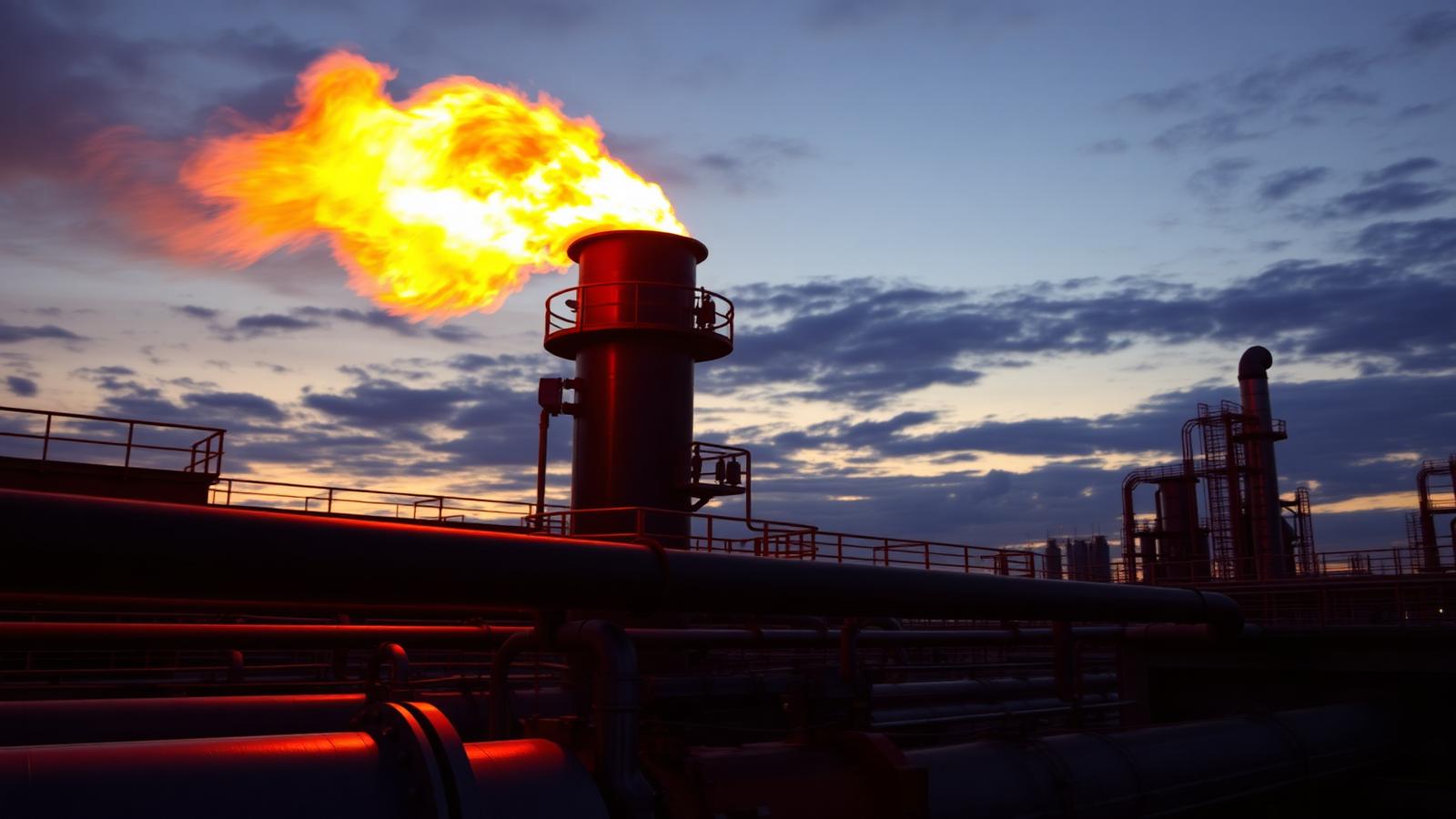
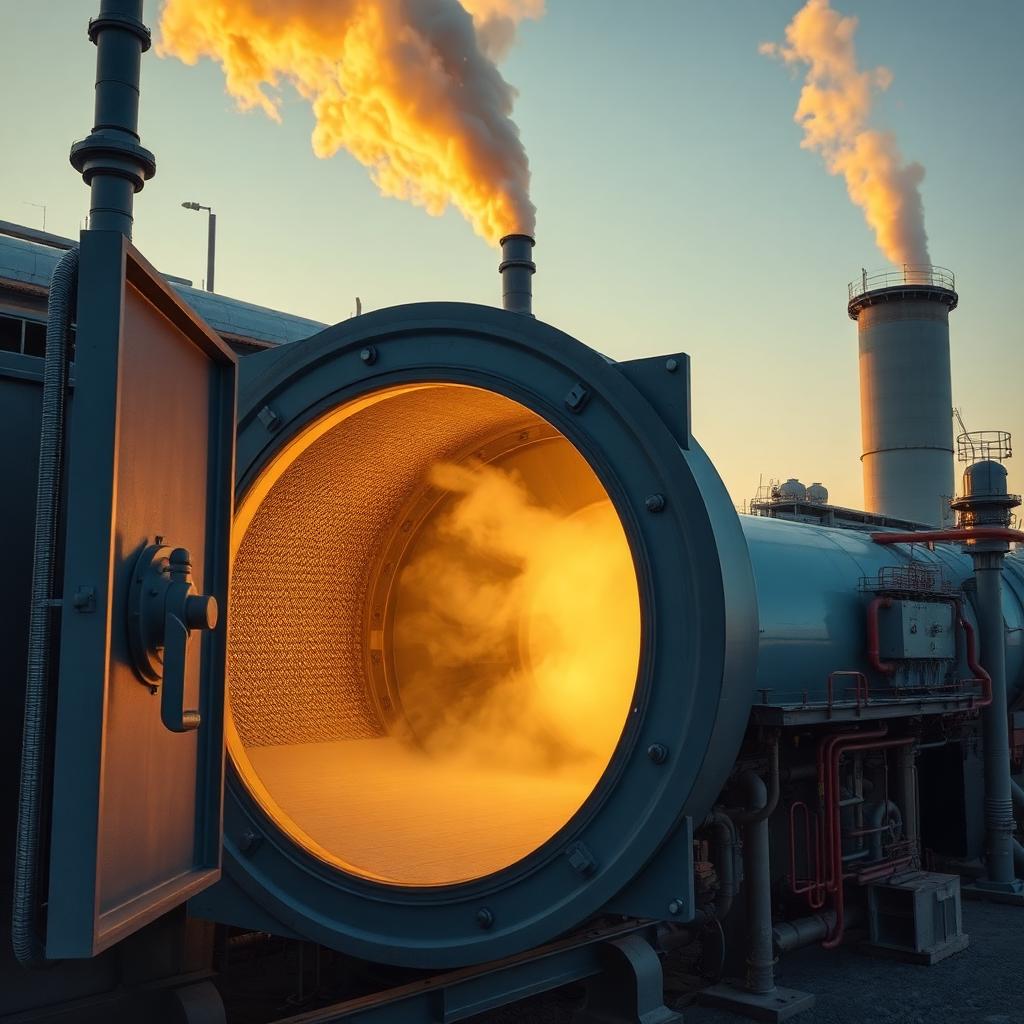
For an operator weighing whether to retrofit a thermal oxidizer, upgrade a flare system, or add methane capture equipment, that distinction changes the payback math. A project that only had to justify itself against seven years of rising carbon costs now has to be evaluated against fourteen. In most cases, that makes the investment case stronger, not weaker: a compliance upgrade with a ten-year functional life pays down its OBPS exposure for longer under the new curve than it would have under the old one.
How the OBPS Actually Works, in Plain Terms
Unlike the consumer carbon tax that was eliminated in 2025, the OBPS applies only to large industrial facilities and is based on emissions intensity, not total emissions. Facilities are measured against a performance standard expressed as emissions per unit of output. Those that perform worse than the standard pay; those that perform better earn tradeable credits. This means two facilities producing the same product at different efficiency levels face very different cost outcomes, and it means efficiency investments have a direct, quantifiable payback in the form of avoided charges or sellable credits.
For 2026 compliance, facilities under the federal system that exceed their limit can settle the shortfall through an excess emissions charge payment, banked or purchased surplus credits, or eligible offsets from a recognized provincial program. Coverage is mandatory for facilities in emissions-intensive, trade-exposed sectors emitting 50,000 tonnes of CO2-equivalent or more per year, with a voluntary opt-in available down to 10,000 tonnes for at-risk sectors, a threshold that catches more mid-sized industrial and processing facilities than many operators realize.
The Provincial Patchwork Is Still a Real Complication
Not every province runs the federal system. An output-based system applies in most provinces, the Northwest Territories runs a direct tax on large polluters, and Quebec operates a cap-and-trade system, while Saskatchewan paused its industrial carbon pricing system in April 2025. That fragmentation matters for any operator running facilities in more than one province, or evaluating where to site a new processing or biogas facility: the effective carbon cost per tonne can differ meaningfully depending on jurisdiction, even for the same equipment and the same process.
There is also a trade dimension building in the background. As the EU's Carbon Border Adjustment Mechanism moves into its definitive period, questions remain about whether Canadian provincial credits and offsets will be recognized as equivalent carbon pricing for export purposes, a gap that could add cost pressure on emissions-intensive exporters like steel and cement producers regardless of what happens domestically.
What This Means for Equipment Planning
For Gulf Coast-style industrial operators with Canadian assets, or for Canadian operators in biogas, oil and gas, or heavy manufacturing, the practical takeaway is straightforward: emissions performance is no longer a soft compliance issue, it is a line item with a known, multi-year price curve attached to it. Equipment that reduces methane slip, improves combustion efficiency, or captures gas that would otherwise be flared or vented has a clearer, longer payback window than it did even twelve months ago.
Facilities evaluating an RTO, RCO, or flare upgrade should be running that analysis against the full CAD 95-to-130 trajectory through 2035, not against a single year's price. Facilities near the 50,000-tonne mandatory threshold or the 10,000-tonne voluntary opt-in line should model where planned production growth puts them, since crossing that line changes the entire compliance calculus. And any operator with cross-border assets should treat the provincial patchwork as a design input, not an afterthought, when deciding where new capacity gets built and what emissions control equipment it needs from day one.
The federal government has said a fuller updated benchmark is coming later in 2026. Operators who get ahead of it, rather than reacting to it, are the ones who will have equipment already in the ground when the next round of reporting comes due.
Frequently Asked Questions
What is Canada's federal carbon price for 2026?
The headline price stayed at CAD 95 per tonne for 2026, unchanged from 2025, before rising to CAD 100 in 2027 under the updated May 2026 trajectory.
How high will Canada's carbon price go, and by when?
Under the current trajectory, the price rises to CAD 115 per tonne by 2030, then increases CAD 3 per year until it reaches CAD 130 per tonne in 2035.
Does the OBPS apply to my facility?
Coverage is mandatory for emissions-intensive, trade-exposed facilities emitting 50,000 tonnes of CO2-equivalent or more per year. Facilities emitting 10,000 tonnes or more in at-risk sectors can opt in voluntarily.
Is the OBPS the same as the carbon tax that was eliminated in 2025?
No. The consumer fuel charge was eliminated in April 2025. The OBPS is a separate system that applies only to large industrial facilities and was not affected by that change.
Do all Canadian provinces use the same carbon pricing system?
No. Most provinces use an output-based system, the Northwest Territories applies a direct tax on large emitters, Quebec runs a cap-and-trade system, and Saskatchewan paused its industrial system in April 2025. The federal OBPS applies as a backstop where a province does not have its own qualifying system.
How can a facility reduce its OBPS costs?
Facilities that perform better than their sector's emissions-intensity standard earn tradeable credits instead of owing charges. Equipment upgrades that improve combustion efficiency or capture methane that would otherwise be vented or flared directly improve that intensity position.
Planning Equipment for Canadian OBPS Exposure?
CREATE Industries engineers, fabricates, and services RTOs, RCOs, flares, vapor combustors, biogas conditioning skids, and CEMS for facilities in the US and Canada. We help operators model equipment payback against real OBPS and provincial carbon curves, not just a single year's price. Offices in Kennesaw, GA and Mobile, AL, with cross-border project experience.
Talk to an Engineer