CEMS Compliance in North America: What U.S. and Canadian Operators Need to Know in 2026
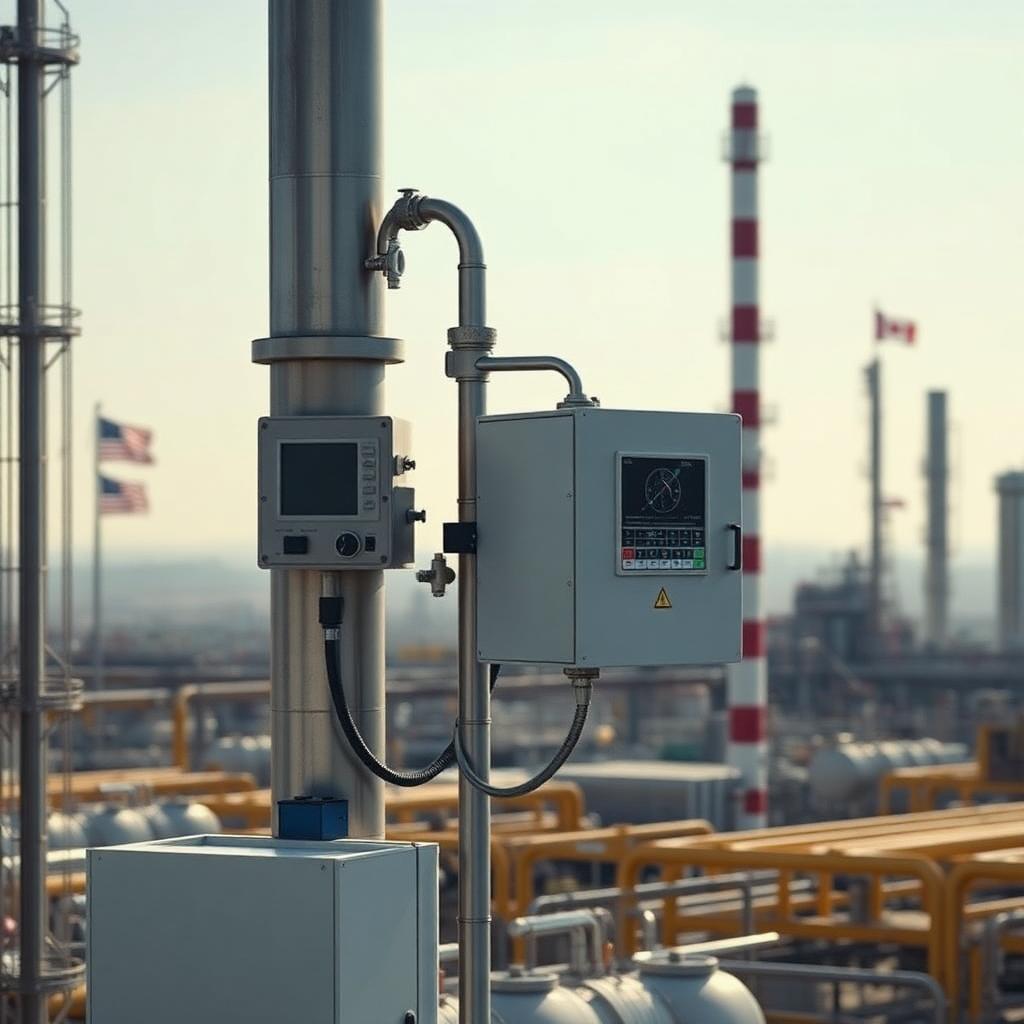
Across North America, the rules that govern industrial air emissions are tightening, and the system most facilities rely on to prove they are compliant, the Continuous Emissions Monitoring System (CEMS), is also the system most likely to quietly fail them. A CEMS does not announce when it stops producing valid data. It just produces a gap, and the gap shows up later, during a report, an audit, or an inspection, when it is far more expensive to fix.
Whether you operate in Texas, Ohio, Alberta, or Ontario, the core obligation is the same: you must be able to demonstrate, with continuous and defensible data, that your stack is operating inside its permit. The regulatory frameworks differ between the United States and Canada, but the operational reality does not.
Key Takeaways
- A CEMS is the legal evidence file for an air permit in both the U.S. and Canada, not just an instrument, which means monitoring downtime is a compliance event.
- In the U.S., CEMS obligations flow from the Clean Air Act through Title V permits and EPA performance and QA standards; in Canada, they flow from CEPA, ECCC, and provincial regulators.
- Data availability and quality-assurance requirements mean even a working analyzer can fall out of compliance if it is not calibrated, audited, and recording correctly.
- The most common CEMS failures are mundane, power and clock faults, sample-line issues, drift, and miscounted signals, not dramatic breakdowns.
- A defensible program combines fast diagnostics, whole-system thinking that includes the source equipment, and documentation an auditor can follow.
Why CEMS Compliance Is Getting Harder, Not Easier
Two forces are converging. First, regulatory scrutiny on volatile organic compounds (VOCs), hazardous air pollutants (HAPs), nitrogen oxides (NOx), and particulate matter is rising on both sides of the border, and enforcement agencies increasingly expect continuous, high-availability data rather than periodic snapshots. Second, much of the installed monitoring base across North America is aging, and the people who originally commissioned it have often moved on, leaving facilities with equipment they depend on but do not fully understand.
The result is a widening gap between what regulators expect a CEMS to deliver and what many facilities can actually prove their CEMS delivered. That gap is where penalties live.
The U.S. Framework: Title V, the Clean Air Act, and Data You Can Defend
In the United States, CEMS obligations ultimately trace back to the Clean Air Act. For major sources, the operating permit, commonly a Title V permit, ties together all of a facility's applicable air requirements into one enforceable document.
Data availability: A CEMS is expected to produce valid data for a high percentage of operating hours. Excessive monitoring downtime is itself a problem, even if the underlying emissions were fine, because the facility cannot prove they were fine.
Data quality: Producing numbers is not enough; the numbers have to be trustworthy. EPA performance specifications and ongoing quality-assurance procedures govern calibration, drift checks, and audits.
That second point is the trap. A CEMS can be up, online, and confidently wrong, recording inflated or inaccurate values that flow straight into the official record.
The Canadian Framework: CEPA, ECCC, and Provincial Permits
In Canada, the architecture is different but the destination is the same. Federal authority runs through the Canadian Environmental Protection Act (CEPA 1999), administered by Environment and Climate Change Canada (ECCC). Sector-specific federal rules, including the Multi-Sector Air Pollutants Regulations, set baseline requirements for certain industrial equipment and pollutants.
Layered on top of the federal framework is provincial regulation. Ontario's Ministry of the Environment, Conservation and Parks, Alberta's environmental regime under EPEA, and their counterparts in other provinces issue approvals and set monitoring and reporting conditions that facilities must meet.
For operators with facilities on both sides of the border, the practical takeaway is this: you cannot assume your U.S. monitoring playbook transfers cleanly to a Canadian site, or vice versa.
The Failure Modes That Actually Catch Operators
- Power and clock faults: A failed backup battery can reset a system clock to default, breaking the handshake between the analyzer and the data acquisition system.
- Sample-line and transport issues: Heat-traced sample lines can develop leaks, condensation, or blockages, so the analyzer is measuring something other than real stack gas.
- Drift and calibration lapses: Analyzers drift over time. Without disciplined calibration and drift checks, readings slowly diverge from reality.
- Miscounted signals from the source: If the source equipment introduces something the analyzer misreads, for example raw natural gas counted as VOC, the CEMS faithfully records an inflated number.
What a Defensible CEMS Program Looks Like
- Whole-system diagnostics: The investigation has to trace the entire path, from the source equipment, through the sample line, to the data acquisition system.
- Fast response that protects the record first: When monitoring goes down, the urgent question is whether the archived, averaged compliance data survived.
- Calibration and QA discipline: Routine drift checks, calibrations, and audits are what keep a working analyzer honest.
- Documentation an auditor can follow: Every diagnosis, repair, and recommendation should leave behind a clear field report with root cause and prioritized next steps.
- Source-equipment health as part of monitoring: Worn media, poor thermal efficiency, and improper fuel injection all show up eventually in the emissions data.
The North America Advantage: One Partner, Both Frameworks
For operators running facilities in multiple states or across the U.S.–Canada border, the hardest part of CEMS compliance is consistency. CREATE Industries works with industrial operators across North America on exactly this intersection: the RTO or oxidizer, the CEMS attached to it, and the compliance record both feed.
Six Questions to Ask Before Your Next Audit
- Can you prove your data availability? Pull monitoring uptime for the reporting period. Unexplained downtime is the easiest finding for an auditor to write up.
- When was your last calibration and drift check? A working analyzer is not a compliant analyzer unless its QA record is current.
- Does your archived data actually match your reported data? A mismatch, even an innocent one, is hard to explain after the fact.
- Have you reviewed the readings for source-driven errors? Check whether any values track an equipment cycle or a fuel event.
- Is your documentation legible to someone who wasn't there? A field report that clearly states what failed, why, and what was done is a compliance asset.
- Do all your sites meet a consistent internal standard? Inconsistency between facilities is its own risk.
Frequently Asked Questions
What does CEMS stand for and what does it do?
CEMS stands for Continuous Emissions Monitoring System. It continuously measures and records the concentration of pollutants, such as VOCs, NOx, or particulate matter, leaving an industrial stack, producing the data a facility uses to demonstrate compliance with its air permit.
Are CEMS rules the same in the U.S. and Canada?
No. In the U.S., CEMS obligations flow from the Clean Air Act through Title V permits and EPA performance and quality-assurance standards. In Canada, they flow from CEPA 1999 and ECCC at the federal level, plus provincial approvals. The instruments can be identical, but reporting requirements, averaging conventions, and the governing agency differ by jurisdiction.
Can a working CEMS still put my facility out of compliance?
Yes. A CEMS can be online and still produce invalid data, through drift, calibration lapses, sample-line problems, or by miscounting a signal from the source equipment. It can also fall short on data availability if it experiences too much downtime, even when actual emissions were within limits.
What is the most common cause of CEMS data loss?
Failures are usually mundane: power or backup-battery faults that reset the system clock and break the data handshake, sample-line condensation or leaks, and calibration drift. Dramatic hardware failures are far less common than these quiet faults.
How does source equipment like an RTO affect CEMS accuracy?
Significantly. If a regenerative thermal oxidizer injects natural gas to hold temperature, the analyzer can count that raw gas as VOC and inflate the reading. The monitor is working correctly, but the data is wrong, which is why source equipment health is part of monitoring reliability.
How quickly should a CEMS issue be addressed?
Immediately, because monitoring downtime can itself be a compliance shortfall. The first priority is verifying whether the archived compliance data survived, then restoring valid data and documenting the root cause.
Build a CEMS Program That Holds Up to an Audit
CREATE Industries supports U.S. and Canadian operators with whole-system CEMS and RTO diagnostics, calibrations, and field reports designed to defend your permit.
Talk to an Engineer