RTO Destruction Efficiency: Why 99% DRE Protects Your Permit (and Your Budget) Across North America
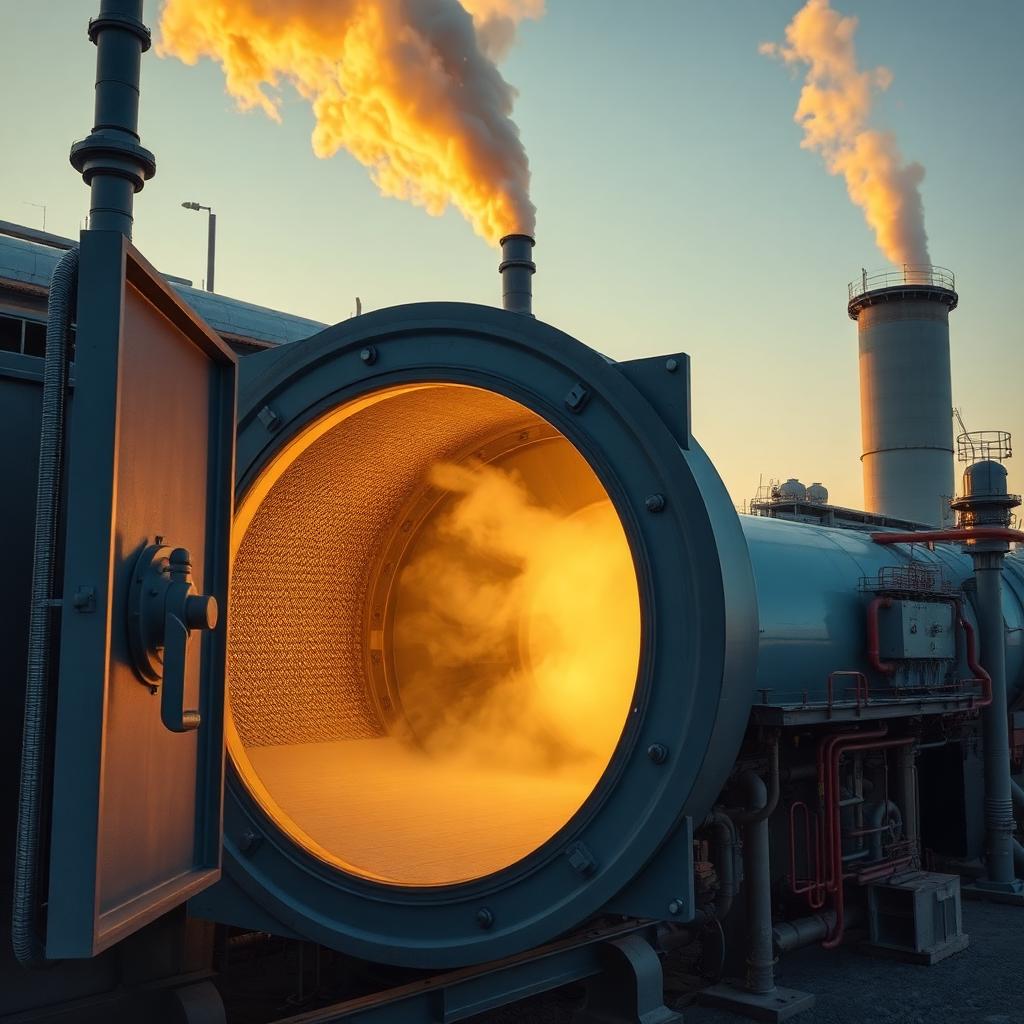
A Regenerative Thermal Oxidizer has one job: destroy the volatile organic compounds and hazardous air pollutants in your process exhaust before they reach the atmosphere. How well it does that job is captured in a single number, Destruction and Removal Efficiency, or DRE. For most industrial operators across North America, that number is not just an engineering metric. It is written into the permit.
When DRE is strong, the RTO is quietly doing its job and almost nobody thinks about it. When DRE slips, the consequences stack up fast and in expensive ways: higher fuel bills, more frequent maintenance, inflated emissions readings, and, eventually, a compliance problem.
Key Takeaways
- Destruction and Removal Efficiency (DRE) measures how completely an RTO destroys VOCs and HAPs, and it is commonly written into air permits as a hard requirement, often around 99 percent.
- Falling DRE shows up first as higher fuel consumption and inconsistent temperatures, long before it shows up as a violation.
- Worn ceramic saddle media is a frequent root cause: it lowers thermal efficiency, which drives higher fuel injection, which can cause incomplete combustion and higher outlet VOC.
- Fuel injection method matters for measurement, not just combustion: raw natural gas injected into the chamber can be miscounted as VOC by a CEMS, inflating reported emissions.
- Recovering DRE is usually a targeted engineering problem, recirculation, cycle timing, selective media replacement, correct burner sizing, not a full rebuild.
What Destruction and Removal Efficiency Actually Measures
Destruction and Removal Efficiency expresses, as a percentage, how much of the VOC and HAP load entering the oxidizer is destroyed before the exhaust leaves the stack. A DRE of 99 percent means that for every hundred units of pollutant coming in, ninety-nine are destroyed and one leaves the stack.
Three conditions have to come together for an RTO to hit and hold a high DRE, sometimes called the "three Ts" of combustion:
- Temperature: The combustion chamber has to reach and maintain a high enough temperature to oxidize the compounds in the stream.
- Time: The gas has to spend enough time at temperature, the residence time, for oxidation to complete.
- Turbulence: The exhaust and combustion products have to mix well enough that no pocket of gas escapes treatment.
Why 99 Percent Is the Number That Matters
Across much of North America, permits for VOC and HAP sources specify a minimum destruction efficiency, and 99 percent is a common threshold for RTOs handling significant pollutant loads. The exact figure depends on the facility, the pollutants, and the governing agency, EPA and state regulators in the U.S., ECCC and provincial authorities in Canada, but the principle is consistent.
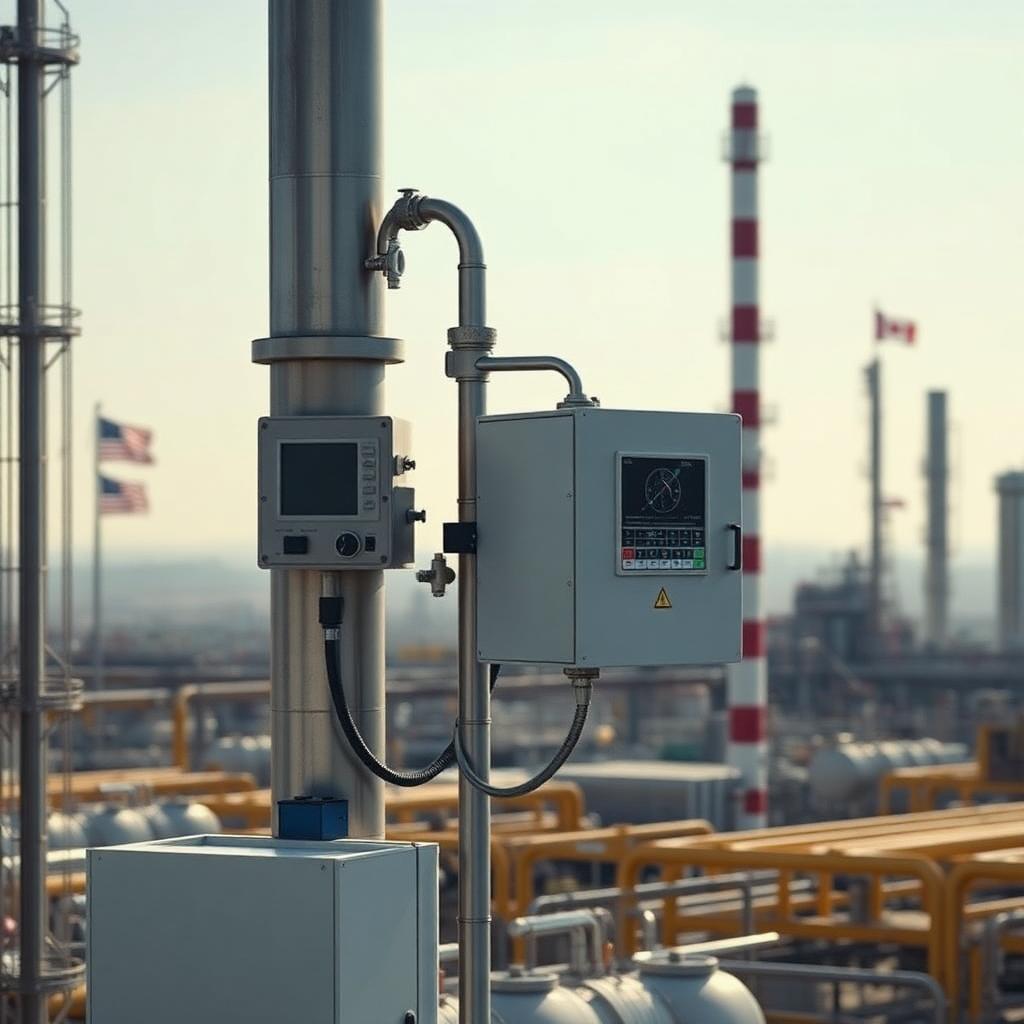
Meeting 99 percent is not enough on its own. You have to be able to demonstrate it with valid emissions data. This is where DRE and continuous emissions monitoring become two sides of the same coin: the RTO has to actually destroy the pollutants, and the monitoring system has to accurately record that it did.
The Quiet Failure Chain: How DRE Erodes
It often starts with the media. The ceramic saddle media in the regenerative beds stores and returns heat. Over time, media can degrade, foul, settle, or develop channels where gas slips through without proper heat exchange.
Lower heat recovery drives higher fuel use. To hold the required combustion temperature with less recovered heat, the burner has to work harder. The first symptom most operators notice is the fuel bill creeping up.
Higher fuel injection can cause incomplete combustion. Pushing more fuel in to compensate does not always produce cleaner combustion. Depending on how and where the fuel is introduced, it can lead to incomplete combustion and higher measured outlet VOC.
And the measurement itself can be corrupted. If the unit uses raw natural gas injection to maintain temperature, the analyzer on the stack can count that unburned natural gas as VOC. The reported hydrocarbon number inflates, not because real emissions rose, but because the measurement is picking up the fuel.
Read that chain again: worn media → lower thermal efficiency → higher fuel injection → incomplete combustion and miscounted fuel → higher reported VOC and real penalty exposure.
What Falling DRE Costs You
- Fuel: Every percentage point of lost heat recovery shows up as natural gas burned to make up the difference.
- Maintenance: A unit running hotter and harder wears faster, pulling forward the next round of repairs.
- Compliance exposure: Inflated or invalid emissions data creates penalty risk at a Title V or provincially permitted facility.
- Lost throughput: A unit that cannot demonstrate compliance can force a process slowdown or shutdown.
How to Recover DRE Without Overspending
- Targeted media replacement, only where needed: Replacing it selectively restores thermal performance at a fraction of the cost of a full change-out.
- Recirculation and shorter cycle timing: An engineering assessment can identify whether a recirculation system and a shorter cycle time would push destruction efficiency toward the 99 percent target.
- Reconsidering fuel injection: Taking raw natural gas injection out of routine operation can remove the false contribution from the data entirely.
- Correct burner sizing and insulation repair: A correctly sized burner and repaired insulation bring the unit's heat profile back where it belongs.
- Easier maintenance access: Practical additions like a cleanout tray and inspection door lower the cost of future media maintenance.
Why This Is a North America–Wide Issue
The physics of an RTO do not change between Houston and Hamilton. Worn media degrades thermal efficiency the same way in every jurisdiction, and the resulting fuel and compliance costs follow the same logic everywhere. What changes is the regulator you answer to and the exact permit threshold you have to prove you are meeting.
CREATE Industries works with industrial operators across North America on RTO and oxidizer performance, from diagnosing why a unit's fuel use is climbing to restoring destruction efficiency and correcting the monitoring data the unit feeds.
A Quarterly DRE Health Check You Can Run Yourself
- Trend your fuel consumption: If fuel per unit of production is creeping up with no process change, your heat recovery is degrading.
- Check your combustion temperature stability: A burner that is firing harder and longer to hold the same setpoint is compensating for lost efficiency.
- Review your VOC readings for cycle correlation: Spikes that line up with chamber switches or fuel events point to incomplete combustion or miscounted fuel.
- Compare current outlet readings to commissioning baselines: A meaningful upward shift is a signal the unit is no longer destroying pollutants as completely as it once did.
- Inspect what you can see: Visible hot spots on the shell point to insulation failure and heat loss.
- Log your media age and last inspection: Media degradation is gradual and easy to ignore until it has cascaded into a fuel and compliance problem.
Frequently Asked Questions
What is DRE in a thermal oxidizer?
DRE stands for Destruction and Removal Efficiency. It is the percentage of VOCs and hazardous air pollutants that an oxidizer destroys before the exhaust leaves the stack. A 99 percent DRE means ninety-nine of every hundred units of pollutant are destroyed.
Why is 99 percent destruction efficiency important?
Across much of North America, air permits for significant VOC and HAP sources specify a minimum destruction efficiency, and 99 percent is a common threshold for RTOs. Operators must both meet that level and be able to prove it with valid emissions data.
What causes an RTO to lose destruction efficiency?
The most common chain starts with degraded ceramic saddle media, which lowers heat recovery. That drives higher fuel injection to maintain temperature, which can cause incomplete combustion and higher measured outlet VOC. Worn media, poor insulation, and improper burner sizing are frequent culprits.
Why does my RTO's fuel use keep rising?
Climbing fuel consumption is usually the first sign of falling thermal efficiency, often from degraded media or heat loss. The burner has to inject more fuel to hold combustion temperature, which raises operating cost before any compliance issue becomes visible.
Can natural gas injection cause false VOC readings?
Yes. If raw natural gas is injected to maintain temperature, a CEMS analyzer can count that unburned gas as VOC, inflating reported hydrocarbon emissions. The fix can be as direct as removing that injection method from routine operation so the data reflects real emissions.
Do I need to replace all the media to restore DRE?
Usually not. Media often degrades unevenly, so targeted replacement only where needed can restore thermal performance at a fraction of the cost of a full change-out. A proper engineering assessment identifies what the specific unit requires.
Protect Your Permit. Protect Your Budget.
CREATE Industries diagnoses falling DRE before it becomes a violation, with targeted fixes that restore performance without overspending.
Talk to an Engineer