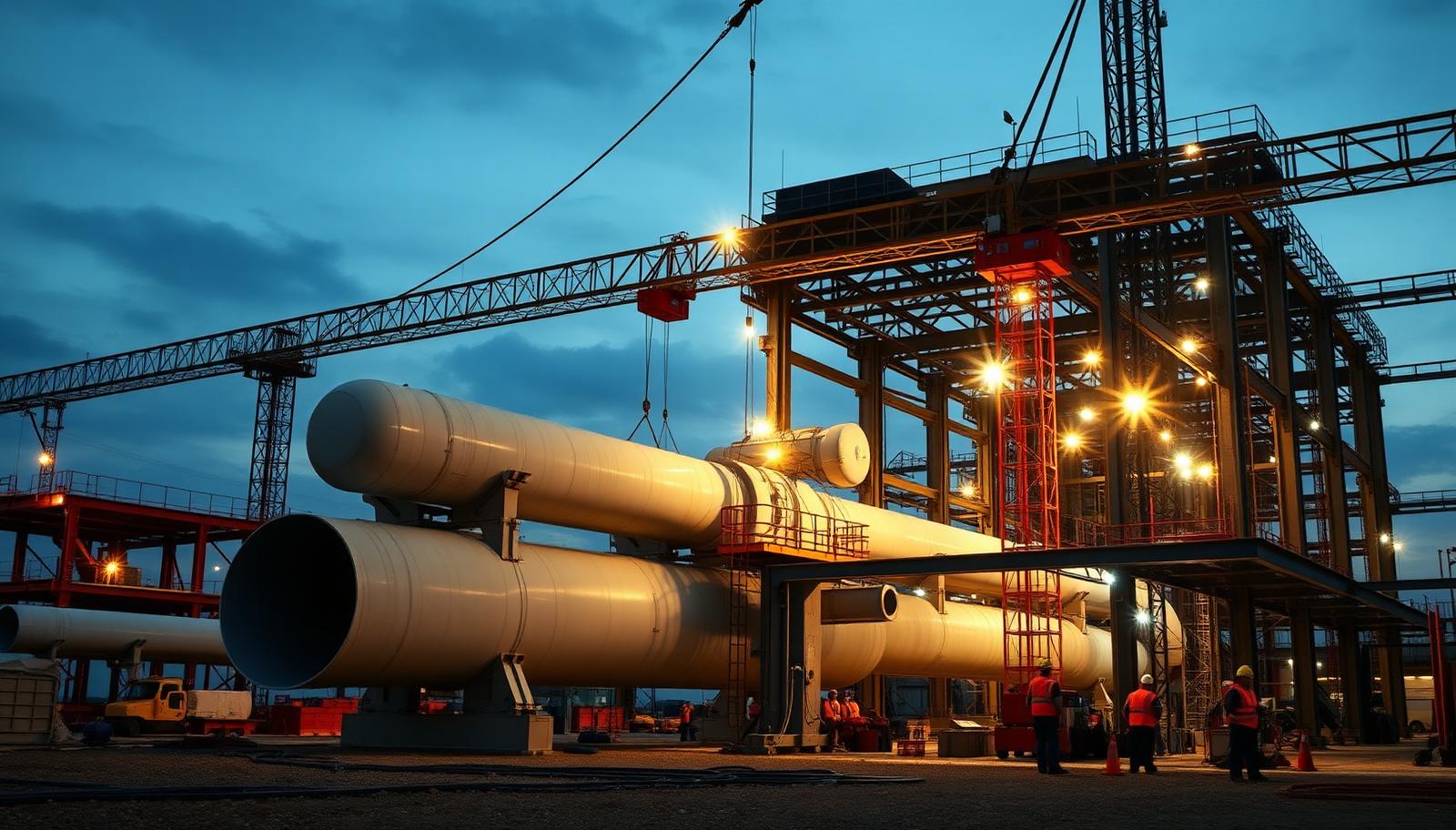
What Does Good Data Center MEP Coordination Actually Look Like?
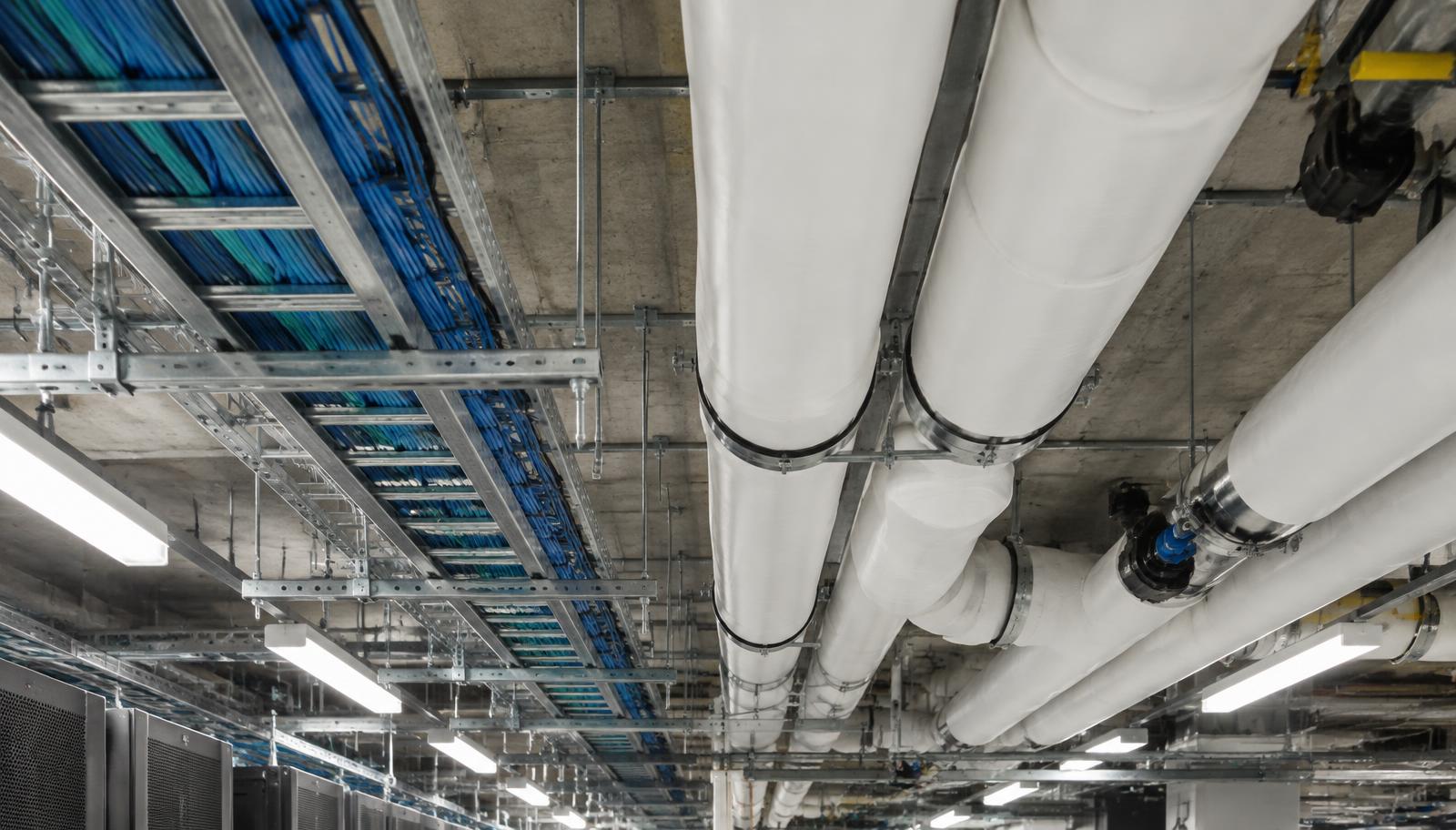
Good data center MEP coordination means the mechanical, electrical, plumbing, and controls scopes are planned, modeled, and sequenced as one system before anything is fabricated or installed. When it works, conflicts get caught on a screen. When it does not, they get caught by two crews showing up to the same ceiling space in the same week.
Walk through the postmortem on almost any data center that shipped late and you land in the same place. It was rarely one trade that failed. It was the seam between two trades that nobody owned.
Where do MEP conflicts actually happen on a data center?
Coordination failures rarely look like disasters. They look like small, repeated collisions that add up to weeks:
- Shared overhead space. Chilled water piping routed through the same corridor as medium-voltage conduit, discovered when both crews arrive to install.
- Electrical rooms sized to old gear. A late design change brings larger switchgear, and the room was framed for yesterday's footprint.
- Equipment ahead of power. A coolant distribution unit (CDU) lands in a room before the feeder meant to power it is energized, so it sits, uncommissioned, waiting.
- Penetrations in the wrong place. Openings cut for mechanical piping that conflict with cable tray routes nobody flagged during design.
- Controls as an afterthought. Sensors, valves, and monitoring points that were never placed in the model, so they get field-routed wherever there is room left.
Any one of these is a change order. On a campus building several halls in parallel, a handful of them compound into a real delay, not a paperwork problem.
Why does liquid cooling make coordination harder?
The mechanical load on a modern data center has grown well past traditional air handling. Direct-to-chip liquid cooling, hybrid air and liquid plants, and CDUs now share space with legacy air-cooled systems.
Every one of those systems needs power, controls, and monitoring designed alongside it, not after it. That means the electrical scope is no longer a fixed load calculation. It is a moving target that has to track mechanical decisions as they are made.
A team coordinating both sides can absorb that kind of change as a sequencing adjustment. A team managing only one side ends up negotiating change orders instead. (For the mechanical side of this shift, see liquid cooling piping for data centers.)
What does real MEP coordination look like?
Coordination is not a kickoff meeting where everyone agrees to communicate. It is a continuous process that runs at the same pace as construction. Four habits separate the teams that do it well.
Clash detection before anything is fabricated
Mechanical, electrical, plumbing, and structural get modeled together in one federated model, and clashes get resolved before shop drawings are released. This is standard practice on paper. It only works if the people modeling each scope are actually talking, not trading files once a month. On fast-track jobs the model should feed fabrication directly, as we describe in fast-track data center construction.
One sequencing schedule, not two
Mechanical rough-in, electrical rough-in, and controls installation have to be sequenced against each other explicitly. If the mechanical crew needs an electrical room framed and powered before they can set a CDU, that dependency belongs on the master schedule. Not in someone's head. Not in a text thread.
Submittal cross-checks between trades
Nothing gets fabricated or installed until shop drawings are checked against the other trade's equipment. A pipe skid built to one set of dimensions and an electrical room built to a different revision is a conflict that should never reach the field. Prefabrication raises the stakes here, because a skid that does not fit is a skid that goes back to the shop. (More on that in prefabricated piping skids for data centers.)
A single point of decision
When a conflict surfaces mid-construction, someone needs the authority to resolve it the same day. Not escalate it through two subcontractor chains while crews stand around. That is the practical case for general contracting with an engineering brain: a team that understands both the mechanical and electrical consequences of a decision can make the call on the spot.
Who should own coordination: the GC, the trades, or one team?
Somebody has to own the seams. The question is who.
When the general contractor holds coordination but neither trade has skin in the other's scope, the GC becomes a referee. When each trade coordinates for itself, every conflict becomes a debate about whose schedule slipped and whose change order should cover it.
The model that holds up best is the one where the scopes that share the most space also share the most accountability. That might be one contractor carrying mechanical and piping with a tightly integrated electrical partner, or a GC that runs coordination as an engineering function rather than a meeting schedule. What matters is that one person can look at a conflict and decide.
Owners do not get paid in change orders. They get paid in energization dates.
What to ask a contractor about MEP coordination
Before you award mechanical or electrical scope on a data center, ask:
- How do you run clash detection, and how often is the coordination model updated during construction?
- Who has authority to resolve a field conflict between trades without a formal change order?
- How are mechanical and electrical shop drawings cross-checked before fabrication?
- Does your schedule show real trade dependencies, or just target dates?
- When an equipment lead time moves, how fast can your sequence adjust, and who decides?
Vague answers to question two are the biggest red flag. For a broader checklist, see how to choose a data center mechanical contractor.
The takeaway
MEP coordination is not a scheduling nicety. It is the difference between a data center that hits its energization date and one that spends its final weeks resolving conflicts that should have been caught on a screen months earlier.
Mechanical and electrical share the same building, the same ceiling space, and the same deadline. They should share the same plan.
CREATE Industries delivers mechanical, piping, and site infrastructure scope for data center projects with one accountable team and one schedule, so problems have no seams to hide in. Built for what can't fail. Talk to an engineer or call us 24/7 at (251) 209-8127.
Frequently Asked Questions
What is MEP coordination in data center construction?
MEP coordination is the process of planning, modeling, and sequencing mechanical, electrical, plumbing, and controls work as one system. Its goal is to catch conflicts in the model and on the schedule before they reach the field.
What causes most MEP conflicts on data center projects?
Shared overhead space, late equipment changes, and trade dependencies that never made it onto the master schedule. Most are small collisions between scopes rather than a failure inside any one scope.
Is clash detection enough to prevent MEP conflicts?
No. Clash detection catches geometric conflicts, but only if every trade's model is current. It also has to be paired with cross-checked submittals and a schedule that shows real dependencies between trades.
Why does liquid cooling increase coordination risk?
Liquid cooling adds CDUs, secondary loops, and more controls points, each of which needs power and monitoring designed alongside it. That turns the electrical scope into a moving target that has to track mechanical decisions in real time.
Who should be responsible for MEP coordination on a data center?
One party with the authority to resolve field conflicts the same day. That is often a contractor that carries multiple scopes or a GC that runs coordination as an engineering function, not just a weekly meeting.
Need one team owning the seams?
Get in touch, or call 24/7 emergency service at (251) 209-8127.
Talk to an Engineer