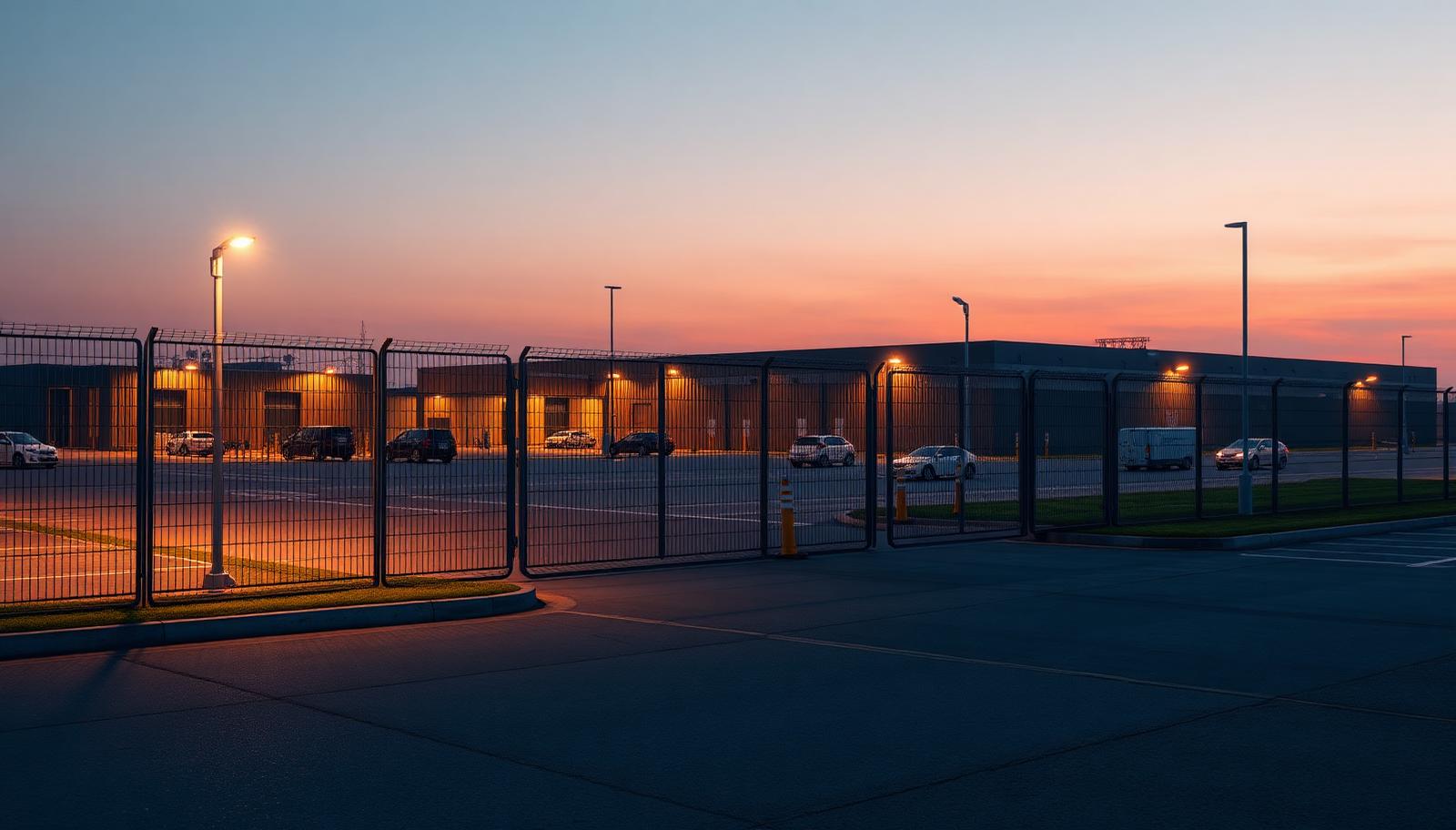
Data Center Perimeter Security Fencing: Anti-Ram, Anti-Climb, and Built on Schedule
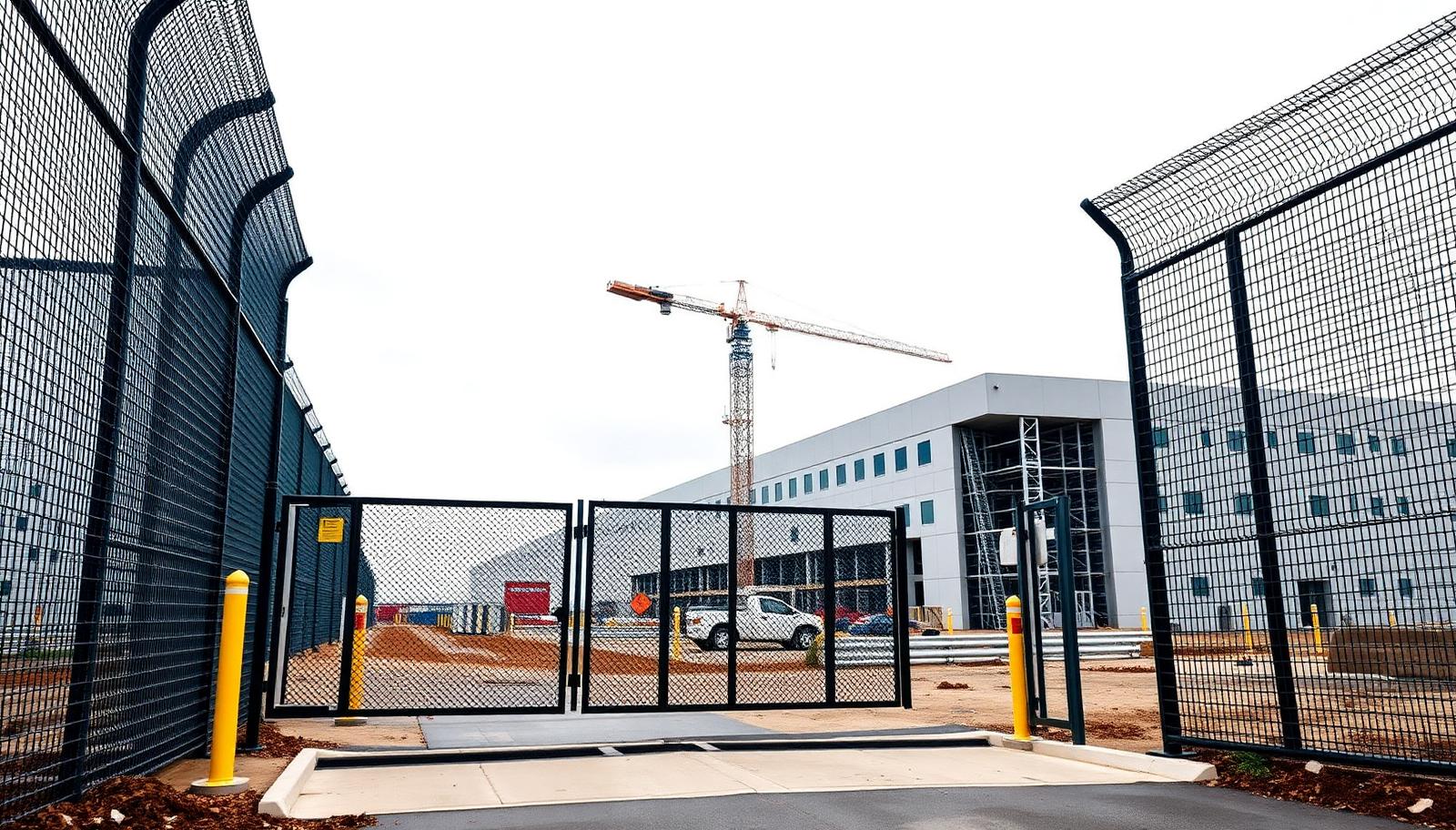
Before a single server racks in, the perimeter has to stand, and hyperscale security standards have turned data center security fencing into a serious engineering scope. This is no longer chain-link on T-posts. It is crash-rated barriers, engineered foundations, integrated detection, and gate systems that move construction traffic today and defend the campus for decades.
The Layered Perimeter Model
Modern campuses defend in depth, and the fence line is only the most visible layer:
- Deter: high anti-climb fencing (typically 8 to 10 ft welded mesh or palisade), signage, lighting, and clear zones with sight lines for cameras
- Detect: fence-mounted vibration sensors, buried cable, radar, and camera analytics tied to the security operations center
- Delay: anti-cut, anti-climb mesh profiles that resist tools and give response teams time
- Deny: crash-rated vehicle barriers, bollards, wedge barriers, and reinforced gates at every vehicle approach
Standards That Show Up in Hyperscale Specs
Vehicle barriers are specified to ASTM F2656 (formerly K-ratings): for example, M50/P1 stops a 15,000 lb truck at 50 mph with minimal penetration. Expect requirements for engineered foundations with rebar and embedment depths driven by soil conditions, not catalog drawings. Fencing itself increasingly references anti-climb/anti-cut performance and CPNI-style testing. If your fence contractor has never poured a barrier foundation to an engineer's stamp, they are learning on your campus.
Gates: Where Security Meets Logistics
A data center under construction may pass hundreds of trucks a day through the same entries that must later meet security standards. Smart programs phase this: construction entrances with temporary barriers, then permanent crash-rated slide or bi-fold gates, guard houses, sally ports for vehicle inspection, and access control integration (turnstiles, badge readers, license plate recognition) commissioned with the security system, not after it.
Constructability Is the Hidden Risk
Perimeter packages fail on the boring things: utility conflicts along the fence line, drainage crossings, grading that leaves gaps under the fence, and foundations that clash with duct banks. The fix is treating the perimeter as sitework engineering (surveyed, modeled, coordinated with civil and electrical) and self-performing the concrete, steel, and welding rather than stacking four subcontractors on one fence line.
Sequencing With the Campus Schedule
Security fencing gates the owner's insurance, the security team's mobilization, and often the AHJ's occupancy conditions. Build it into the critical path: early works perimeter first, permanent perimeter phased with sitework, detection and camera infrastructure pulled forward so commissioning doesn't stall turnover.
CREATE Industries delivers site and infrastructure packages for critical facilities through North Forge Contracting: current work includes a data center campus. Fencing, gates, barriers, foundations, and the steel fabrication behind them, delivered as one scope. (251) 209-8127.
Related reading from CREATE Industries: Data Center Perimeter Security: Defense in Depth, Data Center Mechanical Contracting for AI Cooling, How to Choose a Data Center Mechanical Contractor, our services, and our products and projects.
FAQs: Data Center Security Fencing
What does the layered perimeter model include?
Deter with high anti-climb fencing (typically 8 to 10 ft welded mesh or palisade), signage, lighting, and clear zones with sight lines for cameras. Detect with fence-mounted vibration sensors, buried cable, radar, and camera analytics tied to the security operations center. Delay with anti-cut, anti-climb mesh profiles. Deny with crash-rated vehicle barriers, bollards, wedge barriers, and reinforced gates at every vehicle approach.
What standard applies to data center vehicle barriers?
Vehicle barriers are specified to ASTM F2656 (formerly K-ratings). For example, M50/P1 stops a 15,000 lb truck at 50 mph with minimal penetration.
How should gates handle construction traffic and long-term security?
Smart programs phase this: construction entrances with temporary barriers, then permanent crash-rated slide or bi-fold gates, guard houses, sally ports for vehicle inspection, and access control integration including turnstiles, badge readers, and license plate recognition, commissioned with the security system rather than after it.
Where do perimeter security packages usually fail?
They fail on the boring things: utility conflicts along the fence line, drainage crossings, grading that leaves gaps under the fence, and foundations that clash with duct banks. The fix is treating the perimeter as sitework engineering, surveyed, modeled, and coordinated with civil and electrical, and self-performing the concrete, steel, and welding.
Why does security fencing belong on the critical path?
Security fencing gates the owner's insurance, the security team's mobilization, and often the AHJ's occupancy conditions. Early works perimeter comes first, permanent perimeter is phased with sitework, and detection and camera infrastructure is pulled forward so commissioning does not stall turnover.
Perimeter Packages Delivered as One Scope
Fencing, gates, barriers, foundations, and the steel fabrication behind them. Call (251) 209-8127.
Talk to an Engineer