Data Center Perimeter Security: Fencing, Camera Coverage, and Vehicle Barriers Built for a Higher-Value Target
A single AI server rack can carry a quarter-million dollars in hardware. Perimeter security at a data center campus isn't a fence line and a camera pole anymore, it's an engineered layer of defense-in-depth. Here's what belongs in the scope.
The Perimeter Is the First Layer, Not an Afterthought
Data center physical security follows a defense-in-depth model: multiple layers, each one designed to detect, delay, or deny an intruder before they reach the next. The outer perimeter (fencing, gates, vehicle barriers, lighting, and exterior camera coverage) is the first of those layers, and increasingly the one that determines whether the layers behind it ever get tested.
That first layer has gotten more demanding. The value concentrated inside a modern AI data hall, combined with the operational cost of even a brief physical security incident, has pushed perimeter design from "fence plus a few cameras" to an engineered system that has to hold up against real threat scenarios, not just deter casual trespassing.
What a Modern Perimeter Scope Actually Includes
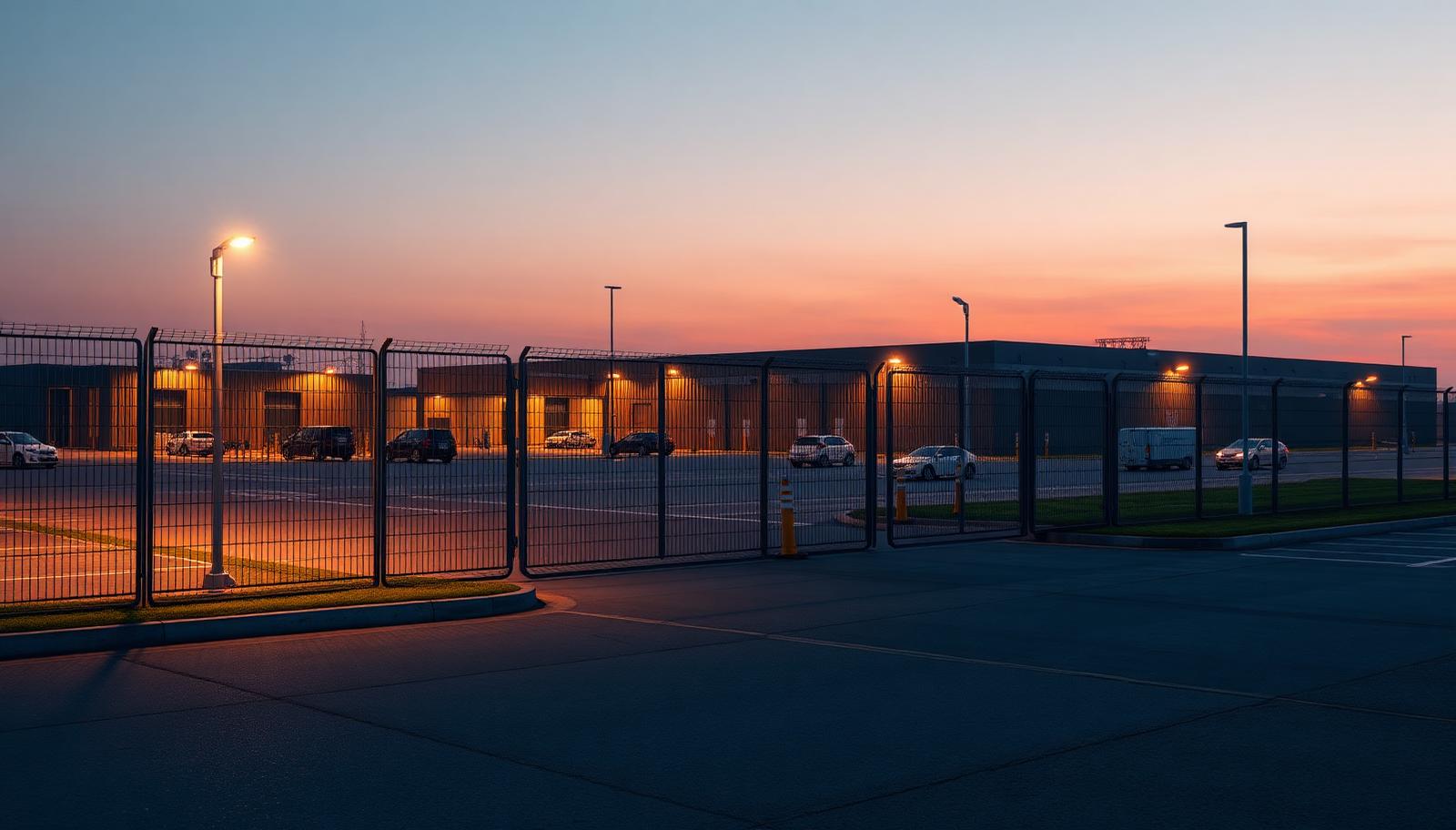
High-security fencing. Standard chain-link doesn't cut it on a data center campus. Hyperscale and colocation sites commonly specify fencing in the eight-foot range or taller, built and rated to resist climbing and cutting attempts, with panel and gate systems certified against standards such as LPS 1175 for forced-entry delay. Fence line design now gets planned alongside camera placement from the start, since certain fencing profiles improve sightlines for fixed and thermal cameras while others create blind spots that undercut the whole camera investment.
Vehicle barriers and crash-rated gates. Regardless of fence specification, every perimeter has gate openings, service entrances, and building approaches that a fence alone can't cover. Crash-rated bollards, gates, and barriers, tested to standards like ASTM F2656 in the U.S., are a required element of the perimeter, not an upgrade, because standard commercial fencing isn't built to stop a vehicle.
Perimeter intrusion detection. Fence-mounted vibration or fiber-optic sensors, buried sensors, and radar give early warning of a breach attempt before an intruder reaches the building, feeding alerts to the same system monitoring the cameras.
Camera coverage engineered for zero blind spots. 24/7 exterior surveillance with high-resolution, wide-coverage cameras is now standard practice at serious facilities, often paired with thermal imaging for low-light and nighttime coverage and video analytics that flag loitering or an object left at a fence line. The most common perimeter security failures aren't exotic, they're blind spots in camera coverage and lighting gaps that defeat the cameras that are already installed. Lighting design has to be planned as part of the camera scope, not a separate electrical afterthought, because uneven lighting creates the shadows and glare that make footage useless.
Access control at every entry point. Gates and vehicle entrances tie into the same multi-factor access control protecting the building itself, so every perimeter crossing generates an audit-ready record, not just a video clip someone has to go find later.
Why This Work Has to Be Planned With the Rest of the Site, Not Bolted On
The mistake operators make most often is treating perimeter security as a scope that gets bid and installed separately from the site and mechanical build. It shouldn't be. Fence line routing has to account for underground utility runs, mechanical yard access, and service vehicle routes already being staged for the cooling plant and electrical infrastructure. Camera and lighting circuits have to be coordinated with the same electrical contractor pulling power for the mechanical systems. And on a fast-tracked AI campus build, perimeter security is frequently on the critical path for a certificate of occupancy, meaning a fencing subcontractor working off outdated site drawings can hold up a schedule just as easily as a late chiller delivery.
This is also increasingly a compliance question, not just a risk-management one. Frameworks like SOC 2 and ISO 27001 require documented physical security boundaries, and enterprise tenants at colocation facilities routinely audit perimeter controls before signing a lease. A perimeter built without that documentation in mind creates rework down the line.
Building the Perimeter as Part of the Whole Site
Perimeter fencing, camera infrastructure, and vehicle barriers work best when they're scoped by a team that's also thinking about the mechanical yard, the site logistics, and the construction schedule around them, not a standalone vendor working off a separate contract and a separate set of drawings.
That's the general contracting model North Forge Contracting, part of CREATE Industries, applies to data center campus builds: site and infrastructure packages scoped tight and subcontracted smart, so perimeter security, mechanical systems, and site work move on one coordinated schedule instead of three competing ones.
Related reading from CREATE Industries: Data Center Mechanical Contracting, Data Center Pipe Fitting, what we do, and our service capabilities.
FAQs: Data Center Perimeter Security
What does perimeter security include at a data center campus?
A modern perimeter typically combines high-security fencing, crash-rated gates and vehicle barriers, perimeter intrusion detection (fence-mounted or buried sensors, radar), 24/7 exterior camera coverage with engineered lighting, and access control at every entry point, all working together as one layered defense-in-depth system.
How tall or secure does data center perimeter fencing need to be?
Hyperscale and colocation facilities commonly specify fencing around eight feet or taller, built and certified to resist climbing and cutting attempts. Fencing profiles are also increasingly chosen alongside camera placement, since some designs improve sightlines for fixed and thermal cameras while others create blind spots.
Do data centers need crash-rated vehicle barriers, or is fencing enough?
Fencing alone isn't built to stop a vehicle. Every perimeter has gate openings and service approaches that need dedicated vehicle barrier protection, with bollards and gates tested to standards like ASTM F2656 in the U.S. This is treated as a required layer of the perimeter design, not an optional upgrade.
What causes most perimeter security failures at data centers?
The most common failures aren't exotic attacks, they're blind spots in camera coverage and lighting gaps that undercut cameras that are already installed. Lighting has to be planned as part of the camera and fencing design, not added afterward.
Why does perimeter security need to be coordinated with mechanical and site construction?
Fence line routing has to account for underground utilities, mechanical yard access, and service vehicle routes already staged for the cooling plant and electrical infrastructure. Camera and lighting circuits also share the same electrical contractor pulling power for mechanical systems, so uncoordinated scopes create rework and schedule risk.
Is perimeter security a compliance requirement for data centers?
Frameworks like SOC 2 and ISO 27001 require documented physical security boundaries, and enterprise tenants at colocation facilities routinely audit perimeter controls before signing a lease. Building the documentation trail in from the start avoids rework later.
Planning Perimeter Security for a Data Center Campus?
Need it built into the overall site schedule, not around it? Talk to an engineer at CREATE Industries or call (251) 209-8127.
Talk to an Engineer