Carbon Steel, Stainless, or PP-R? Choosing Pipe Materials for Data Center Cooling
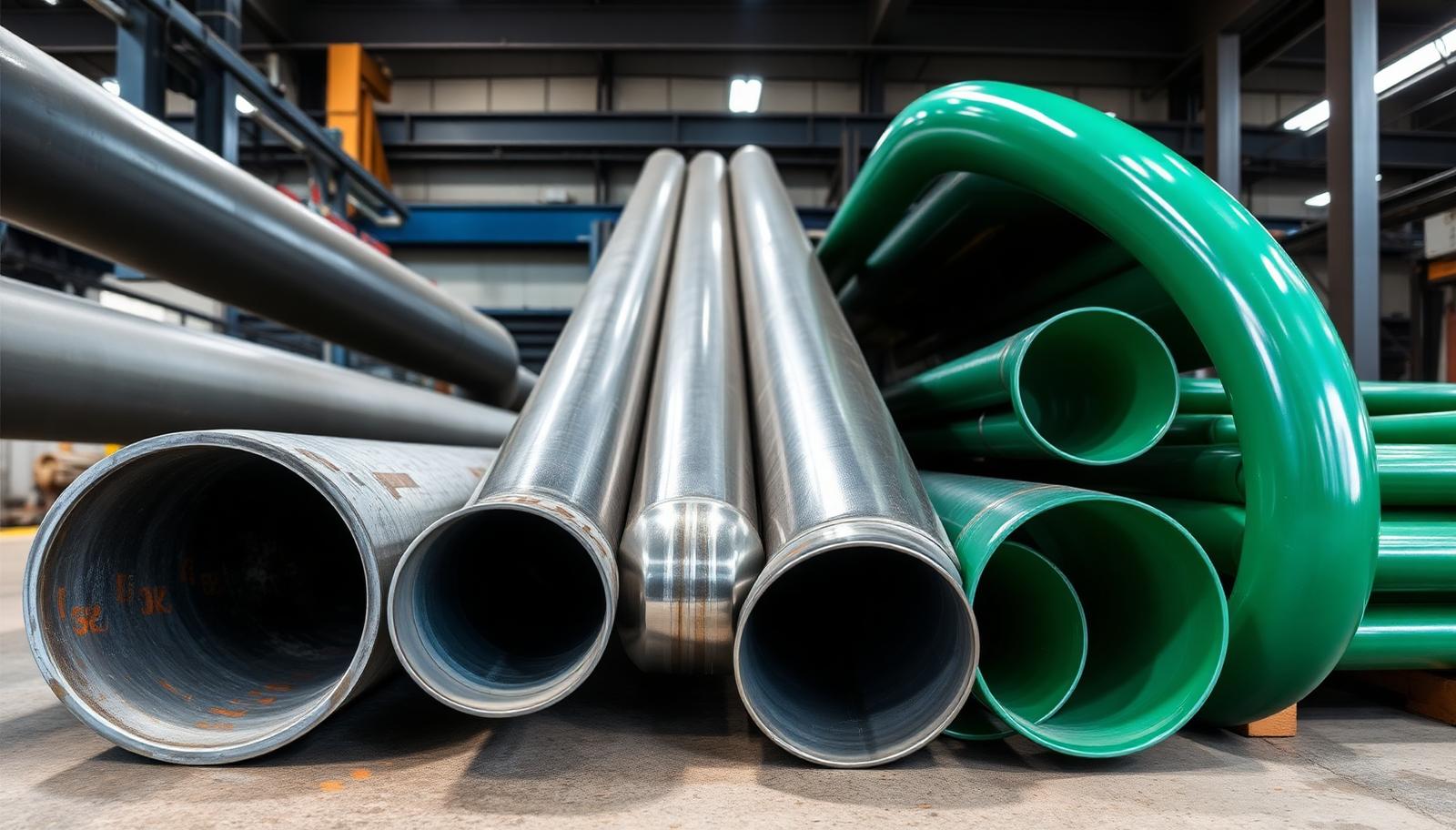
Material selection on a data center piping package is a 25-year decision made under 25-week schedule pressure. Pick wrong and you buy corrosion, weight you didn't need, or joints your insurer doesn't like. Here is how experienced mechanical teams think about data center pipe materials across the major systems.
Carbon Steel: The Large-Bore Workhorse
Schedule 40 carbon steel remains the default for chilled water and condenser water mains. It is economical at large diameters, structurally forgiving, and every qualified fitter can weld it. Its weakness is corrosion, which is why the flushing, passivation, and water treatment program matters as much as the pipe itself. Grooved mechanical couplings speed installation on distribution piping; welded joints still rule on critical mains and risers.
Stainless Steel: Where Cleanliness and Corrosion Govern
304/316 stainless earns its premium in condenser water systems with aggressive chemistry, makeup and treated-water lines, and increasingly in liquid cooling (TCS) loops where internal cleanliness is a warranty condition. Orbital welding produces smooth, debris-free internal joints that microchannel cold plates demand. The tradeoffs are material cost and welder skill: verify your contractor's stainless procedures separately from their carbon steel quals.
PP-R / PP-RCT: The Fast-Rising Challenger
Polypropylene fusion piping has moved from European district heating into US data centers on the strength of three arguments: it cannot corrode, heat-fused joints are monolithic with no gaskets or filler metal to fail, and it weighs a fraction of steel, meaning lighter supports and faster handling. It shines on chilled water distribution and secondary loops. Limits to respect: thermal expansion demands disciplined support design, fusion technicians must be certified, and large-diameter fittings can carry lead times.
CPVC and Specialty Thermoplastics
CPVC has a defined role in sampling lines, aspirating smoke detection networks, chemical feed, and select fire protection applications: economical and corrosion-proof, but not the answer for main plant piping.
Copper: Small-Bore Precision
Copper still serves humidification lines, small equipment connections, and specialty loops where brazed small-bore work is fastest. Watch compatibility with certain coolants and treatment chemistries.
The Decision Framework
- Mains and risers: carbon steel welded; stainless where chemistry or spec demands
- Distribution and secondary loops: PP-R/PP-RCT increasingly competitive with grooved steel, decide on schedule, weight, and lifecycle corrosion cost
- TCS / direct-to-chip loops: stainless or OEM-approved polymer, orbital or fusion joined, pharma-grade cleanliness
- Everything: matched to the facility's water treatment program from day one
The honest answer is usually a hybrid, and a contractor fluent in welding, grooved systems, and fusion joining can optimize each system instead of defaulting to the one method they own tooling for.
CREATE Industries self-performs across carbon, stainless, and fused polymer systems, with in-house fabrication through Red Anvil Fabrication. Get a material strategy, not a habit: (251) 209-8127.
Related reading from CREATE Industries: Data Center Pipe Fitting and Cooling Loop Precision, Data Center Mechanical Contracting for AI Cooling, Pressure Testing, Flushing, and Commissioning, How to Choose a Data Center Mechanical Contractor, and our products and projects.
FAQs: Data Center Pipe Materials
What is the default pipe material for data center chilled water mains?
Schedule 40 carbon steel remains the default for chilled water and condenser water mains. It is economical at large diameters, structurally forgiving, and every qualified fitter can weld it. Its weakness is corrosion, which is why the flushing, passivation, and water treatment program matters as much as the pipe itself.
When is stainless steel the right choice?
304/316 stainless earns its premium in condenser water systems with aggressive chemistry, makeup and treated-water lines, and increasingly in liquid cooling (TCS) loops where internal cleanliness is a warranty condition. Orbital welding produces smooth, debris-free internal joints that microchannel cold plates demand.
Why is PP-R gaining ground in data centers?
Polypropylene fusion piping cannot corrode, heat-fused joints are monolithic with no gaskets or filler metal to fail, and it weighs a fraction of steel, meaning lighter supports and faster handling. It shines on chilled water distribution and secondary loops.
What are the limits of PP-R and PP-RCT piping?
Thermal expansion demands disciplined support design, fusion technicians must be certified, and large-diameter fittings can carry lead times.
Where do CPVC and copper fit in a data center?
CPVC has a defined role in sampling lines, aspirating smoke detection networks, chemical feed, and select fire protection applications: economical and corrosion-proof, but not the answer for main plant piping. Copper still serves humidification lines, small equipment connections, and specialty loops where brazed small-bore work is fastest, with attention to compatibility with certain coolants and treatment chemistries.
Get a Material Strategy, Not a Habit
Carbon, stainless, and fused polymer systems self-performed, with in-house fabrication. Call (251) 209-8127.
Talk to an Engineer