Predictive Maintenance for Thermal Oxidizers, Flares, and RTOs: Cutting Downtime Before It Costs You a Permit
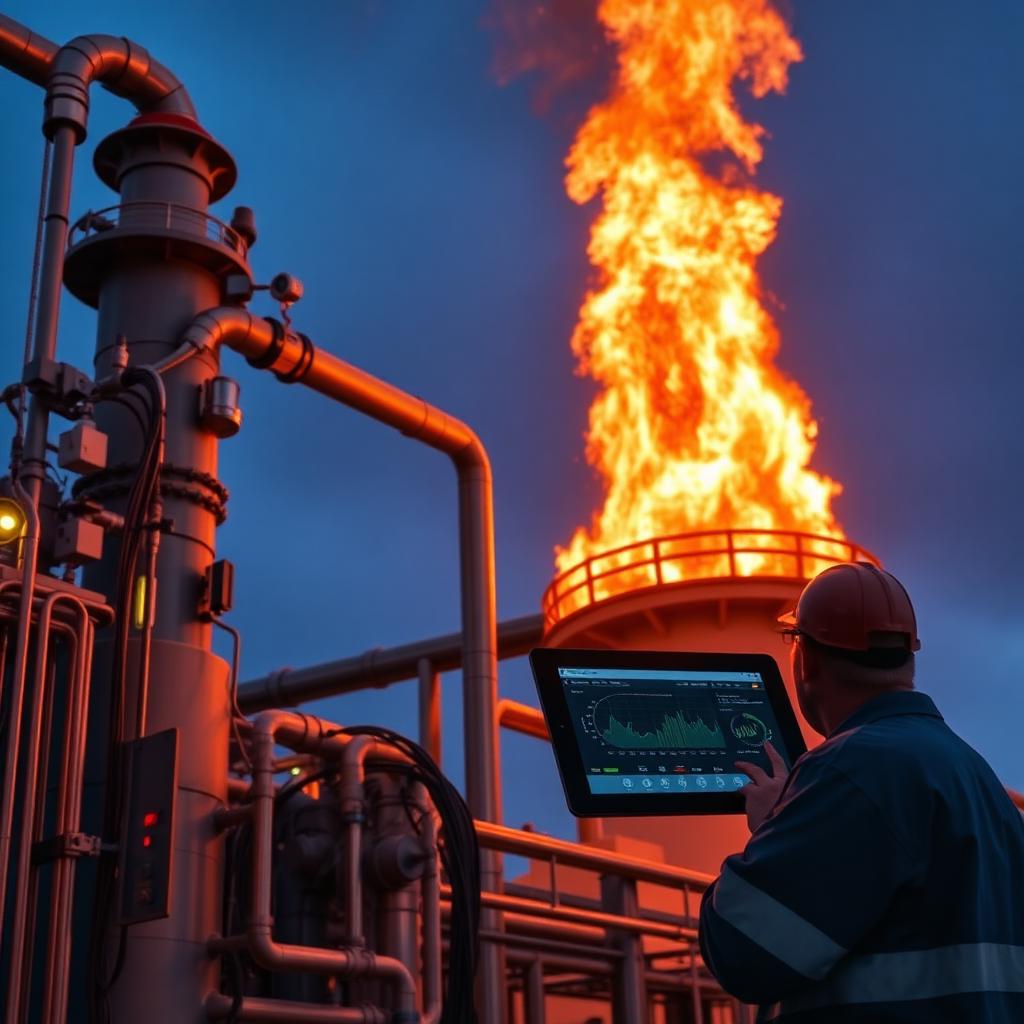
An unplanned thermal oxidizer or flare outage is never just a maintenance problem. It is a production stoppage, a potential permit deviation, and in some jurisdictions a reportable event that draws regulatory attention at the worst possible moment. Across North American industrial facilities, more operators are turning to sensor-based predictive maintenance to catch the early signs of combustion system failure before it becomes any of those things, and the technology has matured enough that it is no longer a luxury reserved for the largest facilities.
Why combustion equipment fails in predictable ways
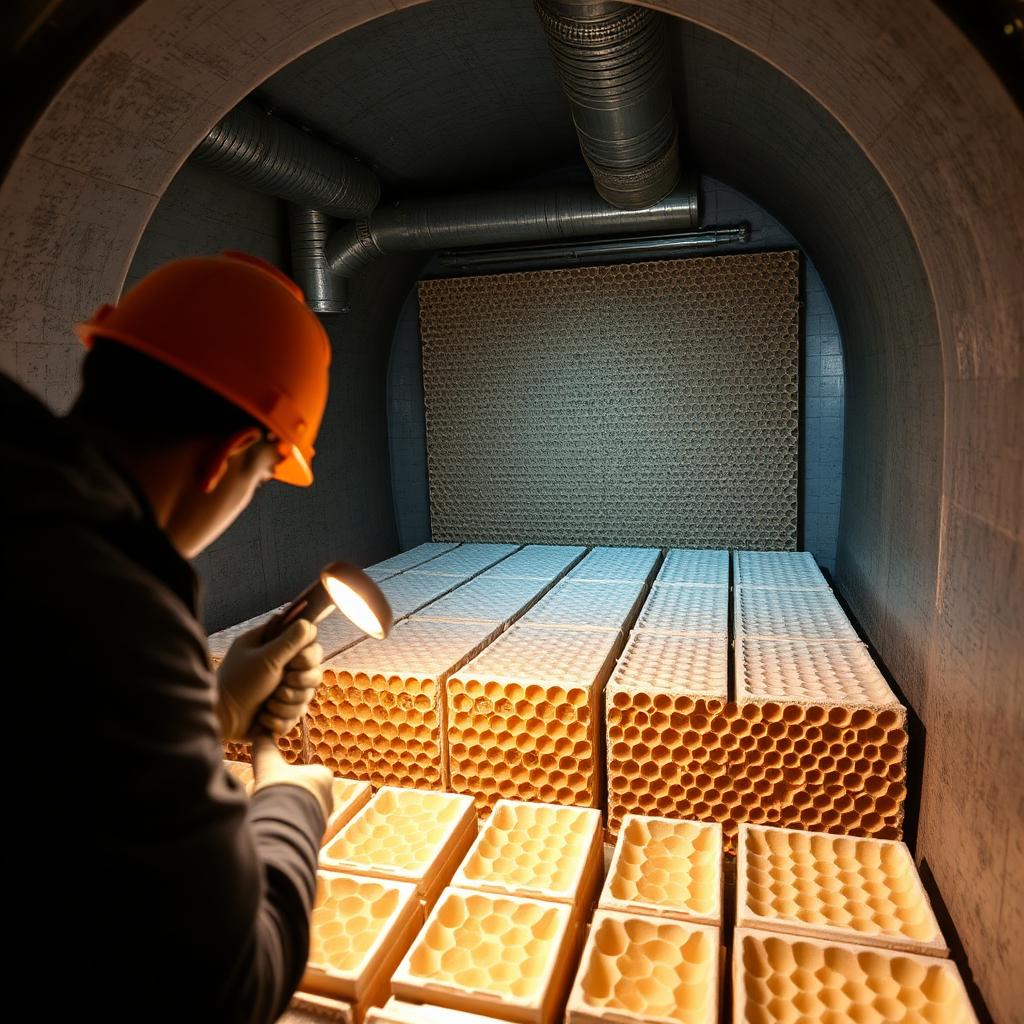
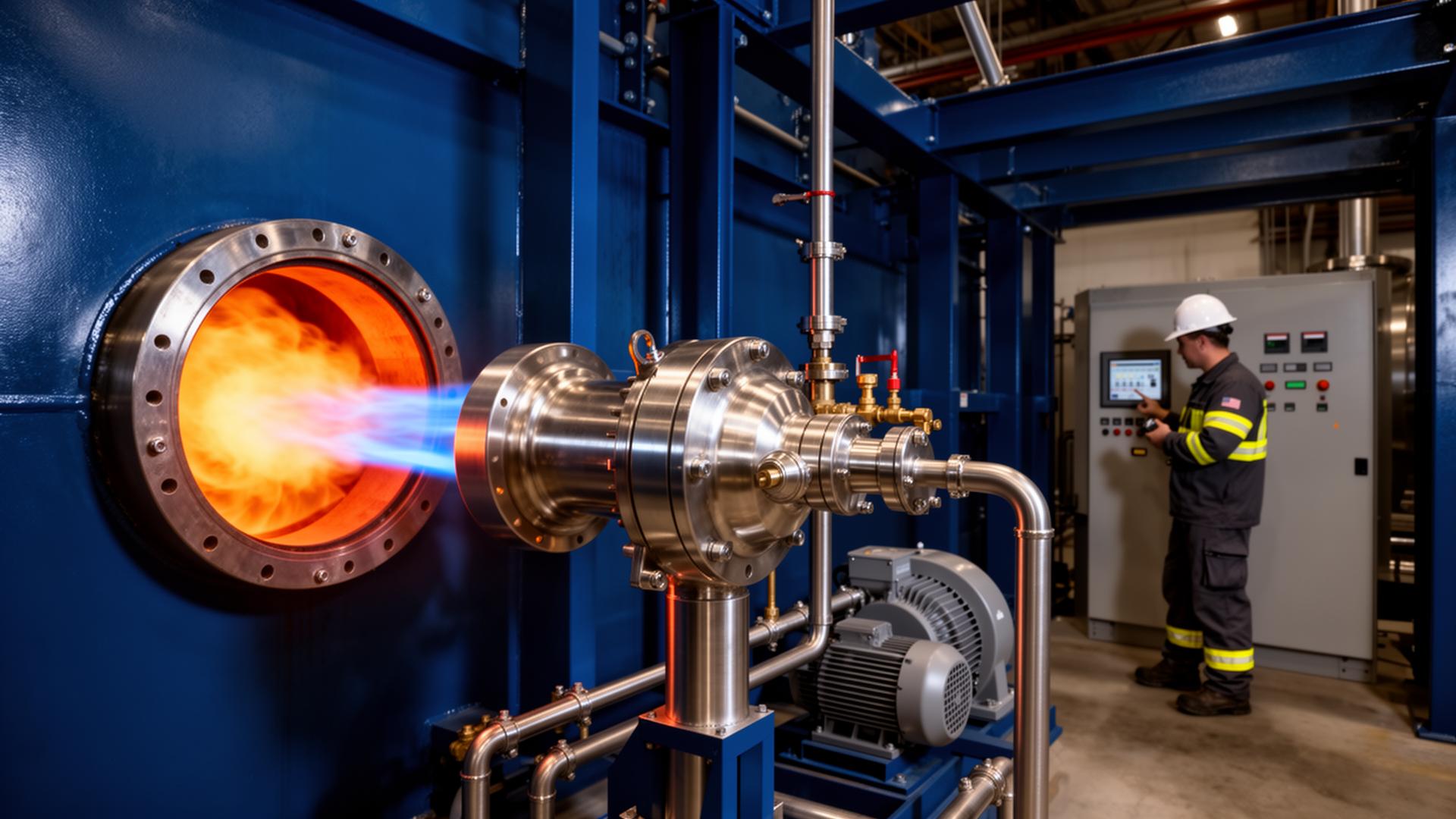
Thermal oxidizers, RTOs, and flares do not usually fail catastrophically and without warning. Ceramic media in a regenerative thermal oxidizer degrades gradually, showing up first as a slow decline in heat recovery efficiency and rising fuel consumption long before a full media replacement becomes urgent. Burner components drift out of tune incrementally, showing up in combustion air ratios and stack temperature trends before they trigger an emissions exceedance. Flare pilots and knockout drums develop failure signatures (pressure anomalies, temperature swings) that are visible in the data well before a pilot outage takes a flare offline entirely. The failure modes are known; the challenge has always been catching them early enough, consistently enough, across enough equipment, to act before the failure becomes unplanned downtime.
What predictive maintenance actually looks like on this equipment
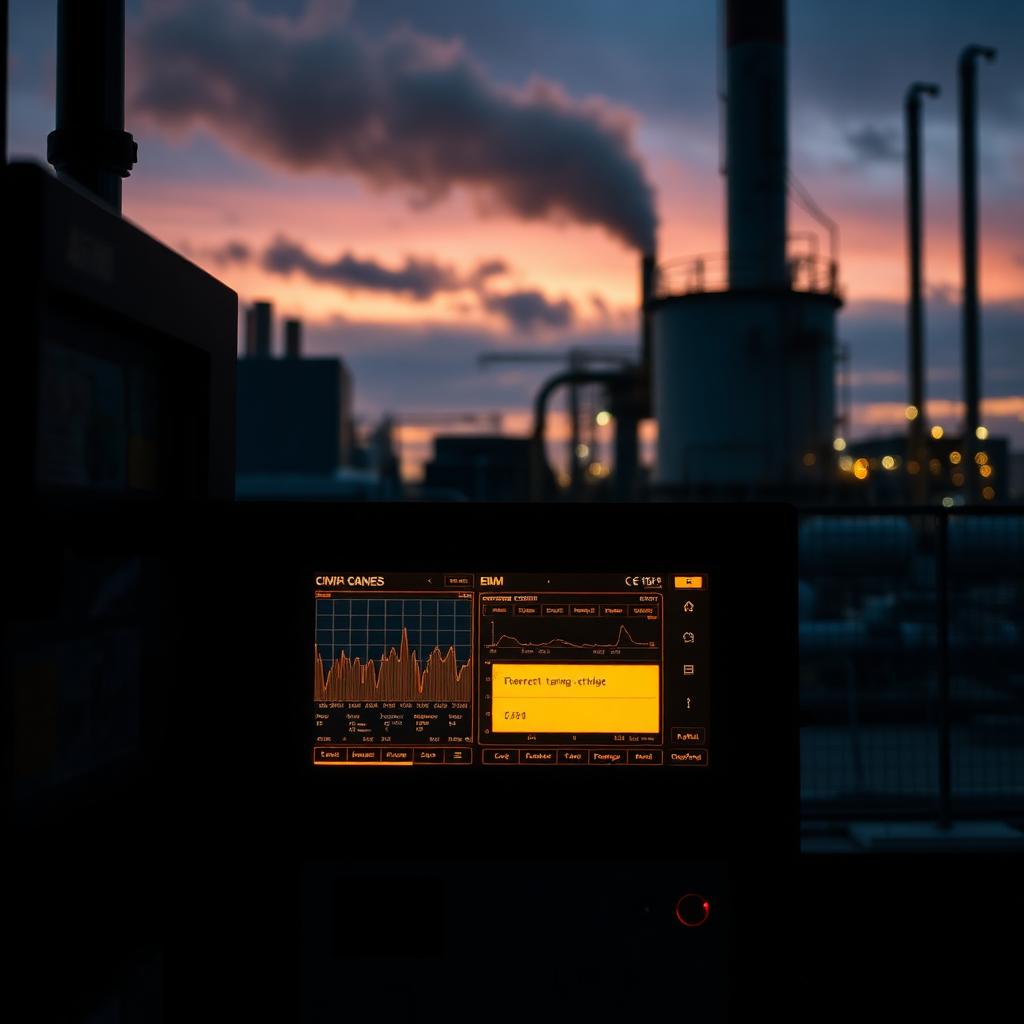
In practice, predictive maintenance for combustion and abatement equipment means instrumenting the systems that already exist (temperature sensors at key points through the RTO chamber and heat exchange beds, vibration and pressure monitoring on blowers and fans, continuous combustion air ratio tracking, and flare pilot and knockout drum monitoring) and feeding that data into a system that flags drift from baseline performance rather than waiting for a hard alarm threshold to trip. The difference between this and traditional monitoring is subtle but important: traditional systems tell you when something has already failed a limit; predictive systems tell you a component is trending toward failure weeks or months out, while there is still time to schedule the repair on your terms rather than the equipment's.
The connection to compliance, not just uptime
For facilities running CEMS alongside their abatement equipment, the compliance case for predictive maintenance is direct. A thermal oxidizer that starts drifting out of its destruction and removal efficiency range does not announce itself with a dramatic failure. It shows up as a gradual erosion in performance that a CEMS eventually catches, often after the facility has already accumulated exceedance minutes that trigger a reportable deviation. Predictive maintenance data, cross-referenced against CEMS trends, gives facility teams a much earlier warning window, the kind of margin that turns a routine maintenance call into the story, rather than a Notice of Violation.
This matters even more for facilities operating under a Title V permit where continuous compliance demonstration is a condition of the permit itself. A documented predictive maintenance program, with equipment performance trends tracked and maintenance actions logged against those trends, also becomes useful evidence during a permit renewal or an inspection: it demonstrates the facility is actively managing the systems the permit relies on, not just reacting to failures after the fact.
Retrofit versus new build
Operators do not need to replace existing thermal oxidizers, RTOs, or flares to add predictive monitoring capability. Most legacy combustion systems can be retrofitted with the sensor packages and data infrastructure needed to establish performance baselines and track drift, without touching the core combustion equipment itself. This makes predictive maintenance one of the higher-return, lower-disruption upgrades available to facilities running older equipment that is not yet due for full replacement. The sensors and monitoring pay for themselves in avoided unplanned downtime and extended media or component life well before a full system overhaul would be justified.
For new installations, building the monitoring infrastructure in from the start avoids the retrofit cost entirely and gives the facility a performance baseline from day one of operation, rather than trying to reconstruct what "normal" looked like after equipment has already been running for years.
Where to start
Facilities considering a predictive maintenance program do not need to instrument everything at once. The highest-value starting points are typically the combustion assets with the most expensive unplanned downtime consequences: RTOs with high-cost ceramic media, flares tied to a facility's core production throughput, and any thermal oxidizer directly tied to a CEMS-monitored permit limit. Establishing baseline performance data on those systems first, then expanding monitoring coverage as the program proves out, is a more capital-efficient path than a facility-wide rollout on day one.
The equipment doing the hardest work in a facility's emissions control strategy (the flares, oxidizers, and RTOs running continuously in the background) deserves the same level of operational visibility that most facilities already apply to their core production assets. Predictive maintenance closes that gap, and for operators managing multiple combustion assets across Gulf Coast and broader North American operations, it is increasingly the difference between a maintenance program that is reactive and one that is actually in control of its own uptime.
Related reading from CREATE Industries: RTO Ceramic Media Replacement, CEMS Field Diagnostic and Title V Risk, and our thermal oxidizer service capabilities.
Frequently Asked Questions
What's the difference between predictive maintenance and traditional monitoring?
Traditional monitoring alerts you after a system crosses a hard threshold or fails. Predictive maintenance tracks gradual drift from baseline performance, flagging components trending toward failure weeks or months before they trip an alarm.
Can existing thermal oxidizers and flares be retrofitted with predictive monitoring?
Yes. Most legacy combustion systems can have sensor packages and monitoring infrastructure added without modifying the core combustion equipment, making it a relatively low-disruption upgrade.
How does predictive maintenance help with CEMS compliance?
It gives facility teams an earlier warning window than CEMS alone by flagging performance drift before it accumulates into the exceedance minutes that trigger a reportable deviation.
Which equipment should be instrumented first?
Prioritize combustion assets with the most expensive unplanned downtime consequences, typically RTOs with costly ceramic media, flares tied to core production throughput, and any oxidizer directly monitored by CEMS under a Title V permit.
Does predictive maintenance reduce ceramic media replacement costs in an RTO?
It does not reduce the underlying wear, but it identifies gradual efficiency decline early enough to plan media replacement on a scheduled basis rather than reacting to a sudden performance failure, which typically lowers total cost and avoids unplanned downtime.
Is predictive maintenance only worthwhile for large facilities?
No. Because sensor packages can be added incrementally to the highest-value assets first, smaller facilities can start with a limited scope and expand coverage as the program demonstrates return, rather than needing a facility-wide rollout to see benefit.
Stop Reacting. Start Predicting.
CREATE Industries retrofits sensor packages, sets performance baselines, and services thermal oxidizers, RTOs, and flares across the US and Canada. Offices in Kennesaw, GA and Mobile, AL. 24/7 emergency response.
Talk to an Engineer