Cold Climate Engineering: Designing Thermal Oxidizers and Flare Systems for North American Winter Operations
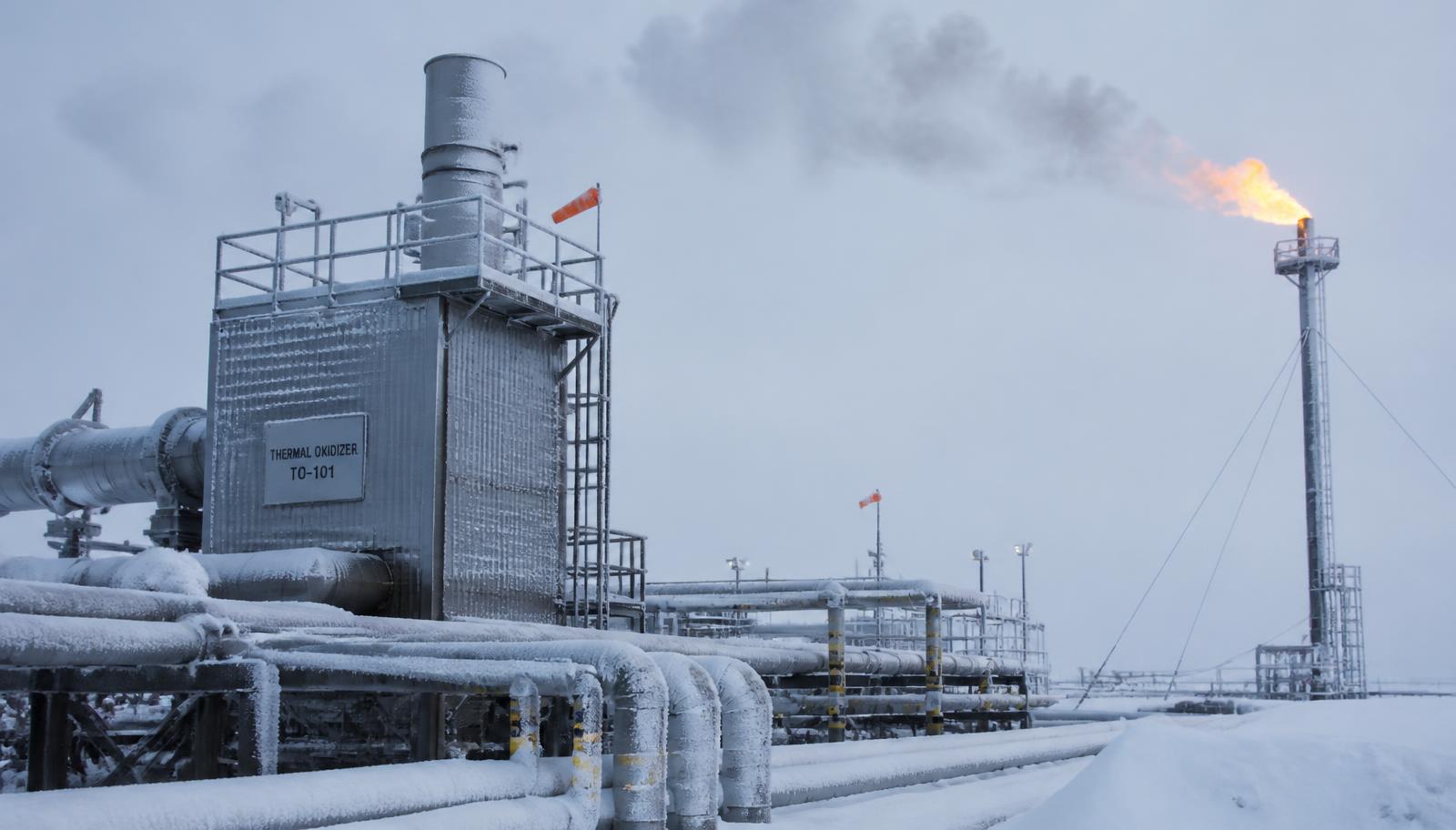
For much of the year, a thermal oxidizer or flare system in Alberta, North Dakota, Saskatchewan, or the upper Midwest has to do the same job as one on the Gulf Coast: destroy pollutants at a guaranteed efficiency, hold permit limits, and keep running. But for several months of that year, it has to do the job at minus twenty, minus thirty, or colder, with wind chill, snow load, and freeze risk added to the design problem. Operators who buy equipment engineered for a generic climate, then discover its limitations the first hard winter, tend to pay for that lesson in downtime, frozen instrumentation, and emergency service calls. Building for North American winter conditions from the start is cheaper than retrofitting for them later.
Why cold climate design is a different engineering problem, not just an add-on
It is tempting to treat cold weather readiness as a checklist of extras: heat trace here, an enclosure there. In practice, sustained sub-zero operation changes core design decisions: material selection has to account for cold-temperature brittleness in carbon steel, pilot and igniter systems need redundancy because a failed pilot in a blizzard is a very different problem than one on a warm afternoon, and condensate management has to assume that any trapped moisture will freeze and expand rather than simply drain away.
Instrumentation is often the first casualty of an underdesigned cold weather system. Flow meters, oxygen analyzers, and thermocouples that perform reliably in a temperate enclosure can drift, ice over, or fail outright when ambient temperatures swing forty or fifty degrees between a January cold snap and a chinook. A system engineered for winter treats analyzer housings, sample lines, and control panels as protected environments from day one, not as afterthoughts wrapped in heat tape once a failure has already occurred.
Flare systems in freezing conditions
Flares present a particular set of cold weather risks around the knockout drum, pilot supply, and purge gas system. Liquid carryover that would simply be handled in a warmer climate can freeze inside a knockout drum or its instrumentation, leading to false readings or blocked drains at exactly the moment the system needs to shed liquid fastest. Purge gas lines and pilot supply lines are similarly vulnerable; a frozen or restricted pilot gas line during a cold snap can mean loss of flame at the worst possible time, from both a safety and a compliance standpoint.
Well-designed cold climate flare systems build in insulated and heat-traced piping on every line carrying moisture-bearing gas, redundant pilot ignition, and enclosure or wind-shielding around critical control components. None of this is exotic technology: it is standard practice applied consistently, rather than selectively, across the full system rather than just the pieces that are easiest to protect.
Thermal oxidizers, RTOs, and the freeze-thaw cycle
Regenerative thermal oxidizers and other combustion systems face a related but distinct challenge: the freeze-thaw cycle itself. Ceramic media, refractory linings, and duct seals that perform well under steady operating temperatures can develop stress fractures over repeated seasonal cycling, particularly in facilities that run intermittently rather than continuously through winter. A system that is shut down overnight in a Prairie winter and restarted the next morning puts different thermal stress on its components than one running continuously at a steady state, and design margins should reflect that operating pattern rather than an idealized constant-load assumption.
Outdoor ductwork, dampers, and expansion joints also need cold-specific attention. Damper actuators can bind in extreme cold if lubricants and seals are not rated for the actual low-temperature extremes of the site, not just a generic industrial specification. Facilities in Canada and the northern United States should be specifying components against realistic minimum design temperatures for their exact location, including wind chill exposure for outdoor equipment, rather than a standard catalog rating intended for milder climates.
Building winterization into the commissioning and maintenance plan
Cold climate performance is not just a design question: it is a commissioning and maintenance question. Systems should be commissioned with a cold-weather test protocol where practical, and maintenance schedules should include a pre-winter readiness check that covers heat trace continuity, enclosure heater function, pilot and igniter redundancy, and drain line integrity. Waiting until the first cold snap to discover a failed heat trace circuit or a cracked drain line is the most expensive way to find out about it.
For operators managing assets across multiple climate zones (a Gulf Coast facility and a Western Canadian facility under the same corporate umbrella, for example) the winterization standard should not be uniform across all sites by default. Each facility's design margin should reflect its actual regional extremes, informed by historical low temperatures and wind exposure at that specific site, not a single corporate specification written for the mildest location in the portfolio.
The cost of getting this wrong
The financial case for cold climate engineering is straightforward once a facility has experienced a winter failure. Emergency service calls in extreme cold cost more, take longer to mobilize for, and often coincide with the exact conditions that make travel and outdoor work most difficult. A flare or oxidizer that trips offline during a cold snap can also create a compliance exposure: a system down for emissions control during a period when the facility is still producing gas is a problem regulators and internal EHS teams both take seriously.
Engineering for North American winter conditions from the outset, rather than retrofitting after a failure, is consistently the lower-cost path across the equipment's operating life. It is also, increasingly, table stakes for any operator running assets across the colder regions of the continent rather than exclusively in temperate zones.
Related reading from CREATE Industries: Predictive Maintenance for Thermal Oxidizers, Flares, and RTOs, RTO Ceramic Media Replacement and the Cost of Waiting, and our thermal oxidizer and flare service capabilities.
FAQs
What temperature range should cold climate thermal oxidizer design account for?
Design margins should be based on the actual historical low temperatures and wind chill exposure of the specific site, not a generic industrial rating. A system installed in a sheltered location has different real-world exposure than one on an open plain, even at the same latitude.
Why do flares fail more often in extreme cold?
The most common failure points are frozen knockout drum drains, restricted pilot or purge gas lines, and instrumentation that was not protected for large ambient temperature swings. These are addressable with heat trace, insulation, and redundant pilot ignition, but only if they are designed in rather than added after a failure.
Does intermittent winter operation stress equipment differently than continuous operation?
Yes. Repeated freeze-thaw and heat-cool cycling puts different thermal stress on refractory linings, ceramic media, and duct seals than steady-state continuous operation, and facilities that shut down overnight in cold climates should account for that cycling in their maintenance and inspection schedule.
Should winterization standards be the same across every facility in a company's portfolio?
No. Each site's design margin should reflect its own regional extremes. A single corporate specification written around the mildest site in a portfolio will under-protect facilities in colder regions.
What is the most cost-effective way to prevent cold weather failures?
A pre-winter readiness check covering heat trace continuity, enclosure heater function, pilot and igniter redundancy, and drain line integrity, performed before the first hard freeze rather than after an emergency service call.
Get Your System Ready Before the First Hard Freeze.
CREATE Industries designs, builds, and services thermal oxidizers, flares, and combustion systems for operators across North America. Offices in Kennesaw, GA and Mobile, AL. 24/7 emergency response.
Talk to an Engineer